
Comparison Ezviz DP2 vs Grandstream GSC3570
Add to comparison | 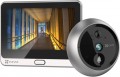 | 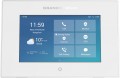 |
|---|---|---|
| Ezviz DP2 | Grandstream GSC3570 | |
from $298.00 | Compare prices 1 | |
| TOP sellers | ||
Protection of the calling panel according to the IP54 standard. 4600 mAh battery, working time up to 90 days. | ||
Main specs | ||
| Type | set (panel + intercom) | internal panel (intercom) |
| Connection | Wi-Fi | Wi-Fi / RJ-45 |
| Mobile application |  |  |
| SIP protocol | | |
Internal panel (intercom) | ||
| Display size | 4.3 " | 7 " |
| Screen resolution | 1024x600 px | |
| Touch screen | | |
| Pluggable outdoor panels | 10 | |
| Connectable surveillance cameras | 32 pcs | |
| Alarm inputs | 4 | |
| Alarm outputs | 1 | |
| PoE power | | |
| Features | event recording support motion sensor recording card reader up to 256 GB | event recording support motion sensor recording internal communication (intercom) voice message (answering machine) card reader up to 256 GB |
| Consumption (standby) | 2.2 W | |
| Operating temperature | -10 °C ~ +45 °C | -10 °C ~ +50 °C |
| Size | 116x86x25 mm | 225x150x37 mm |
Call panel | ||
| Number of subscribers | 1 | |
| Mount | built-in | |
| Buttons backlight | | |
| Protection level | IP54 | |
| Material | metal (anti-vandal) | |
| Operating temperature | -10 °C ~ +45 °C | |
| Dimensions | 71x71x48 mm | |
Camera | ||
| Megapixels | 2 MP | |
| Video resolution | 1920x1080 px | |
| Horizontal viewing angle | 136 ° | |
| IR illumination (night shooting) | | |
| Motion detector | | |
| Color | ||
| Added to E-Catalog | march 2023 | april 2021 |



Compare Ezviz DP2 and Grandstream GSC3570
Price comparison
You may be interested in
My comparisons
Ezviz DP2 often compared


Glossary
Type
— Internal Panel (Intercom). A device installed indoors to communicate with visitors through an intercom system. It is designed to ensure security by allowing you to communicate with guests and control access to the building or apartment without needing to open the door.
— Call Panel. An outdoor device of the intercom system, installed at the entrance to a building or apartment. The call panel is designed to allow a visitor to summon the hosts or owners of the premises, and, with a camera, to provide an external image, enhancing security and access control.
— Video Doorbell. A simplified and "light" version of the call panel: a doorbell with a built-in camera and Wi-Fi module. These devices differ from video panels in two key aspects. Firstly, they do not include the ability to control a magnetic lock—simply put, you cannot remotely open the door through a video doorbell. On the other hand, a video doorbell doesn't require an intercom or other special equipment—the video and audio from such a device is transmitted via Wi-Fi to a smartphone, tablet, or computer with a special application installed. Thus, video doorbells are extremely easy to install and set up.
— Kit (Panel + Intercom). Having both devices in a set allows for a complete communication and access control system out of the box. This solution can b...e advantageous at the initial installation stage, as the devices are highly compatible with each other. However, when upgrading or due to specific preferences in certain functions, it is easier to choose a call panel separately from the intercom.
— Call Panel. An outdoor device of the intercom system, installed at the entrance to a building or apartment. The call panel is designed to allow a visitor to summon the hosts or owners of the premises, and, with a camera, to provide an external image, enhancing security and access control.
— Video Doorbell. A simplified and "light" version of the call panel: a doorbell with a built-in camera and Wi-Fi module. These devices differ from video panels in two key aspects. Firstly, they do not include the ability to control a magnetic lock—simply put, you cannot remotely open the door through a video doorbell. On the other hand, a video doorbell doesn't require an intercom or other special equipment—the video and audio from such a device is transmitted via Wi-Fi to a smartphone, tablet, or computer with a special application installed. Thus, video doorbells are extremely easy to install and set up.
— Kit (Panel + Intercom). Having both devices in a set allows for a complete communication and access control system out of the box. This solution can b...e advantageous at the initial installation stage, as the devices are highly compatible with each other. However, when upgrading or due to specific preferences in certain functions, it is easier to choose a call panel separately from the intercom.
Connection
— Wired. A classic setup where the signal is transmitted directly via cable without digitization, typically using a 4-core or coaxial cable. This type of connection is simple, stable, and does not require network infrastructure, making it a reliable solution for basic systems. It ensures the transmission of video, audio, and control signal (lock opening) with minimal delay, but is limited in functionality—lacking remote access, integration into IP systems, and high-resolution transmission. Suitable for inexpensive or existing analog installations.
— LAN (RJ-45). The LAN port (RJ-45) in intercom systems and call panels is designed for wired connection to a local network and provides stable data transmission, which is especially important for IP models. It allows the device to be integrated into a surveillance system, connected to a network video recorder, transmit video and sound without delays, and also provides remote access via an app or cloud service. Compared to Wi-Fi, LAN connection is more reliable, protected from interference, and better suited for systems where constant communication and quick response are crucial.
— Wi-Fi. Wi-Fi in intercom systems and call panels provides a wireless connection to the network, allowing the transmission of video and audio signals, device management via an app, and notifications on a smartphone. This option simpli...fies installation, especially in places where cable routing is difficult, and provides access to remote management and cloud storage functions. However, Wi-Fi is more susceptible to interference and signal loss, especially with weak coverage or an overloaded network, so it requires a stable connection for proper operation, particularly during video calls and recording.
— LAN (RJ-45). The LAN port (RJ-45) in intercom systems and call panels is designed for wired connection to a local network and provides stable data transmission, which is especially important for IP models. It allows the device to be integrated into a surveillance system, connected to a network video recorder, transmit video and sound without delays, and also provides remote access via an app or cloud service. Compared to Wi-Fi, LAN connection is more reliable, protected from interference, and better suited for systems where constant communication and quick response are crucial.
— Wi-Fi. Wi-Fi in intercom systems and call panels provides a wireless connection to the network, allowing the transmission of video and audio signals, device management via an app, and notifications on a smartphone. This option simpli...fies installation, especially in places where cable routing is difficult, and provides access to remote management and cloud storage functions. However, Wi-Fi is more susceptible to interference and signal loss, especially with weak coverage or an overloaded network, so it requires a stable connection for proper operation, particularly during video calls and recording.
Mobile application
This feature means that the device (whether it's an intercom or a call panel) can be operated through a smartphone or tablet with a special application installed on it. Such applications are usually released for both of the most popular mobile operating systems today — Android and iOS; however, it's worth confirming this separately. In any case, control from a mobile device can offer quite extensive functionality; and interacting with the device through a gadget that can be kept on hand is definitely more convenient than having to approach the intercom or other stationary equipment every time.
Display size
Diagonal size of the intercom's own display.
In modern intercoms, there are displays ranging in size from 2 "to 10" — smaller screens are non-functional, larger ones are unreasonably bulky and expensive. At the same time, you can normally view the image on almost any display from this range — if you lean close enough to it.
With all this in mind, it makes sense to specifically look for a large screen (10 ") if you need to see it normally from a long distance (a metre or more), or if you do not want to strain your eyes once again, peering into a small image. Golden the middle is the 7" display.
In modern intercoms, there are displays ranging in size from 2 "to 10" — smaller screens are non-functional, larger ones are unreasonably bulky and expensive. At the same time, you can normally view the image on almost any display from this range — if you lean close enough to it.
With all this in mind, it makes sense to specifically look for a large screen (10 ") if you need to see it normally from a long distance (a metre or more), or if you do not want to strain your eyes once again, peering into a small image. Golden the middle is the 7" display.
Screen resolution
Resolution of the display installed in the intercom.
All other things being equal, a higher resolution provides a smoother and more detailed image, but it does affect the cost of the screen. In addition, all the benefits of high resolution are lost if the camera you are using does not support it. In general, this parameter is secondary: it is selected by the manufacturer based on the screen diagonal and the general functionality of the device, and for many screens it is not indicated at all - it is believed (and quite reasonably) that the resolution is in any case sufficient for its intended use. Therefore, there is no point in chasing a Full HD screen ; an HD display, or even an SD one, will be enough.
All other things being equal, a higher resolution provides a smoother and more detailed image, but it does affect the cost of the screen. In addition, all the benefits of high resolution are lost if the camera you are using does not support it. In general, this parameter is secondary: it is selected by the manufacturer based on the screen diagonal and the general functionality of the device, and for many screens it is not indicated at all - it is believed (and quite reasonably) that the resolution is in any case sufficient for its intended use. Therefore, there is no point in chasing a Full HD screen ; an HD display, or even an SD one, will be enough.
Pluggable outdoor panels
The number of outdoor panels that can be connected to the intercom at the same time.
The call panel is an external panel through which the guest sends a call to the owner of the intercom and communicates with him. Such a panel should be at each door "covered" by the intercom. This means that the number of supported outdoor panels corresponds to the maximum number of doors with which this model can be used. The simplest option is 1 calling panel, but in fact this is often not enough. Therefore, models that can block 2 doors at once are more popular — for example, the main and service entrances to the office. And in the most advanced intercoms, it may be possible to connect 4 calling panels at once, or even more.
The call panel is an external panel through which the guest sends a call to the owner of the intercom and communicates with him. Such a panel should be at each door "covered" by the intercom. This means that the number of supported outdoor panels corresponds to the maximum number of doors with which this model can be used. The simplest option is 1 calling panel, but in fact this is often not enough. Therefore, models that can block 2 doors at once are more popular — for example, the main and service entrances to the office. And in the most advanced intercoms, it may be possible to connect 4 calling panels at once, or even more.
Connectable surveillance cameras
The number of video cameras that can be simultaneously connected to the intercom. The mode of operation with these cameras can be different — a mosaic of several signals at once, switching between signals with each one displayed on the full screen, etc. However, anyway, to work with several video cameras, it is desirable that their corresponding number be directly claimed in the intercom — otherwise you will have to resort to installing additional equipment.
The simplest modern intercoms allow the connection of 1 or 2 cameras, in more advanced ones this number can reach 4 or more.
The simplest modern intercoms allow the connection of 1 or 2 cameras, in more advanced ones this number can reach 4 or more.
Alarm inputs
The number of alarm inputs provided in the design of the intercom.
Such inputs allow the intercom to receive service signals from other elements of the security system — various sensors (motion, opening, temperature), cameras and video surveillance recorders, etc. This provides additional features for setting up the security system for certain events: for example, you can provide automatic activation of the video intercom camera when an opening sensor on an external wicket or gate is triggered. The specific functionality of alarm inputs for each model should be specified separately; however, anyway, such connectors allow you to increase automation and reduce dependence on the human factor. And the number of such inputs corresponds to the number of control components of the security system, which can be simultaneously connected to the intercom directly, without the use of additional equipment. Most often, it ranges from 3 to 8, and in some models it reaches one and a half dozen.
Such inputs allow the intercom to receive service signals from other elements of the security system — various sensors (motion, opening, temperature), cameras and video surveillance recorders, etc. This provides additional features for setting up the security system for certain events: for example, you can provide automatic activation of the video intercom camera when an opening sensor on an external wicket or gate is triggered. The specific functionality of alarm inputs for each model should be specified separately; however, anyway, such connectors allow you to increase automation and reduce dependence on the human factor. And the number of such inputs corresponds to the number of control components of the security system, which can be simultaneously connected to the intercom directly, without the use of additional equipment. Most often, it ranges from 3 to 8, and in some models it reaches one and a half dozen.
Alarm outputs
The number of alarm outputs provided for in the design of the intercom.
Alarm connectors are used to exchange service signals between individual components of the security system, most often to automatically turn on a particular function. The presence of alarm outputs in the intercom allows you to transmit control signals from it to other security devices — locks, spotlights, surveillance cameras, a siren, etc. For example, you can configure the system so that when you press the call button, not only the video intercom camera, but also external surveillance cameras.
The specific functionality of alarm outputs for each model should be specified separately; however, anyway, such connectors allow you to increase automation and reduce dependence on the human factor. And the number of such outputs corresponds to the number of controlled components of the security system, which can be simultaneously connected to the intercom directly, without the use of additional equipment. However, for a number of reasons, this number rarely exceeds 1.
Alarm connectors are used to exchange service signals between individual components of the security system, most often to automatically turn on a particular function. The presence of alarm outputs in the intercom allows you to transmit control signals from it to other security devices — locks, spotlights, surveillance cameras, a siren, etc. For example, you can configure the system so that when you press the call button, not only the video intercom camera, but also external surveillance cameras.
The specific functionality of alarm outputs for each model should be specified separately; however, anyway, such connectors allow you to increase automation and reduce dependence on the human factor. And the number of such outputs corresponds to the number of controlled components of the security system, which can be simultaneously connected to the intercom directly, without the use of additional equipment. However, for a number of reasons, this number rarely exceeds 1.