
Comparison HECHT 405 vs HECHT 4500
Add to comparison | 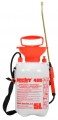 | 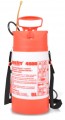 |
|---|---|---|
| HECHT 405 | HECHT 4500 | |
| Outdated Product | Outdated Product | |
| TOP sellers | ||
| Type | pump | pump |
| Design | backpack | backpack |
Specs | ||
| Volume | 5 L | 5 L |
| Max. pressure | 3 bar | 3 bar |
| Hose length | 130 cm | |
| Spray wand length | 49 cm | |
| Wand type | narrow | narrow |
| Wand material | brass | brass |
| Tip material | brass | |
General | ||
| Spray lock |  |  |
| Measuring scale | | |
| Pressure gauge | | |
| Wand holder | | |
| Weight | 1.3 kg | 1.4 kg |
| Added to E-Catalog | april 2020 | may 2018 |


Compare HECHT 405 and 4500
You may be interested in
My comparisons
Glossary
Hose length
The length of the hose supplied with the sprayer.
The longer the hose, the farther the spray tube can be reached without moving the sprayer itself. However, this is true mainly for wheeled and universal sprayers (see "Carrying type"). In shoulder-mounted units, the hose is usually selected in such a way that it is enough to comfortably hold the tube in your hand, and this parameter in such models most often does not exceed 150 cm.
It is also worth considering that long hoses can be quite bulky; however, this disadvantage is often eliminated by the use of spiral hoses, which are stretched to their full length only when necessary.
The longer the hose, the farther the spray tube can be reached without moving the sprayer itself. However, this is true mainly for wheeled and universal sprayers (see "Carrying type"). In shoulder-mounted units, the hose is usually selected in such a way that it is enough to comfortably hold the tube in your hand, and this parameter in such models most often does not exceed 150 cm.
It is also worth considering that long hoses can be quite bulky; however, this disadvantage is often eliminated by the use of spiral hoses, which are stretched to their full length only when necessary.
Spray wand length
The length of the spray tube supplied with the sprayer.
A long tube, on the one hand, allows you to reach far without leaving your seat and without using stools, ladders, etc.; on the other hand, it is not very manoeuvrable and can be inconvenient when working in tight spaces. When choosing, it is worth proceeding from the optimal compromise between these characteristics. For example, a large tube length (up to 2 m in some models) is useful when processing fruit trees, but for a greenhouse it is better to choose a shorter sprayer. It is also worth considering that some sprayers use telescopic (sliding) tubes, the length of which can be adjusted as needed; in such cases, the unfolded size of the atomizer is usually indicated.
A long tube, on the one hand, allows you to reach far without leaving your seat and without using stools, ladders, etc.; on the other hand, it is not very manoeuvrable and can be inconvenient when working in tight spaces. When choosing, it is worth proceeding from the optimal compromise between these characteristics. For example, a large tube length (up to 2 m in some models) is useful when processing fruit trees, but for a greenhouse it is better to choose a shorter sprayer. It is also worth considering that some sprayers use telescopic (sliding) tubes, the length of which can be adjusted as needed; in such cases, the unfolded size of the atomizer is usually indicated.
Tip material
The material from which the complete spray tip is made.
The most common tip material is plastic, which is used in the vast majority of atomizers. Therefore, this parameter is specified only in cases where the tip is made of another, more advanced material. One of the most popular of these options is brass — it is noticeably more expensive than plastic, but much stronger and more durable.
The most common tip material is plastic, which is used in the vast majority of atomizers. Therefore, this parameter is specified only in cases where the tip is made of another, more advanced material. One of the most popular of these options is brass — it is noticeably more expensive than plastic, but much stronger and more durable.
Spray lock
A device that allows you to fix the trigger (switch) of the sprayer in the pressed position. This is especially convenient for large volumes of work: holding the trigger manually for a long time is rather tiring, and the continuous watering lock allows you to avoid unnecessary stress on your hands.
Note that this feature can be found in all types of sprayers (see above), including lever ones — many models with this type of action are equipped with both a pumping lever and a separate trigger that must be kept pressed during operation.
Note that this feature can be found in all types of sprayers (see above), including lever ones — many models with this type of action are equipped with both a pumping lever and a separate trigger that must be kept pressed during operation.
Measuring scale
The presence of a measuring scale in the design of the sprayer.
Usually, such a scale is applied directly to the tank wall, and the tank itself is made transparent or translucent. Other design options are also possible — for example, a water metre tube with a scale built into the opaque wall of the tank. Anyway, the measuring scale allows you to determine with a fairly high accuracy how much chemicals are left in the sprayer, and without having to open the tank.
Usually, such a scale is applied directly to the tank wall, and the tank itself is made transparent or translucent. Other design options are also possible — for example, a water metre tube with a scale built into the opaque wall of the tank. Anyway, the measuring scale allows you to determine with a fairly high accuracy how much chemicals are left in the sprayer, and without having to open the tank.
Pressure gauge
Built-in pressure gauge — a device for measuring pressure in the working tank (essentially — at the outlet of the sprayer).
Such a device makes it easy to control the pressure so that it does not rise above a critical level and at the same time remains sufficient for stable operation. This feature is especially important for manual sprayers — pump and lever (see "Type"): in such models, the operator often controls the pressure manually, and it can be difficult to do this without a pressure gauge. In other types of sprayers (battery, gasoline, etc.), automation is usually provided that independently regulates pressure; however, such units can also be equipped with pressure gauges — so that the user can monitor the operating parameters himself.
Such a device makes it easy to control the pressure so that it does not rise above a critical level and at the same time remains sufficient for stable operation. This feature is especially important for manual sprayers — pump and lever (see "Type"): in such models, the operator often controls the pressure manually, and it can be difficult to do this without a pressure gauge. In other types of sprayers (battery, gasoline, etc.), automation is usually provided that independently regulates pressure; however, such units can also be equipped with pressure gauges — so that the user can monitor the operating parameters himself.
Wand holder
The presence of a tube clamp in the design of the sprayer.
Such a latch is a set of special clips, usually installed directly on the tank. It greatly simplifies the storage and transportation of the device: the handset, usually, is placed as compactly as possible and at the same time securely. Yes, and during breaks in work, this feature can come in handy — fixing the tube in the retainer is more convenient and safer than putting it on the ground, holding it in your hands, etc.
Such a latch is a set of special clips, usually installed directly on the tank. It greatly simplifies the storage and transportation of the device: the handset, usually, is placed as compactly as possible and at the same time securely. Yes, and during breaks in work, this feature can come in handy — fixing the tube in the retainer is more convenient and safer than putting it on the ground, holding it in your hands, etc.
Weight
The total weight of the sprayer. Specified without taking into account the liquid or powder in the working tank; at the same time, for battery models (see “Type”), usually, the weight is given with a complete battery, and for gasoline models, on the contrary, “dry” weight, without fuel in the tank.