
Comparison cleaning Machines
Save List
Add to comparison | 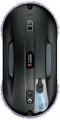 |
|---|---|
| HOBOT 388 Ultrasonic | |
from $249.00 | |
| TOP sellers | |
Detergent spray system. Smartphone control. Drop protection for 20 minutes when unplugged. | |
| Type | window robot |
| Power supply | mains |
| Controls | remote control / smartphone |
| Motor power | 90 W |
Battery | |
| Autonomy time | 20 min |
More specs | |
| Noise level | 65 dB |
| Power cord length | 5 m |
| Dimensions | 29.5x14.8x9.5 cm |
| Weight | 0.92 kg |
| Added to E-Catalog | august 2020 |


You may be interested in
My comparisons
Glossary
Type
Classic cleaning machines (not robots) in our time can be of the following types: street sweepers, sweeper-suction machines, floor scrubbers, as well as window cleaning devices (“ window vacuum cleaners ”). In addition, special cleaning robots are produced - for windows, for cleaning the pool. Here's a more detailed description of each of these options:
– Sweeper. Machines that operate on the broom principle: moving brushes sweep away debris from the floor, sidewalk or other surface, collecting it in a special container. Such units are extremely simple, most of them generally have a mechanical drive (see below). And from the simplicity of the design comes such advantages as low weight, low cost, reliability and ease of maintenance/repair. On the other hand, in terms of cleaning efficiency, such equipment is inferior to the same sweeping and suction devices. We emphasize that most models in this category are designed for large open spaces, including outdoors; for small cleaning volumes and with an abundance of hard-to-reach places, it is better to use the household version of sweepers (see below)
— Sweeping and suction. Machines that combine sweeping and suction in operation, in other words, they work simultaneously as a broom and a vacuum cleaner: debr...is and dust are collected by brushes, then, due to the flow of air, the collected material is drawn into the garbage container. This increases the cleaning efficiency compared to “pure sweeping” units, but the machines themselves are heavier and more expensive, and a mechanical drive is not applicable to them - an engine is required to operate the suction system.
– Floor scrubber. Machines for wet cleaning of non-carpeted floors (linoleum, laminate, marble, etc.). A classic scrubber dryer works as follows: water with detergent is supplied to the floor through a sprayer at the front of the unit, the moistened surface is brushed, after which the dirty water is collected by a special device (suction beam) at the rear of the device and drawn into a separate tank. Thus, a clean, quickly drying floor is immediately left behind the machine. In addition, this category also includes so-called floor polishers - devices designed to treat the floor mainly using rotating brushes. Such units may provide the ability to supply water or detergent to the brush, but there is no suction system; So floor polishers were originally intended for relatively simple cleaning, as well as rubbing and polishing non-carpet surfaces. At the same time, it is worth noting that some of these devices are very versatile; they can be equipped with various additional attachments and accessories - including discs for cleaning carpets and even a vacuum cleaner module that turns the floor polisher into a sweeper-suction machine (see above).
– For windows. Devices for manual window cleaning, reminiscent of compact vacuum cleaners. This type of washing is carried out as follows: liquid detergent is applied to the glass from a spray bottle, then the liquid along with dirt is collected from the glass using this “window vacuum cleaner”. The sprayer is often built-in, but in some models it is a separate container with a sprayer supplied in the kit.
— Robot for windows. Automatic window cleaning devices: the robot attaches to the glass and moves along it, wiping the glass in the process. Such a device greatly simplifies the cleaning process, and for residents of high-rise buildings it can be a real salvation: with the help of a robot, you can easily wipe the windows from the outside on any floor, without the risk of falling out of the window and without calling industrial climbers. True, such devices can leave dirt around the edges and corners of the frame - however, eliminating these shortcomings is easier than washing the entire glass.
— Robot for swimming pools. Specialized units for automatic cleaning of swimming pools. As a rule, they are designed for use under water and do not require emptying the pool for cleaning; Often the design provides not only the ability to clean surfaces, but also water filtration. Robots, as a rule, have programs for self-cleaning - however, in addition to this, it is often possible to force the unit to be sent to one or another part of the pool, or even completely manual control. Many advanced devices in this category are capable of moving not only along the bottom, but also along the walls, rising to the very surface and thereby providing effective cleaning of the waterline.
We emphasize that although robots of this type are usually designed for maximum safety, you cannot use the pool while cleaning. It is also worth noting that such devices are usually powered from the mains - through a power supply and a special waterproof cable. Among other things, this design allows you to pull the unit out of the water directly by the wire in an emergency (although under normal conditions this should not be done).
– Sweeper. Machines that operate on the broom principle: moving brushes sweep away debris from the floor, sidewalk or other surface, collecting it in a special container. Such units are extremely simple, most of them generally have a mechanical drive (see below). And from the simplicity of the design comes such advantages as low weight, low cost, reliability and ease of maintenance/repair. On the other hand, in terms of cleaning efficiency, such equipment is inferior to the same sweeping and suction devices. We emphasize that most models in this category are designed for large open spaces, including outdoors; for small cleaning volumes and with an abundance of hard-to-reach places, it is better to use the household version of sweepers (see below)
— Sweeping and suction. Machines that combine sweeping and suction in operation, in other words, they work simultaneously as a broom and a vacuum cleaner: debr...is and dust are collected by brushes, then, due to the flow of air, the collected material is drawn into the garbage container. This increases the cleaning efficiency compared to “pure sweeping” units, but the machines themselves are heavier and more expensive, and a mechanical drive is not applicable to them - an engine is required to operate the suction system.
– Floor scrubber. Machines for wet cleaning of non-carpeted floors (linoleum, laminate, marble, etc.). A classic scrubber dryer works as follows: water with detergent is supplied to the floor through a sprayer at the front of the unit, the moistened surface is brushed, after which the dirty water is collected by a special device (suction beam) at the rear of the device and drawn into a separate tank. Thus, a clean, quickly drying floor is immediately left behind the machine. In addition, this category also includes so-called floor polishers - devices designed to treat the floor mainly using rotating brushes. Such units may provide the ability to supply water or detergent to the brush, but there is no suction system; So floor polishers were originally intended for relatively simple cleaning, as well as rubbing and polishing non-carpet surfaces. At the same time, it is worth noting that some of these devices are very versatile; they can be equipped with various additional attachments and accessories - including discs for cleaning carpets and even a vacuum cleaner module that turns the floor polisher into a sweeper-suction machine (see above).
– For windows. Devices for manual window cleaning, reminiscent of compact vacuum cleaners. This type of washing is carried out as follows: liquid detergent is applied to the glass from a spray bottle, then the liquid along with dirt is collected from the glass using this “window vacuum cleaner”. The sprayer is often built-in, but in some models it is a separate container with a sprayer supplied in the kit.
— Robot for windows. Automatic window cleaning devices: the robot attaches to the glass and moves along it, wiping the glass in the process. Such a device greatly simplifies the cleaning process, and for residents of high-rise buildings it can be a real salvation: with the help of a robot, you can easily wipe the windows from the outside on any floor, without the risk of falling out of the window and without calling industrial climbers. True, such devices can leave dirt around the edges and corners of the frame - however, eliminating these shortcomings is easier than washing the entire glass.
— Robot for swimming pools. Specialized units for automatic cleaning of swimming pools. As a rule, they are designed for use under water and do not require emptying the pool for cleaning; Often the design provides not only the ability to clean surfaces, but also water filtration. Robots, as a rule, have programs for self-cleaning - however, in addition to this, it is often possible to force the unit to be sent to one or another part of the pool, or even completely manual control. Many advanced devices in this category are capable of moving not only along the bottom, but also along the walls, rising to the very surface and thereby providing effective cleaning of the waterline.
We emphasize that although robots of this type are usually designed for maximum safety, you cannot use the pool while cleaning. It is also worth noting that such devices are usually powered from the mains - through a power supply and a special waterproof cable. Among other things, this design allows you to pull the unit out of the water directly by the wire in an emergency (although under normal conditions this should not be done).
Power supply
— Network. Connection to a regular household outlet. The advantage of this option is its almost unlimited operating time. On the other hand, the power cord limits mobility and does not allow you to move away from sockets, and in their absence the device becomes useless. In addition, in some cases, the power cord can interfere with operation - for example, it will be clearly unnecessary for a heavy machine with a steering wheel and an operator's seat.
— Battery. Battery-powered devices are extremely mobile: they do not depend on sockets and do not have a wire that limits movement. In addition, the absence of a wire has a positive effect on the overall convenience of work - it “doesn’t fit into your hand.” On the other hand, the continuous operation time of such a device is limited by the battery charge, and the machines themselves are heavier, bulkier and more expensive than similar mains-powered models. However, in some cases, the described advantages have a decisive advantage over the disadvantages: in particular, scrubber-drying robots (see “Type”), as well as heavy professional machines with steering control (see below), are powered by a battery.
— Network/battery. Devices that can operate both from the mains and from a built-in battery. The features of these types of nutrition are described in detail above; and their combination is used quite rarely. In particular, this method of power...supply is provided in some window robots: the device uses a battery as standard, but if it is possible to run a wire, you can connect it to the network, saving battery power.
— Battery. Battery-powered devices are extremely mobile: they do not depend on sockets and do not have a wire that limits movement. In addition, the absence of a wire has a positive effect on the overall convenience of work - it “doesn’t fit into your hand.” On the other hand, the continuous operation time of such a device is limited by the battery charge, and the machines themselves are heavier, bulkier and more expensive than similar mains-powered models. However, in some cases, the described advantages have a decisive advantage over the disadvantages: in particular, scrubber-drying robots (see “Type”), as well as heavy professional machines with steering control (see below), are powered by a battery.
— Network/battery. Devices that can operate both from the mains and from a built-in battery. The features of these types of nutrition are described in detail above; and their combination is used quite rarely. In particular, this method of power...supply is provided in some window robots: the device uses a battery as standard, but if it is possible to run a wire, you can connect it to the network, saving battery power.
Controls
The control method provided for in the design of the machine.
Note that for models with simple manual control (when the user holds the handle and thus directs the machine), as well as for robots controlled exclusively from their own built-in panel, this parameter is not indicated; it is given only for units with more advanced options. For traditional harvesting machines, this may be the steering ; in turn, robots (see “Type”) can be controlled from a remote control and/or smartphone. Here's a more detailed description of these options:
- Steering. Control using a steering wheel or steering wheel. Used in heavy productive self-propelled equipment (see below), which would be difficult to deploy manually. Many of these models even have an operator seat and are essentially mini harvesting tractors of sorts. However, there are also units for which the operator must walk while working - they are somewhat less convenient to use, but are more compact, lightweight and inexpensive.
- Remote control. Control using a separate remote control supplied in the kit. More often, communication is carried out via an infrared channel - similar to remote controls for televisions, air conditioners, etc.; however, other options are possible. In general, the functionality of such control is quite limited compared to another option used in robots - control from a smartpho...ne (see below): from the remote control, as a rule, only a selection of preset operating programs, simple settings, and in some models - also direct motion control. On the other hand, such control is relatively inexpensive, and for most cases it is more than enough.
- From a smartphone. Control the robot from a smartphone or other similar gadget (for example, a tablet) with a special application installed on it; Communication is usually carried out via Bluetooth. This method turns out to be much more convenient and visual than using a remote control: in particular, the application can implement many additional functions that are not available with a traditional remote control (cartography with manual routing on a map of the room, scheduled cleaning, etc.). On the other hand, supporting such control affects the overall cost of the unit; and in the absence of a suitable control gadget, the robot becomes completely useless. Therefore, this option is rarely found in its pure form - much more often the ability to work with a smartphone is provided simultaneously with the remote control (see below for more details).
— Remote control / from a smartphone. Devices that support both control methods described above. This option is as versatile as possible: when working with basic functions, you can get by with the remote control, and for advanced settings, use an external gadget. At the same time, the remote control is initially included in the delivery package, thanks to which the unit can be used without a smartphone - for example, if a suitable smartphone is not on the household, or if you do not want to bother with installing and configuring the application.
Note that for models with simple manual control (when the user holds the handle and thus directs the machine), as well as for robots controlled exclusively from their own built-in panel, this parameter is not indicated; it is given only for units with more advanced options. For traditional harvesting machines, this may be the steering ; in turn, robots (see “Type”) can be controlled from a remote control and/or smartphone. Here's a more detailed description of these options:
- Steering. Control using a steering wheel or steering wheel. Used in heavy productive self-propelled equipment (see below), which would be difficult to deploy manually. Many of these models even have an operator seat and are essentially mini harvesting tractors of sorts. However, there are also units for which the operator must walk while working - they are somewhat less convenient to use, but are more compact, lightweight and inexpensive.
- Remote control. Control using a separate remote control supplied in the kit. More often, communication is carried out via an infrared channel - similar to remote controls for televisions, air conditioners, etc.; however, other options are possible. In general, the functionality of such control is quite limited compared to another option used in robots - control from a smartpho...ne (see below): from the remote control, as a rule, only a selection of preset operating programs, simple settings, and in some models - also direct motion control. On the other hand, such control is relatively inexpensive, and for most cases it is more than enough.
- From a smartphone. Control the robot from a smartphone or other similar gadget (for example, a tablet) with a special application installed on it; Communication is usually carried out via Bluetooth. This method turns out to be much more convenient and visual than using a remote control: in particular, the application can implement many additional functions that are not available with a traditional remote control (cartography with manual routing on a map of the room, scheduled cleaning, etc.). On the other hand, supporting such control affects the overall cost of the unit; and in the absence of a suitable control gadget, the robot becomes completely useless. Therefore, this option is rarely found in its pure form - much more often the ability to work with a smartphone is provided simultaneously with the remote control (see below for more details).
— Remote control / from a smartphone. Devices that support both control methods described above. This option is as versatile as possible: when working with basic functions, you can get by with the remote control, and for advanced settings, use an external gadget. At the same time, the remote control is initially included in the delivery package, thanks to which the unit can be used without a smartphone - for example, if a suitable smartphone is not on the household, or if you do not want to bother with installing and configuring the application.
Motor power
Rated power of the engine installed in the car.
Most often, this paragraph gives the total engine power. However, in units with a suction function - for example, scrubber dryers (see "Type") - only the power transmitted to the brushes can be indicated here. In such cases, the total power can be determined by summing the motor power and the suction power (see below). These details should be clarified separately. We also note that in self-propelled models (see above), part of the engine power is spent on moving the unit, which is why the useful power of such machines is lower than that of similar non-self-propelled equipment. In light of this, only models with the same movement format can be directly compared by this indicator - only self-propelled or only non-self-propelled.
Overall, higher motor power results in higher efficiency and productivity. However, there is no strict dependence here, and devices with similar engine characteristics can differ markedly in practical characteristics - productivity, working width, etc. So when choosing, it makes sense to pay attention first of all to these characteristics - especially since for some units (in particular, many robots) the engine power may not be supplied at all. As for specific power values, in the most modest equipment - in particular, household scrubber dryers - it does not exceed 600 W ; 600 – 1200 W can be called average, 1200 – 1800 W...is above average, and in powerful heavy units there are even more respectable values.
Most often, this paragraph gives the total engine power. However, in units with a suction function - for example, scrubber dryers (see "Type") - only the power transmitted to the brushes can be indicated here. In such cases, the total power can be determined by summing the motor power and the suction power (see below). These details should be clarified separately. We also note that in self-propelled models (see above), part of the engine power is spent on moving the unit, which is why the useful power of such machines is lower than that of similar non-self-propelled equipment. In light of this, only models with the same movement format can be directly compared by this indicator - only self-propelled or only non-self-propelled.
Overall, higher motor power results in higher efficiency and productivity. However, there is no strict dependence here, and devices with similar engine characteristics can differ markedly in practical characteristics - productivity, working width, etc. So when choosing, it makes sense to pay attention first of all to these characteristics - especially since for some units (in particular, many robots) the engine power may not be supplied at all. As for specific power values, in the most modest equipment - in particular, household scrubber dryers - it does not exceed 600 W ; 600 – 1200 W can be called average, 1200 – 1800 W...is above average, and in powerful heavy units there are even more respectable values.
Autonomy time
Operating time of a battery-powered cleaning machine on one charge of a standard battery.
This parameter itself is quite approximate: it is most often indicated for standard operating modes and simple conditions. However, the actual autonomy is usually not very different from the stated one; so, based on the stated operating time, it is quite possible to both evaluate the capabilities of different models and compare them with each other.
This parameter itself is quite approximate: it is most often indicated for standard operating modes and simple conditions. However, the actual autonomy is usually not very different from the stated one; so, based on the stated operating time, it is quite possible to both evaluate the capabilities of different models and compare them with each other.
Noise level
The noise level created by the harvesting machine during operation.
Low noise levels are important for the comfort of both the operator and others; the latter is especially true in some specific places such as hospitals or kindergartens. On the other hand, the higher the power, the louder, as a rule, the unit operates and the more difficult it is to reduce this noise to a certain level; despite the fact that in many cases high volume operation is not a particular problem. So you should specifically look for a “quiet” cleaning machine only if a low noise level is more critical for you than high cost and/or reduced power.
When assessing specific loudness values, it is worth considering that the decibel used to indicate the noise level is a non-linear quantity. Therefore, the easiest way is to evaluate specific values using comparative tables. Here's a simplified table for the range that most modern harvesting machines fit into:
55 dB - background noise in an office without special noise sources;
60 dB - loud conversation;
65 dB - city street with average traffic intensity;
70 dB - a conversation between several people in a raised voice.
75 dB – high power vacuum cleaner.
80 dB - traffic noise on a busy street.
Low noise levels are important for the comfort of both the operator and others; the latter is especially true in some specific places such as hospitals or kindergartens. On the other hand, the higher the power, the louder, as a rule, the unit operates and the more difficult it is to reduce this noise to a certain level; despite the fact that in many cases high volume operation is not a particular problem. So you should specifically look for a “quiet” cleaning machine only if a low noise level is more critical for you than high cost and/or reduced power.
When assessing specific loudness values, it is worth considering that the decibel used to indicate the noise level is a non-linear quantity. Therefore, the easiest way is to evaluate specific values using comparative tables. Here's a simplified table for the range that most modern harvesting machines fit into:
55 dB - background noise in an office without special noise sources;
60 dB - loud conversation;
65 dB - city street with average traffic intensity;
70 dB - a conversation between several people in a raised voice.
75 dB – high power vacuum cleaner.
80 dB - traffic noise on a busy street.
Power cord length
The length of the mains cord provided in the machine with the appropriate power supply (see "Power supply").
A long cord allows you to move further away from the outlet but can get tangled under your feet and create inconvenience. Therefore, manufacturers choose the length of the power cord by the specs of a particular model: for example, a window robot (see "Type") is quite enough 4 – 5 m, and in heavy scrubbing units, the length of the wire can exceed 20 m.
A long cord allows you to move further away from the outlet but can get tangled under your feet and create inconvenience. Therefore, manufacturers choose the length of the power cord by the specs of a particular model: for example, a window robot (see "Type") is quite enough 4 – 5 m, and in heavy scrubbing units, the length of the wire can exceed 20 m.
Weight
The total weight of the cleaning machine. Usually, weight is indicated with empty tanks for detergent, waste, fuel, etc. At the same time, additional equipment, such as side brushes, may or may not be taken into account. Such equipment has a very small weight compared to the machines themselves. And, when installed/removed, does not seriously affect the mass of the entire machine.