
Comparison Kraissmann EKS 3000 vs Kraissmann EKS 2400
Add to comparison |  | 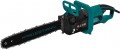 |
|---|---|---|
| Kraissmann EKS 3000 | Kraissmann EKS 2400 | |
| Outdated Product | from $71.72 up to $73.28 | |
| TOP sellers | ||
| Product type | chainsaw | chainsaw |
| Type | portable | portable |
| Power source | mains (230 V) | mains (230 V) |
Motor | ||
| Engine location | longitudinally | longitudinally |
| Power | 2400 W | 2400 W |
Cutting equipment | ||
| Bar/blade size | 400 mm | 400 mm |
| Chain pitch | 3/8 " | 3/8 " |
| Chain speed | 14 m/s | 13 m/s |
Protective functions | ||
| Soft start |  |  |
| Chain brake | | |
| Electronic motor protection | | |
| Motor brake | | |
Features | ||
| Features | keyless chain tension keyless blade replacement | keyless chain tension keyless blade replacement |
| In box | chain | chain |
General | ||
| Noise level | 103 dB | |
| Oil tank volume | 0.22 L | |
| Weight | 6.7 kg | 6 kg |
| Added to E-Catalog | september 2024 | september 2016 |


Compare Kraissmann EKS 3000 and EKS 2400
You may be interested in
Kraissmann EKS 2400 often compared


Glossary
Chain speed
The maximum speed of the chain relative to the material that a saw of the appropriate design can provide (see "Device"). Higher speed allows to achieve faster and cleaner cuts, but requires more engine power; low speed, in turn, reduces productivity, but allows you to achieve good traction with a relatively low engine power. More detailed recommendations regarding this parameter can be found in special sources.
Soft start
A function that starts the engine smoothly without a sudden jerk and gradually brings the tool up to working speed. It makes the start safer and more comfortable because the saw doesn't jerk in your hands at the moment of activation. In practice, soft start is convenient when you need to make a precise cut in mid-air, work in an awkward position, or simply better control the tool from the first seconds.
Compared to models without such a function, the load on the hands, gearbox, and power network is lower. This is especially useful for powerful circular, reciprocating, and chain saws, where a sudden start is felt most strongly.
Electronic motor protection
Electronic motor protection in a saw controls the load on the motor and helps protect it from overheating, overload, or damage. If the tool is operating in a mode that is too heavy, the system can limit power, shut off the engine, or prevent it from overheating. This is beneficial not only for user safety but also for extending the lifespan of the saw itself. For example, when cutting dense wood, wet timber, or during long continuous work, such a feature helps avoid costly breakdowns.
Motor brake
A feature that quickly stops the saw's attachment after releasing the button or trigger. Depending on the type of tool, this could be the blade, blade, or chain, which stops rotating noticeably faster than with a regular stop by inertia. Motor brake enhances safety because after finishing the cut, the working part doesn't spin for extra seconds. Compared to saws without a motor brake, the tool becomes more convenient for frequent short operations and hand position changes. In practice, this is especially useful for precise cuts, working on a workbench, and in situations where it's important to quickly put away the saw after cutting.
Noise level
The noise level produced by the saw during operation. Note that this parameter is rather approximate, because in fact, the “loudness of the work” depends not only on the tool, but also on the material being processed and the characteristics of the environment. Nevertheless, the data given in the characteristics make it possible to assess the comfort of working with the tool. The lower this indicator, the less discomfort the noise will cause, and at high values, even special hearing protection may be needed.
Note that the noise level is usually measured in decibels, and this unit is not linear: for example, a difference of 3 dB corresponds to a difference of 2 times, 10 dB — to 10 times. Therefore, it is easiest to evaluate the noise level using comparative tables. Here is a simplified version of such a table for the range in which modern saws operate:
70 dB — loud conversation of several people in close proximity;
75 dB — a cry in the immediate vicinity;
80 dB — truck engine, mechanical alarm ringing;
85 dB — loud scream;
90 dB — freight car at a distance of 7 – 10 m;
95 dB — subway car at a distance of 7 – 10 m;
100 dB — industrial shop;
110 dB — tractor engine;
120 dB — demolition hammer, thunder from a close lightning strike (pain threshold of auditory perception).
Note that the noise level is usually measured in decibels, and this unit is not linear: for example, a difference of 3 dB corresponds to a difference of 2 times, 10 dB — to 10 times. Therefore, it is easiest to evaluate the noise level using comparative tables. Here is a simplified version of such a table for the range in which modern saws operate:
70 dB — loud conversation of several people in close proximity;
75 dB — a cry in the immediate vicinity;
80 dB — truck engine, mechanical alarm ringing;
85 dB — loud scream;
90 dB — freight car at a distance of 7 – 10 m;
95 dB — subway car at a distance of 7 – 10 m;
100 dB — industrial shop;
110 dB — tractor engine;
120 dB — demolition hammer, thunder from a close lightning strike (pain threshold of auditory perception).
Oil tank volume
The volume of the oil tank provided in the tool.
In this case, we mean a tank from which oil is supplied to the saw chain (see "Device") to lubricate it during operation. In general, this is a reference parameter that allows you to estimate how much oil is needed for one refueling of the tool.
In this case, we mean a tank from which oil is supplied to the saw chain (see "Device") to lubricate it during operation. In general, this is a reference parameter that allows you to estimate how much oil is needed for one refueling of the tool.
Weight
The total weight of the tool. For petrol models (see "Power Source"), usually, dry weight is indicated, excluding fuel.
In general, it makes sense to pay attention to this parameter primarily when choosing a hand tool. At the same time, note that higher power, a more capacious battery or a capacious tank will inevitably affect weight. However, tools with similar characteristics can and do differ markedly in weight. And here it is worth considering that a lighter model will be more comfortable to work with, but weight reduction may affect reliability and/or cost. In addition, a more massive tool is more stable, it is not so prone to jerks under uneven loads. If we talk about specific numbers, then a weight of 3 kg or less is considered very light, 3–5 kg is relatively small, 5–7 kg is medium, 7–10 kg is significant, and some powerful tools (mainly gasoline) weigh and over 10 kg.
As for stationary saws, weight is of secondary importance for them — it mainly affects the ease of transportation.
In general, it makes sense to pay attention to this parameter primarily when choosing a hand tool. At the same time, note that higher power, a more capacious battery or a capacious tank will inevitably affect weight. However, tools with similar characteristics can and do differ markedly in weight. And here it is worth considering that a lighter model will be more comfortable to work with, but weight reduction may affect reliability and/or cost. In addition, a more massive tool is more stable, it is not so prone to jerks under uneven loads. If we talk about specific numbers, then a weight of 3 kg or less is considered very light, 3–5 kg is relatively small, 5–7 kg is medium, 7–10 kg is significant, and some powerful tools (mainly gasoline) weigh and over 10 kg.
As for stationary saws, weight is of secondary importance for them — it mainly affects the ease of transportation.