
Comparison Thule Motion XL vs Thule Dynamic M
Add to comparison | 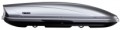 | 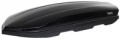 |
|---|---|---|
| Thule Motion XL | Thule Dynamic M | |
from $679.96 up to $745.56 | from $844.76 | |
| User reviews | ||
| TOP sellers | ||
| Type | box | box |
| Installation | crossbars | crossbars |
Specs | ||
| Load capacity | 75 kg | 75 kg |
| Internal capacity | 460 L | 320 L |
| Opening | double-sided | double-sided |
| Skis number | 7 | 7 |
| Lock |  | |
| Material | plastic | plastic |
| External dimensions (LxWxH) | 205x84x45 cm | 206x84x34 cm |
| Weight | 19 kg | 18 kg |
| Color | ||
| Added to E-Catalog | june 2014 | june 2014 |


Compare Thule Motion XL and Dynamic M
You may be interested in
Thule Motion XL often compared


Thule Dynamic M often compared


Glossary
Internal capacity
The internal volume of the closed boot — boxing (see "Type").
Along with the load capacity (see above), this parameter determines the amount of cargo that can be placed in the boot. At the same time, we note that more load-bearing models generally have a more extensive interior space; however, products of a similar "weight category" may differ markedly in this indicator. And here it is worth proceeding from the fact that with the same allowable weight, a more voluminous boot is better suited for light and/or bulky goods, but it will have more weight, dimensions and price, and also (with a high probability) create additional resistance during movement, especially at high speed.
As for specific values, most modern boxes have a capacity in the range of 400 – 500 liters. A volume of 300 – 400 liters or less is considered relatively small, more than 500 liters — large.
Along with the load capacity (see above), this parameter determines the amount of cargo that can be placed in the boot. At the same time, we note that more load-bearing models generally have a more extensive interior space; however, products of a similar "weight category" may differ markedly in this indicator. And here it is worth proceeding from the fact that with the same allowable weight, a more voluminous boot is better suited for light and/or bulky goods, but it will have more weight, dimensions and price, and also (with a high probability) create additional resistance during movement, especially at high speed.
As for specific values, most modern boxes have a capacity in the range of 400 – 500 liters. A volume of 300 – 400 liters or less is considered relatively small, more than 500 liters — large.
External dimensions (LxWxH)
Boot dimensions in working position; usually indicated for open models and boxes (see "Type"). The capacity of the product directly depends on this parameter, in particular, its suitability for transporting large items. And in the case of boxes, dimensions also affect aerodynamics: increasing the height or width increases drag and fuel consumption. At the same time, it should be noted that the aerodynamics of the container also largely depends on its shape.
For open boots, the height is most often not indicated — after all, its actual value usually depends not on the dimensions of the structure, but on the size of the cargo being transported.
For open boots, the height is most often not indicated — after all, its actual value usually depends not on the dimensions of the structure, but on the size of the cargo being transported.
Weight
Net weight of the boot in working (fully assembled) form.
The light weight contributes to fuel economy (especially during long-term use) and also makes it easier to transport the boot outside the car (for example, from storage to the car and back). On the other hand, lightening the product leads either to a decrease in its strength and load capacity, or to an increase in cost. So in certain situations, a relatively heavy boot may be the best choice; and when choosing a light model, you should pay special attention to the claimed load capacity.
The light weight contributes to fuel economy (especially during long-term use) and also makes it easier to transport the boot outside the car (for example, from storage to the car and back). On the other hand, lightening the product leads either to a decrease in its strength and load capacity, or to an increase in cost. So in certain situations, a relatively heavy boot may be the best choice; and when choosing a light model, you should pay special attention to the claimed load capacity.