
Comparison LG S95TR vs LG SG10TY
Add to comparison | 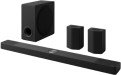 |  |
|---|---|---|
| LG S95TR | LG SG10TY | |
| Compare prices 7 | from $799.99 | |
| TOP sellers | ||
Improved sound with LG TV AI processor. LG AI Sound Pro's intelligent soundbar algorithm analyzes your content to deliver optimal sound. | ||
| Audio format | 9.1.5 | 3.1 |
| Mount type | shelf / wall | shelf / wall |
| Rear acoustics |  |  |
| Virtual surround sound | | |
| Ultra HD (4K) | | |
Tech specs | ||
| Rated power | 810 W | 420 W |
Subwoofer | ||
| Wireless subwoofer | | |
| Acoustic design | bass-reflex type | bass-reflex type |
| Subwoofer dimensions (WxHxD) | 201.7x407x403 mm | 180x393x290 mm |
| Subwoofer weight | 10 kg | 5.8 kg |
Interfaces | ||
| Interfaces | AirPlay 2 Google Cast (Chromecast) Wi-Fi Bluetooth | AirPlay 2 Google Cast (Chromecast) Wi-Fi Bluetooth |
| Streaming services | Spotify TIDAL | Spotify TIDAL |
| Audio decoders | DTS HD DTS X Dolby Digital Dolby Digital Plus Dolby TrueHD Dolby Atmos IMAX Enhanced | DTS DTS HD DTS X Dolby Digital Dolby Atmos |
Connectors | ||
| Inputs | USB-A optical | USB-A optical |
| HDMI input | 1 pc | 1 pc |
| HDMI output | 1 pc | 1 pc |
Speakers | ||
| Number of speakers | 10 шт | |
General | ||
| Control | remote control TV remote control from smartphone Google Assistant / Amazon Alexa | remote control TV remote control from smartphone Google Assistant / Amazon Alexa |
| Power consumption | 138 W | 83 W |
| Dimensions (WxHxD) | 1250x63x135 mm | 1146x150x32 mm |
| Projector weight | 5.65 kg | 3.9 kg |
| Color | ||
| Added to E-Catalog | october 2024 | october 2024 |




Compare LG S95TR and SG10TY
You may be interested in
My comparisons
LG S95TR often compared


LG SG10TY often compared


Glossary
Audio format
The audio format produced by a sound projector is actually the largest number of individual audio channels supported by the device. Note that in this case we are talking about the number of real channels, that is, channels for each of which at least one speaker is allocated; Models that support virtual surround sound can give the listener the impression of more channels than there actually are (see below for more details).
The sound format is indicated by two or three numbers separated by a dot. The first indicates the number of main channels, the second - the number of subwoofers, the third - the number of additional vertical radiators. For example, 2.1 format corresponds to stereo sound (2.0) supplemented by a subwoofer. And the conditional 3.1.2 format includes left, right and center channels, a subwoofer, left and right vertical speakers.
Sound projectors that support a more advanced sound format than 3.1 are designated in our catalog as multi-channel. The classic multichannel audio format is 5.1, but there are other options. In any case, a large number of real channels contributes to the fidelity of the reproduced sound and simplifies setup compared to virtual surround sound systems, but is also more expensive.
The most common sound formats are: 2.0, 2.1..., 3.0, 3.1, 4.1, 5.1, 5.1.2, 7.1.
The sound format is indicated by two or three numbers separated by a dot. The first indicates the number of main channels, the second - the number of subwoofers, the third - the number of additional vertical radiators. For example, 2.1 format corresponds to stereo sound (2.0) supplemented by a subwoofer. And the conditional 3.1.2 format includes left, right and center channels, a subwoofer, left and right vertical speakers.
Sound projectors that support a more advanced sound format than 3.1 are designated in our catalog as multi-channel. The classic multichannel audio format is 5.1, but there are other options. In any case, a large number of real channels contributes to the fidelity of the reproduced sound and simplifies setup compared to virtual surround sound systems, but is also more expensive.
The most common sound formats are: 2.0, 2.1..., 3.0, 3.1, 4.1, 5.1, 5.1.2, 7.1.
Rear acoustics
The rear speakers provide a more realistic and spacious soundbar sound, allowing you to immerse yourself in the atmosphere of what is happening. Such sound system, often consisting of a pair of speakers, are installed behind the intended seating area of the listeners, complementing the sound of the main source.
Virtual surround sound
The projector supports the virtual surround function.
The purpose of this feature is that due to special sound settings and the reflection of sound beams from the walls of the room, the listener hears more channels than are actually available in the projector (see "Audio Format"). For example, a 3.1 system with virtual surround sound can produce sound similar to 5.1 surround sound. This allows you to achieve the effect of "immersion" in sound without increasing the number of channels and the cost of the projector. On the other hand, the reliability of such sound is usually noticeably worse than that of real surround sound, and the overall quality is highly dependent on the characteristics of a particular room.
Note that the virtual surround function is specified for 2.0, 2.1, 3.0, 3.1 format systems. In more advanced multi-channel systems, there are a priori additional channels for reproducing surround sound.
The purpose of this feature is that due to special sound settings and the reflection of sound beams from the walls of the room, the listener hears more channels than are actually available in the projector (see "Audio Format"). For example, a 3.1 system with virtual surround sound can produce sound similar to 5.1 surround sound. This allows you to achieve the effect of "immersion" in sound without increasing the number of channels and the cost of the projector. On the other hand, the reliability of such sound is usually noticeably worse than that of real surround sound, and the overall quality is highly dependent on the characteristics of a particular room.
Note that the virtual surround function is specified for 2.0, 2.1, 3.0, 3.1 format systems. In more advanced multi-channel systems, there are a priori additional channels for reproducing surround sound.
Rated power
The total power rating of the sound projector speakers (including subwoofer, if present).
This parameter is often used to estimate the overall sound volume of the device, but this is not entirely true. The fact is that the actual sound volume is determined mainly by the power of the main speakers of the sound projector, and the total power is the sum of this power and the power of the subwoofer. Therefore, models with the same power rating can vary markedly in actual volume: for example, a 150-watt soundbar with a 50-watt subwoofer will be louder than a 100-watt projector with a subwoofer of the same power, although in both cases the rated power will be equal to 200 watts.
Summing up, we can say that it is possible to evaluate the volume by rated power only if the sound projector is not equipped with a subwoofer — in such models, the rated power is equal to the power of the main speakers. In other cases, it is worth focus on the power of the soundbar and the power of the subwoofer directly stated in the characteristics (see below for both).
This parameter is often used to estimate the overall sound volume of the device, but this is not entirely true. The fact is that the actual sound volume is determined mainly by the power of the main speakers of the sound projector, and the total power is the sum of this power and the power of the subwoofer. Therefore, models with the same power rating can vary markedly in actual volume: for example, a 150-watt soundbar with a 50-watt subwoofer will be louder than a 100-watt projector with a subwoofer of the same power, although in both cases the rated power will be equal to 200 watts.
Summing up, we can say that it is possible to evaluate the volume by rated power only if the sound projector is not equipped with a subwoofer — in such models, the rated power is equal to the power of the main speakers. In other cases, it is worth focus on the power of the soundbar and the power of the subwoofer directly stated in the characteristics (see below for both).
Audio decoders
A decoder can be broadly described as a standard in which digital audio (often multi-channel) is recorded. For normal playback of such sound, it is necessary that the corresponding decoder is supported by the device. The first signs of multi-channel decoding were Dolby Digital and DTS, gradually improving and introducing new features. The final stage for 2020 is Dolby Atmos and DTS X decoders.
Dolby Atmos. A decoder that does not use a rigid distribution of sound across channels, but the processing of audio objects, due to which it can be used with almost any number of channels on a reproducing system - the sound will be divided between channels so that each audio object is heard as close as possible to its proper place. When using Dolby Atmos, in-ceiling speakers (or speakers facing the ceiling) are highly desirable. However, in extreme cases, you can do without them.
— DTS X. An analogue of the Dolby Atmos described above, when the sound is distributed not through individual channels, but through audio objects. The digital signal contains information about where (according to the director's intention) the object audible to the user should be and how it should move, and the processor of the reproducing device processes this information and determines exactly how the sound should be distributed over the available channels in order to achieve the required localization. Thanks to this, D...TS X is not tied to a specific number of audio channels - there can be as many as you like, the system will automatically divide the sound into them, achieving the desired sound. Also note that this decoder allows you to separately adjust the volume of dialogues. A separate variant of DTS X is the DTS Virtual:X decoder for providing surround sound without the use of additional upward speakers on the soundbar. You can rely on just two channels and a separate subwoofer to achieve the desired DTS Virtual:X effect. A separate variation of DTS X is the DTS Virtual:X decoder to provide surround sound without the need for additional upward-firing speakers on the soundbar. DTS Virtual:X can rely on just two channels and a separate subwoofer to achieve the desired effect.
— IMAX Enhanced. The IMAX Enhanced Mark of Conformity is awarded to equipment that meets the audio certification requirements of IMAX Corporation. Combined with DTS audio technology to deliver signature IMAX theater-like sound in the home. The most accurate reproduction of such audio is possible in systems with a large number of channels (5.1 or more). Note that for a fully immersive experience, IMAX Enhanced certification must also apply to video equipment for playing content (TV, projector, etc.).
Dolby Atmos. A decoder that does not use a rigid distribution of sound across channels, but the processing of audio objects, due to which it can be used with almost any number of channels on a reproducing system - the sound will be divided between channels so that each audio object is heard as close as possible to its proper place. When using Dolby Atmos, in-ceiling speakers (or speakers facing the ceiling) are highly desirable. However, in extreme cases, you can do without them.
— DTS X. An analogue of the Dolby Atmos described above, when the sound is distributed not through individual channels, but through audio objects. The digital signal contains information about where (according to the director's intention) the object audible to the user should be and how it should move, and the processor of the reproducing device processes this information and determines exactly how the sound should be distributed over the available channels in order to achieve the required localization. Thanks to this, D...TS X is not tied to a specific number of audio channels - there can be as many as you like, the system will automatically divide the sound into them, achieving the desired sound. Also note that this decoder allows you to separately adjust the volume of dialogues. A separate variant of DTS X is the DTS Virtual:X decoder for providing surround sound without the use of additional upward speakers on the soundbar. You can rely on just two channels and a separate subwoofer to achieve the desired DTS Virtual:X effect. A separate variation of DTS X is the DTS Virtual:X decoder to provide surround sound without the need for additional upward-firing speakers on the soundbar. DTS Virtual:X can rely on just two channels and a separate subwoofer to achieve the desired effect.
— IMAX Enhanced. The IMAX Enhanced Mark of Conformity is awarded to equipment that meets the audio certification requirements of IMAX Corporation. Combined with DTS audio technology to deliver signature IMAX theater-like sound in the home. The most accurate reproduction of such audio is possible in systems with a large number of channels (5.1 or more). Note that for a fully immersive experience, IMAX Enhanced certification must also apply to video equipment for playing content (TV, projector, etc.).
Number of speakers
The total number of speakers installed in the sound projector housing (external subwoofer is not taken into account in this calculation).
Given the same audio format (see above), more speakers typically provide greater fidelity and more precise localization of individual sound sources. This is especially true for models with virtual surround sound.
Given the same audio format (see above), more speakers typically provide greater fidelity and more precise localization of individual sound sources. This is especially true for models with virtual surround sound.
Power consumption
The total power consumption of the entire system, both the sound projector itself and the external subwoofer (if present). Usually this indicator is indicated by the average power consumption at maximum volume. Note that on individual signal jumps, the actual power consumption may exceed the claimed one; in some cases (for example, when connected through a voltage stabilizer), this must be taken into account.