
Comparison Hisense HS214 vs LG SJ2
Add to comparison | 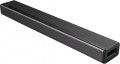 | 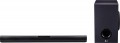 |
|---|---|---|
| Hisense HS214 | LG SJ2 | |
| Compare prices 1 | from $154.70 | |
| User reviews | ||
| TOP sellers | ||
Has an IR signal repeater | ||
| Audio format | 2.1 | 2.1 |
| Mount type | shelf / wall | shelf / wall |
Tech specs | ||
| Rated power | 108 W | 160 W |
| Soundbar speaker power | 54 W | 60 W |
| Frequency range | 40 – 20000 Hz | |
| Impedance | 8 Ohm | |
Subwoofer | ||
| Built-in subwoofer |  |  |
| Wireless subwoofer | | |
| Subwoofer power | 54 W | 100 W |
| Subwoofer dimensions (WxHxD) | 170x300x204 mm | |
Interfaces | ||
| Interfaces | Bluetooth | Bluetooth |
| Audio decoders | Dolby Digital | Dolby Digital |
Connectors | ||
| Inputs | USB-A mini-Jack (3.5 mm) optical coaxial S/PDIF iR control input | USB-A mini-Jack (3.5 mm) optical |
| Outputs | iR control output | |
| HDMI output | 1 pc | |
Speakers | ||
| Number of speakers | 2 шт | 2 шт |
| Full range speaker size | 45 mm | |
General | ||
| Control | remote control TV remote control | remote control TV remote control |
| Power consumption | 20 W | |
| Dimensions (WxHxD) | 650x58x95 mm | 660x55x99 mm |
| Projector weight | 2.17 kg | |
| Color | ||
| Added to E-Catalog | february 2022 | july 2017 |



Compare Hisense HS214 and LG SJ2
Price comparison
You may be interested in
My comparisons
Hisense HS214 often compared


LG SJ2 often compared


Glossary
Rated power
The total power rating of the sound projector speakers (including subwoofer, if present).
This parameter is often used to estimate the overall sound volume of the device, but this is not entirely true. The fact is that the actual sound volume is determined mainly by the power of the main speakers of the sound projector, and the total power is the sum of this power and the power of the subwoofer. Therefore, models with the same power rating can vary markedly in actual volume: for example, a 150-watt soundbar with a 50-watt subwoofer will be louder than a 100-watt projector with a subwoofer of the same power, although in both cases the rated power will be equal to 200 watts.
Summing up, we can say that it is possible to evaluate the volume by rated power only if the sound projector is not equipped with a subwoofer — in such models, the rated power is equal to the power of the main speakers. In other cases, it is worth focus on the power of the soundbar and the power of the subwoofer directly stated in the characteristics (see below for both).
This parameter is often used to estimate the overall sound volume of the device, but this is not entirely true. The fact is that the actual sound volume is determined mainly by the power of the main speakers of the sound projector, and the total power is the sum of this power and the power of the subwoofer. Therefore, models with the same power rating can vary markedly in actual volume: for example, a 150-watt soundbar with a 50-watt subwoofer will be louder than a 100-watt projector with a subwoofer of the same power, although in both cases the rated power will be equal to 200 watts.
Summing up, we can say that it is possible to evaluate the volume by rated power only if the sound projector is not equipped with a subwoofer — in such models, the rated power is equal to the power of the main speakers. In other cases, it is worth focus on the power of the soundbar and the power of the subwoofer directly stated in the characteristics (see below for both).
Soundbar speaker power
The nominal power of the speakers installed directly in the soundbar, excluding the subwoofer (in models with a built-in subwoofer, respectively, only the power of the main speakers is taken into account).
This indicator directly determines the overall volume of the sound projector; It is worth choosing according to this parameter taking into account the specifics of the room in which the projector is planned to be installed: the larger the room and the greater the distance to the viewer, the higher the power should be, otherwise the soundbar will not be able to effectively sound the scene. Detailed recommendations on the optimal power for different situations can be found in special sources.
This indicator directly determines the overall volume of the sound projector; It is worth choosing according to this parameter taking into account the specifics of the room in which the projector is planned to be installed: the larger the room and the greater the distance to the viewer, the higher the power should be, otherwise the soundbar will not be able to effectively sound the scene. Detailed recommendations on the optimal power for different situations can be found in special sources.
Frequency range
The audio frequency range supported by the projector's speakers.
When evaluating this parameter, it is worth remembering that the audibility range of the human ear is about 16 – 22,000 Hz (and narrows with age). If the projector's frequency range is narrower, this can result in "cutting" low or high frequencies (however, with a slight narrowing, this effect is almost imperceptible). There are models in which the frequency limit is much wider — however, this is a kind of "side effect" of high-quality acoustics and has no meaning other than advertising.
Also note that a wide frequency range in itself does not guarantee high-quality sound — a lot depends on other parameters of the projector.
When evaluating this parameter, it is worth remembering that the audibility range of the human ear is about 16 – 22,000 Hz (and narrows with age). If the projector's frequency range is narrower, this can result in "cutting" low or high frequencies (however, with a slight narrowing, this effect is almost imperceptible). There are models in which the frequency limit is much wider — however, this is a kind of "side effect" of high-quality acoustics and has no meaning other than advertising.
Also note that a wide frequency range in itself does not guarantee high-quality sound — a lot depends on other parameters of the projector.
Impedance
Impedance is the projector's resistance to alternating current, or more precisely, to the analog audio signal input from an external power amplifier. Actually, this parameter is of practical importance precisely if the device is planned to be used with an external amplifier. Ideally, the projector's impedance should match the impedance for which the amplifier is designed - otherwise, the volume may either decrease (if the impedance is too high), or distortion, overload, and even damage to the acoustics (if the impedance is too low) may occur.
Higher impedance is also thought to reduce the likelihood of interference. However, modern speakers (including sound projectors) have standard impedance values of 4, 6 or 8 ohms - the difference is not so great that the differences in sound quality are noticeable.
Higher impedance is also thought to reduce the likelihood of interference. However, modern speakers (including sound projectors) have standard impedance values of 4, 6 or 8 ohms - the difference is not so great that the differences in sound quality are noticeable.
Built-in subwoofer
The presence of a built-in subwoofer in the design of the sound projector.
Any subwoofer enhances the bass response, delivering rich bass. Models with a built-in subwoofer are more convenient to install and take up less space, because. no need to look for a separate place for the woofer. On the other hand, the dimensions of this speaker are usually smaller than those of a separate subwoofer (this is due to the limited space in the projector cabinet) — accordingly, the bass is less powerful and richer.
Any subwoofer enhances the bass response, delivering rich bass. Models with a built-in subwoofer are more convenient to install and take up less space, because. no need to look for a separate place for the woofer. On the other hand, the dimensions of this speaker are usually smaller than those of a separate subwoofer (this is due to the limited space in the projector cabinet) — accordingly, the bass is less powerful and richer.
Wireless subwoofer
The presence of a wireless subwoofer in the design of the sound projector.
Any subwoofer enhances the bass response, delivering rich bass. The advantage of a wireless subwoofer is the ability to install it almost anywhere in the room without the hassle of laying wires — this makes it easier to adjust the sound to specific conditions. In addition, such subwoofers can have a fairly solid speaker size — 200 mm or more (see below for more details). However note that wireless acoustics require their own power source and significantly affect the cost of the projector.
Any subwoofer enhances the bass response, delivering rich bass. The advantage of a wireless subwoofer is the ability to install it almost anywhere in the room without the hassle of laying wires — this makes it easier to adjust the sound to specific conditions. In addition, such subwoofers can have a fairly solid speaker size — 200 mm or more (see below for more details). However note that wireless acoustics require their own power source and significantly affect the cost of the projector.
Subwoofer power
The rated power of the subwoofer included in the design or delivery of the sound projector.
The higher the power, the louder the sub can sound, the richer the bass it can provide. On the other hand, an increase in power inevitably promises an increase in the size and cost of the speaker. Therefore, an overly powerful subwoofer is just as undesirable as one that is too weak. Detailed recommendations for selecting power for the size and acoustic characteristics of a particular room can be found in special sources.
Note that the external subwoofer in soundbars should be approximately twice as powerful as the soundbar in order to prevent sound sags at maximum volume. So, if the total output power of the speaker system is 300 watts, then 100 of them should come from the soundbar alone, and 200 should go directly to the subwoofer.
The higher the power, the louder the sub can sound, the richer the bass it can provide. On the other hand, an increase in power inevitably promises an increase in the size and cost of the speaker. Therefore, an overly powerful subwoofer is just as undesirable as one that is too weak. Detailed recommendations for selecting power for the size and acoustic characteristics of a particular room can be found in special sources.
Note that the external subwoofer in soundbars should be approximately twice as powerful as the soundbar in order to prevent sound sags at maximum volume. So, if the total output power of the speaker system is 300 watts, then 100 of them should come from the soundbar alone, and 200 should go directly to the subwoofer.
Inputs
— USB-A. This refers to a USB port that allows you to connect external drives (flash drives, hard drives) to the projector and play content directly from them. Models with video outputs (see below) can often function as a media center, outputting video signals to a TV or another external screen.
— USB-C. Used in soundbars for transmitting digital audio with minimal quality loss, replacing traditional AUX and optical ports. Unlike analog connections, USB-C transmits sound without distortion and can support high-resolution audio streams, including Hi-Res formats. It also allows for simultaneous audio and power transmission, simplifying the connection to devices. However, this port is mainly relevant for portable devices, and its primary purpose is to connect a soundbar to a laptop.
— mini-Jack (3.5 mm). The 3.5 mm jack can be used in various interfaces; in this case, it refers to a line audio input with a mini-Jack socket. This input is mainly used to connect portable audio equipment (players, smartphones) to a sound projector.
— RCA. Technically, RCA (commonly called "tulip") is a type of connector that can be used in different interfaces. However, the term "RCA input" usually refers to line inputs for connecting an analog stereo signal. Note that this input consists of two RCA cable sockets, as one cable ca...n only transmit one audio channel.
— Optical. Connector for connecting a digital audio signal via a TOSLINK fiber optic cable. This interface allows for multi-channel sound transmission and is practically immune to electrical interference; its drawback is the fragility of the cable.
— Coaxial S/P-DIF. Connector for connecting a digital audio signal via an electrical cable with an RCA connector (not to be confused with the line RCA described above). Similar to the optical input described above, including the ability to transmit multi-channel sound through a single connector. At the same time, the coaxial cable is less delicate but more sensitive to electrical interference (therefore, a specially shielded cable is preferable for such a connection).
— Composite. This refers to not a full-size composite interface of three connectors, allowing audio and video signal transmission, but only one connector for working with video. Since sound projectors do not reproduce images, the composite input is used to transmit a video signal through the projector to another device, such as a TV. The composite video interface does not support HD and lacks high quality; on the other hand, it is widely used and can work even with outdated video equipment. This input usually uses a yellow RCA ("tulip") connector.
— Component. An input designed to receive an analog video signal for further transmission to another device—TV, video projector, etc. This connection usually uses three RCA connectors, each transmitting its component of the video signal (hence the name). Thanks to this, the component interface offers good bandwidth and picture quality, supports HD, and is considered the most advanced modern standard for analog video.
— IR Control Input. A connector for connecting an external infrared remote control receiver. When correctly positioned, this receiver allows the use of a remote control even from locations where the signal from the remote cannot reach the main (built-in) sensor—such as another room. Note that the receiver can be a specialized device or another component of the audio system—such as an amplifier with an IR control output.
— USB-C. Used in soundbars for transmitting digital audio with minimal quality loss, replacing traditional AUX and optical ports. Unlike analog connections, USB-C transmits sound without distortion and can support high-resolution audio streams, including Hi-Res formats. It also allows for simultaneous audio and power transmission, simplifying the connection to devices. However, this port is mainly relevant for portable devices, and its primary purpose is to connect a soundbar to a laptop.
— mini-Jack (3.5 mm). The 3.5 mm jack can be used in various interfaces; in this case, it refers to a line audio input with a mini-Jack socket. This input is mainly used to connect portable audio equipment (players, smartphones) to a sound projector.
— RCA. Technically, RCA (commonly called "tulip") is a type of connector that can be used in different interfaces. However, the term "RCA input" usually refers to line inputs for connecting an analog stereo signal. Note that this input consists of two RCA cable sockets, as one cable ca...n only transmit one audio channel.
— Optical. Connector for connecting a digital audio signal via a TOSLINK fiber optic cable. This interface allows for multi-channel sound transmission and is practically immune to electrical interference; its drawback is the fragility of the cable.
— Coaxial S/P-DIF. Connector for connecting a digital audio signal via an electrical cable with an RCA connector (not to be confused with the line RCA described above). Similar to the optical input described above, including the ability to transmit multi-channel sound through a single connector. At the same time, the coaxial cable is less delicate but more sensitive to electrical interference (therefore, a specially shielded cable is preferable for such a connection).
— Composite. This refers to not a full-size composite interface of three connectors, allowing audio and video signal transmission, but only one connector for working with video. Since sound projectors do not reproduce images, the composite input is used to transmit a video signal through the projector to another device, such as a TV. The composite video interface does not support HD and lacks high quality; on the other hand, it is widely used and can work even with outdated video equipment. This input usually uses a yellow RCA ("tulip") connector.
— Component. An input designed to receive an analog video signal for further transmission to another device—TV, video projector, etc. This connection usually uses three RCA connectors, each transmitting its component of the video signal (hence the name). Thanks to this, the component interface offers good bandwidth and picture quality, supports HD, and is considered the most advanced modern standard for analog video.
— IR Control Input. A connector for connecting an external infrared remote control receiver. When correctly positioned, this receiver allows the use of a remote control even from locations where the signal from the remote cannot reach the main (built-in) sensor—such as another room. Note that the receiver can be a specialized device or another component of the audio system—such as an amplifier with an IR control output.
Outputs
— To the subwoofer. Dedicated output for connecting an external subwoofer. This is usually a line output that only feeds bass — this eliminates the need for external frequency filters. Such a connector is designed to connect an active subwoofer — a passive one will need its own amplifier. Note that this output can be provided in models equipped with their own subwoofer (see above) — in case the capabilities of this subwoofer are not enough.
— RCA. Despite the fact that RCA connectors are used in various interfaces, the term "RCA output" is usually used only for line output with such connectors. This output is used to send an analogue audio signal to an external device; it usually uses the stereo format and consists of two RCA jacks (one for each channel). In sound projectors, the line output can be useful, for example, for connecting additional acoustics.
— Composite. In this case, we do not mean a full-format composite interface of three connectors that allows you to transmit audio and video signals, but only one connector for working with video. This output is used to connect a sound projector to a TV and work as a media centre. The composite video interface does not allow working with HD and is not of high quality; on the other hand, it is widespread and can even be used to work with frankly outdated video equipment (for example, kinescope TVs). Typically this input uses a yellow RCA plug.
— Component. An outpu...t used to send an analogue video signal to an external display. It uses three cables (usually with RCA plugs), each of which carries a different video signal component (hence the name). Due to this, the component interface has good bandwidth and picture quality, it allows you to work with HD and is considered the most advanced modern analogue video standard.
— IR control output. An output that allows the sound projector to be used as an external IR receiver for other devices (such as an amplifier or audio receiver). Through this output, the sound projector can transmit received commands from the control panel to the connected equipment. This allows you to install an external device anywhere, even outside the range of the remote control. In addition, this feature is especially useful for some shelf models (see "Installation type"), which, when installed, may cover the IR receiver of the TV. However note that equipment from different manufacturers may be incompatible in terms of control connectors.
— RCA. Despite the fact that RCA connectors are used in various interfaces, the term "RCA output" is usually used only for line output with such connectors. This output is used to send an analogue audio signal to an external device; it usually uses the stereo format and consists of two RCA jacks (one for each channel). In sound projectors, the line output can be useful, for example, for connecting additional acoustics.
— Composite. In this case, we do not mean a full-format composite interface of three connectors that allows you to transmit audio and video signals, but only one connector for working with video. This output is used to connect a sound projector to a TV and work as a media centre. The composite video interface does not allow working with HD and is not of high quality; on the other hand, it is widespread and can even be used to work with frankly outdated video equipment (for example, kinescope TVs). Typically this input uses a yellow RCA plug.
— Component. An outpu...t used to send an analogue video signal to an external display. It uses three cables (usually with RCA plugs), each of which carries a different video signal component (hence the name). Due to this, the component interface has good bandwidth and picture quality, it allows you to work with HD and is considered the most advanced modern analogue video standard.
— IR control output. An output that allows the sound projector to be used as an external IR receiver for other devices (such as an amplifier or audio receiver). Through this output, the sound projector can transmit received commands from the control panel to the connected equipment. This allows you to install an external device anywhere, even outside the range of the remote control. In addition, this feature is especially useful for some shelf models (see "Installation type"), which, when installed, may cover the IR receiver of the TV. However note that equipment from different manufacturers may be incompatible in terms of control connectors.