
Comparison Pro Intellect NC 1300 vs DoCash Cube
Add to comparison | 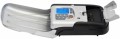 | 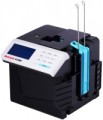 |
|---|---|---|
| Pro Intellect NC 1300 | DoCash Cube | |
| Outdated Product | Outdated Product | |
| TOP sellers | ||
| Product Type | auto | auto |
| Portable |  |  |
Specs | ||
| Authenticity Check | ultraviolet (UV) infrared (IR) by size by magnetic marks optical density ink spectral analysis | ultraviolet (UV) infrared (IR) by size by magnetic marks optical density ink spectral analysis |
| Autofeed | 250 bills/min | 250 bills/min |
| More Features | Display Sound indication | Display Sound indication |
General | ||
| Power source | mains powered built-in battery | mains powered built-in battery |
| Power consumption | 20 W | |
| PC connection | | |
| Dimensions | 240x138x67 mm | 170x157x152 mm |
| Weight | 1.25 kg | 1.6 kg |
| Added to E-Catalog | september 2017 | august 2015 |


Compare Pro Intellect NC 1300 and DoCash Cube
You may be interested in
My comparisons
Pro Intellect NC 1300 often compared


DoCash Cube often compared

Glossary
Portable
Portable detectors include detectors that can be powered by built-in or rechargeable batteries (see below); this allows them to be used regardless of whether there is a power outlet nearby. But the shape and size of such devices can be different; in fact, this means that not all such models are convenient for constant carrying.
Power consumption
The total power consumed by the counterfeit detector during operation. In most cases, this parameter is purely reference. Even the most powerful modern counterfeit detectors consume about 50 – 60 W — this is not enough to overload the network or significantly increase power consumption. However, there are situations where power data can be useful, such as when calculating the load on an uninterruptible power supply.