
Comparison HP 255 G10 [B39NSAT] vs Asus Vivobook Go 15 OLED E1504FA [E1504FA-BQ049]
Add to comparison | 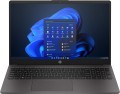 |  |
|---|---|---|
| HP 255 G10 [B39NSAT] | Asus Vivobook Go 15 OLED E1504FA [E1504FA-BQ049] | |
| Outdated Product | Outdated Product | |
| TOP sellers | ||
| Type | laptop | laptop |
Screen | ||
| Screen size | 15.6 " | 15.6 " |
| Screen type | IPS | IPS |
| Surface treatment | anti-glare | anti-glare |
| Screen resolution | 1920x1080 (16:9) | 1920x1080 (16:9) |
| Refresh rate | 60 Hz | 60 Hz |
| Brightness | 250 nt | 250 nt |
| Contrast | 600 :1 | |
| Colour gamut (NTSC) | 45 % | 45 % |
| TÜV Rheinland certificate |  |  |
CPU | ||
| Series | Ryzen 5 | Ryzen 5 |
| Model | 7530U | 7520U |
| Processor code name | Barcelo R (Zen 3) | Mendocino (Zen 2) |
| Processor cores | 6 | 4 |
| Total threads | 12 | 8 |
| CPU speed | 2 GHz | 2.8 GHz |
| TurboBoost / TurboCore frequency | 4.5 GHz | 4.3 GHz |
| CPU TDP | 15 W | 15 W |
| Test Passmark CPU Mark | 16116 points | 9802 points |
RAM | ||
| RAM | 8 GB | 8 GB |
| Maximum installed RAM capacity | 16 GB | |
| RAM type | DDR4 | LPDDR5 |
| RAM memory frequency | 3200 MHz | 5500 MHz |
| Amount of RAM slots | 2 | built-in |
Graphics card | ||
| Graphics card type | integrated | integrated |
| Graphics card series | AMD Radeon | AMD Radeon |
| Graphics card model | Vega 7 | Radeon 610M |
| Test 3DMark06 | 22493 points | 13875 points |
| Test 3DMark Vantage P | 17714 points | 7833 points |
Storage | ||
| Drive type | SSD M.2 NVMe | SSD M.2 NVMe |
| Drive capacity | 512 GB | 512 GB |
| M.2 drive interface | PCIe 3.0 | PCIe 3.0 |
| M.2 connector interface | PCI-E 4.0 4x | PCI-E 3.0 2x |
| M.2 drive size | 22x80 mm | 22x80 mm |
Connections | ||
| Connection ports | HDMI v1.4b | HDMI v1.4 |
| Card reader | | |
| USB-A 2.0 | 1 pcs | |
| USB-A 5Gbps | 2 pcs | 1 pcs |
| USB-C 5Gbps | 1 pcs | 1 pcs |
| Alternate Mode | | |
| Monitors connection | 1 | 1 |
| Wi-Fi | Wi-Fi 6 (802.11ax) | Wi-Fi 5 (802.11ac) |
| Bluetooth | v5.3 | v5.1 |
Multimedia | ||
| Webcam | 1280x720 (HD) | 1280x720 (HD) |
| Camera shutter | | |
| Speakers | 2 pcs | 2 pcs |
Keyboard | ||
| Backlight | in absent | in absent |
| Key design | island type | island type |
| Num block | | |
| Waterproof | | |
| Input device | touchpad | touchpad |
Battery | ||
| Battery capacity | 3648 mAh | |
| Battery capacity | 41 W*h | 42 W*h |
| Battery voltage | 11.25 В | |
| Operating time | 12 h | |
| Power Delivery via USB-C | | |
| Fast charge | | |
| Charging time | 50% in 45 min | 60% in 49 min |
| Power supply Included | 45 W | 45 W |
General | ||
| Preinstalled OS | DOS | without OS |
| MIL-STD-810 Military Standard | | |
| Material | matte plastic | matte plastic |
| Dimensions (WxDxT) | 360x236x19 mm | 360x233x18 mm |
| Weight | 1.52 kg | 1.63 kg |
| Color | ||
| Added to E-Catalog | february 2025 | january 2024 |


Compare HP B39NSAT and Asus E1504FA-BQ049 HP 255 G10 и Asus Vivobook Go 15 OLED E1504FA?
You may be interested in
My comparisons
HP 255 G10 often compared


Glossary
Contrast
The contrast of the screen installed in the laptop.
Contrast is the largest difference in brightness between the lightest white and darkest black that can be achieved on a single screen. It is written as a fraction, for example, 560:1; while the larger the first number, the higher the contrast, the more advanced the screen is and the better the image quality can be achieved on it. This is especially noticeable with large differences in brightness within a single frame: with low contrast, individual details located in the darkest or brightest parts of the picture may be lost, increasing the contrast allows you to eliminate this phenomenon to a certain extent. The flip side of these benefits is an increase in cost.
Separately, we emphasize that in this case only static contrast is indicated — the difference provided within one frame in normal operation, at constant brightness and without the use of special technologies. For advertising purposes, some manufacturers may also provide data on the so-called dynamic contrast — it can be measured in very impressive numbers (seven-digit or more). However, you should focus primarily on static contrast — this is the basic characteristic of any display.
As for specific values, even in the most advanced screens, this indicator does not exceed 2000: 1. But in general, modern laptops have a rather low contrast ratio — it is assumed that for tasks that require more advanced image characteristics, it is more...reasonable to use an external screen (monitor or TV).
Contrast is the largest difference in brightness between the lightest white and darkest black that can be achieved on a single screen. It is written as a fraction, for example, 560:1; while the larger the first number, the higher the contrast, the more advanced the screen is and the better the image quality can be achieved on it. This is especially noticeable with large differences in brightness within a single frame: with low contrast, individual details located in the darkest or brightest parts of the picture may be lost, increasing the contrast allows you to eliminate this phenomenon to a certain extent. The flip side of these benefits is an increase in cost.
Separately, we emphasize that in this case only static contrast is indicated — the difference provided within one frame in normal operation, at constant brightness and without the use of special technologies. For advertising purposes, some manufacturers may also provide data on the so-called dynamic contrast — it can be measured in very impressive numbers (seven-digit or more). However, you should focus primarily on static contrast — this is the basic characteristic of any display.
As for specific values, even in the most advanced screens, this indicator does not exceed 2000: 1. But in general, modern laptops have a rather low contrast ratio — it is assumed that for tasks that require more advanced image characteristics, it is more...reasonable to use an external screen (monitor or TV).
TÜV Rheinland certificate
Laptop display certification for safe blue light emission levels and panel flicker rates. The presence of a TÜV Rheinland certificate confirms that the screen is comfortable for the eyes.
TÜV Rheinland is a large international concern headquartered in Cologne, Germany, providing a wide range of audit services. The company's specialists have developed and approved a number of tests for the compliance of the screens of mobile devices, monitors and TVs with the required level of eye protection from the harmful effects of display radiation on the user's vision on the other side of the screen. The authoritative opinion of TÜV Rheinland is respected in the tech community. Certificates from this body are issued to successfully tested electronics for the implementation of blue light filtering and screen flicker suppression technologies.
TÜV Rheinland is a large international concern headquartered in Cologne, Germany, providing a wide range of audit services. The company's specialists have developed and approved a number of tests for the compliance of the screens of mobile devices, monitors and TVs with the required level of eye protection from the harmful effects of display radiation on the user's vision on the other side of the screen. The authoritative opinion of TÜV Rheinland is respected in the tech community. Certificates from this body are issued to successfully tested electronics for the implementation of blue light filtering and screen flicker suppression technologies.
Model
The specific model of the processor installed in the laptop, or rather, the processor index within its series (see above). Knowing the full name of the processor (series and model), you can find detailed information on it (up to practical reviews) and clarify its capabilities.
Processor code name
The code name of the processor installed in the laptop.
This parameter primarily characterizes the generation to which the processor belongs and the microarchitecture used in it. At the same time, chips belonging to the same microarchitecture/generation may have different code names; in such cases, they differ by other parameters—overall positioning, belonging to specific series (see above), presence/absence of certain specific features, etc.
Currently, Intel processors have the following code names: Coffee Lake, Comet Lake, Ice Lake, Tiger Lake, Jasper Lake, Alder Lake, Raptor Lake (13 Gen), Alder Lake-N, Raptor Lake Refresh (14 Gen), Meteor Lake (Series 1), Raptor Lake (Series 1), Arrow Lake (Series 2), Lunar Lake (Series 2), Raptor Lake (Series 2), Panther Lake (Series 3). For AMD, the list looks like this: Zen 2 Renoir, Zen 2 Lucienne, Zen 3 Cezanne..., Zen 3 Barcelo, Zen 3+ Rembrandt, Zen 3+ Rembrandt R, Zen 2 Mendocino, Zen 3 Barcelo R, Zen 4 Dragon Range, Zen 4 Phoenix, Zen 4 Hawk Point, Zen 5 Strix Point, Zen 5 Strix Halo, Zen 5 Krackan Point, Zen 5 Gorgon Point. Detailed data on different code names can be found in specialized sources.
This parameter primarily characterizes the generation to which the processor belongs and the microarchitecture used in it. At the same time, chips belonging to the same microarchitecture/generation may have different code names; in such cases, they differ by other parameters—overall positioning, belonging to specific series (see above), presence/absence of certain specific features, etc.
Currently, Intel processors have the following code names: Coffee Lake, Comet Lake, Ice Lake, Tiger Lake, Jasper Lake, Alder Lake, Raptor Lake (13 Gen), Alder Lake-N, Raptor Lake Refresh (14 Gen), Meteor Lake (Series 1), Raptor Lake (Series 1), Arrow Lake (Series 2), Lunar Lake (Series 2), Raptor Lake (Series 2), Panther Lake (Series 3). For AMD, the list looks like this: Zen 2 Renoir, Zen 2 Lucienne, Zen 3 Cezanne..., Zen 3 Barcelo, Zen 3+ Rembrandt, Zen 3+ Rembrandt R, Zen 2 Mendocino, Zen 3 Barcelo R, Zen 4 Dragon Range, Zen 4 Phoenix, Zen 4 Hawk Point, Zen 5 Strix Point, Zen 5 Strix Halo, Zen 5 Krackan Point, Zen 5 Gorgon Point. Detailed data on different code names can be found in specialized sources.
Processor cores
The number of cores in the laptop CPU.
The core is a part of the CPU designed to process one thread of instructions (and sometimes more, for such models, see "Number of threads"). Nowadays, in laptops you can find dual-core, quad-core, six-core, eight-core, ten-core, 12-core, 14-core CPUs. Also note that recently configurations with different types of cores as part of a single CPU are gaining popularity. Such chips are built on a hybrid architecture that combines high performance and energy-efficient cores. They operate at different clock speeds, have different amounts of pre-installed cache memory and are designed to solve different problems. In particular, such CPUs are found in Intel CPUs (from the 12th generation) and Apple.
Theoretically, more cores means higher performance, especially in parallel computing tasks or when processing multiple resource-intensive tasks at the same time. However, in practice this is true only all else being equal – that is, with a similar microarchitecture, clock frequency, cache volumes and other key parameters. Modern CPUs can vary greatly on these parameters – in itself, a greater number of cores does not mean superiority. This is especially true for dual- and quad-core chips: a mobil...e-level CPU (for example, Snapdragon, see "CPU series") with 4 cores may well be inferior in capabilities to a dual-core desktop series chip (like Core i3 or i5, which are often used in universal laptops with the "optimal" set of specifications for different tasks). When evaluating CPUs with two or four cores, it is necessary to look, first of all, at the general set of characteristics. But the presence of six, eight or more cores is almost certainly a sign of a powerful CPU. Such equipment is typical mainly for advanced gaming and professional laptops.
The core is a part of the CPU designed to process one thread of instructions (and sometimes more, for such models, see "Number of threads"). Nowadays, in laptops you can find dual-core, quad-core, six-core, eight-core, ten-core, 12-core, 14-core CPUs. Also note that recently configurations with different types of cores as part of a single CPU are gaining popularity. Such chips are built on a hybrid architecture that combines high performance and energy-efficient cores. They operate at different clock speeds, have different amounts of pre-installed cache memory and are designed to solve different problems. In particular, such CPUs are found in Intel CPUs (from the 12th generation) and Apple.
Theoretically, more cores means higher performance, especially in parallel computing tasks or when processing multiple resource-intensive tasks at the same time. However, in practice this is true only all else being equal – that is, with a similar microarchitecture, clock frequency, cache volumes and other key parameters. Modern CPUs can vary greatly on these parameters – in itself, a greater number of cores does not mean superiority. This is especially true for dual- and quad-core chips: a mobil...e-level CPU (for example, Snapdragon, see "CPU series") with 4 cores may well be inferior in capabilities to a dual-core desktop series chip (like Core i3 or i5, which are often used in universal laptops with the "optimal" set of specifications for different tasks). When evaluating CPUs with two or four cores, it is necessary to look, first of all, at the general set of characteristics. But the presence of six, eight or more cores is almost certainly a sign of a powerful CPU. Such equipment is typical mainly for advanced gaming and professional laptops.
Total threads
The number of threads supported by the laptop processor.
A thread is a sequence of instructions executed by a processor. Initially, each processor core was designed for one such sequence, and the number of threads was equal to the number of cores. However, in modern CPUs, multithreading technologies are increasingly being used, which allow loading each core with two instruction sequences at once. Such technologies have different names for different manufacturers, but the principle of their operation is the same: during the inevitable pauses in the execution of one of the threads, the kernel does not idle, but works with a different sequence. Accordingly, the total number of threads in such processors is twice the number of cores; such a scheme of work significantly increases productivity (although, of course, it also affects the cost).
A thread is a sequence of instructions executed by a processor. Initially, each processor core was designed for one such sequence, and the number of threads was equal to the number of cores. However, in modern CPUs, multithreading technologies are increasingly being used, which allow loading each core with two instruction sequences at once. Such technologies have different names for different manufacturers, but the principle of their operation is the same: during the inevitable pauses in the execution of one of the threads, the kernel does not idle, but works with a different sequence. Accordingly, the total number of threads in such processors is twice the number of cores; such a scheme of work significantly increases productivity (although, of course, it also affects the cost).
CPU speed
The clock speed of the processor installed in the laptop (for multi-core processors, the frequency of each individual core).
Theoretically, a higher clock speed has a positive effect on performance, as it allows the processor to perform more operations per unit of time. However, in fact, the capabilities of the CPU depend on a number of other characteristics — primarily on the series to which it belongs (see above). It even happens that of the two chips, the more performant in the overall result is the slower one. With this in mind, it makes sense to compare by clock frequency only processors of the same series, and ideally, also of the same generation; and the laptop as a whole should be judged by the complex characteristics of the system, as well as by the results of tests (see below).
Theoretically, a higher clock speed has a positive effect on performance, as it allows the processor to perform more operations per unit of time. However, in fact, the capabilities of the CPU depend on a number of other characteristics — primarily on the series to which it belongs (see above). It even happens that of the two chips, the more performant in the overall result is the slower one. With this in mind, it makes sense to compare by clock frequency only processors of the same series, and ideally, also of the same generation; and the laptop as a whole should be judged by the complex characteristics of the system, as well as by the results of tests (see below).
TurboBoost / TurboCore frequency
Processor clock speed achieved in TurboBoost or TurboCore "overclocking" mode.
Turbo Boost and Turbo Core technologies are used by different manufacturers (Intel and AMD, respectively), but they have the same principle of operation: load distribution from more loaded processor cores to less loaded ones to improve performance. The "overclocking" mode is characterized by an increased clock frequency, and it is indicated in this case.
For more information about clock speed in general, see the relevant paragraph above.
Turbo Boost and Turbo Core technologies are used by different manufacturers (Intel and AMD, respectively), but they have the same principle of operation: load distribution from more loaded processor cores to less loaded ones to improve performance. The "overclocking" mode is characterized by an increased clock frequency, and it is indicated in this case.
For more information about clock speed in general, see the relevant paragraph above.
Test Passmark CPU Mark
The result shown by the laptop processor in the Passmark CPU Mark test.
Passmark CPU Mark is a comprehensive test that is more detailed and reliable than the popular 3DMark06 (see above). It checks not only the gaming capabilities of the CPU, but also its performance in other modes, based on which it displays the overall score; this score can be used to fairly reliably evaluate the processor as a whole (the more points, the higher the performance).
Passmark CPU Mark is a comprehensive test that is more detailed and reliable than the popular 3DMark06 (see above). It checks not only the gaming capabilities of the CPU, but also its performance in other modes, based on which it displays the overall score; this score can be used to fairly reliably evaluate the processor as a whole (the more points, the higher the performance).