
Comparison Hator Pulsar 2 Pro vs Razer Cobra
Add to comparison | 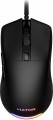 | 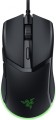 |
|---|---|---|
| Hator Pulsar 2 Pro | Razer Cobra | |
| Outdated Product | Compare prices 28 | |
| User reviews | ||
| TOP sellers | ||
| Product type | mouse | mouse |
| Connection | wired | wired |
| Sensor | optical | optical |
| Type | for game | for game |
Sensor and control | ||
| Sensor | PixArt 3335 | |
| Sensor resolution | 500 – 16000 DPI | 8500 DPI |
| Max. acceleration | 50 G | 35 G |
| Max. speed | 300 ips | |
| Max. polling rate | 1000 Hz (1 ms) | 1000 Hz (1 ms) |
| Number of buttons | 5 | 5 |
| Side buttons |  | |
| DPI-button | | |
| Switch type | mechanical | optical |
| Switches | Kailh | Razer Gen-3 |
| Switch resource | 80 mln | 90 mln |
| Scroll wheels | 1 | 1 |
Additional features | ||
| Programmable buttons | | |
| Built-in memory | | |
| Lighting | RGB | RGB |
| Lighting effects | + | Razer Chroma |
| Feet material | teflon (PTFE) | teflon (PTFE) |
Connection and power supply | ||
| Cable | USB-A braided | USB-A braided |
| Cable length | 1.8 m | 1.8 m |
General | ||
| Suitable for left-handers | | |
| In box | replaceable legs | |
| Size (LxWxH) | 123x68x38 mm | 120x63x38 mm |
| Weight | 69 g | 58 g |
| Color | ||
| Added to E-Catalog | september 2023 | july 2023 |





Compare Hator Pulsar 2 Pro and Razer Cobra
Mice Hator Pulsar 2 Pro and Razer Cobra have similar characteristics, but there are a few key differences. The Hator Pulsar 2 Pro is equipped with a PixArt 3335 sensor with a maximum resolution of 16000 DPI and a maximum acceleration of 50 G, making it more suitable for high-end gaming tasks. Meanwhile, the Razer Cobra has a maximum resolution of 8500 DPI and an acceleration of 35 G. The switches in the Cobra have a lifespan of 90 million clicks, which is slightly more than 80 million in the Pulsar 2 Pro. Both devices feature RGB lighting and programmable buttons, but the Cobra offers Razer Chroma effects. In terms of weight, the Cobra is lighter (58 g compared to 69 g for the Pulsar 2 Pro).
Price comparison
You may be interested in
My comparisons
Hator Pulsar 2 Pro often compared


Razer Cobra often compared


Glossary
Sensor
The model of the sensor installed in the mouse. This information is indicated mainly for models equipped with high-end sensors, which are significantly superior in their capabilities to simpler solutions. Such characteristics are important primarily for gaming mice, so most of the devices for which the sensor model is specified belong to this category.
Knowing the name, you can find detailed data on the sensor and evaluate its capabilities. Note that one of the most popular brands nowadays, under which advanced sensors are produced, is PixArt ; on the market are often found, in particular, sensors PixArt 3212, PixArt 3325, PixArt 3327, PixArt 3335, PixArt 3360, PixArt 3389, PixArt 3395, PixArt 3950.
Knowing the name, you can find detailed data on the sensor and evaluate its capabilities. Note that one of the most popular brands nowadays, under which advanced sensors are produced, is PixArt ; on the market are often found, in particular, sensors PixArt 3212, PixArt 3325, PixArt 3327, PixArt 3335, PixArt 3360, PixArt 3389, PixArt 3395, PixArt 3950.
Sensor resolution
Resolution of the sensor responsible for tracking mouse movements on the work surface. Specified in DPI — dots per inch.
The physical meaning of DPI as a whole is as follows. The sensor of a modern mouse works on the same principle as the camera matrix, and consists of pixels. And DPI is the number of pixels that fall on 1 inch of the underlying surface (length or width), "visible" by the sensor.
It is believed that more DPI means a more advanced sensor and mouse in general; nowadays, models for 3500 – 5000 DPI, 12000 DPI, 16000 DPI even more are not uncommon. In a way, it is — high resolution contributes to accuracy. However, the only thing that is directly determined by this indicator is the speed at which the cursor moves across the screen: the higher the resolution of the sensor, the greater the number of pixels that the cursor will move when the mouse itself moves a certain distance. At the same time, it is worth recalling that too high a speed is even more undesirable than too low. So the real need for high DPI ( 1000 and above) arises mainly when working on large screens (4K resolution and more); for more modest displays (HD and Full HD), smaller values are often enough.
The physical meaning of DPI as a whole is as follows. The sensor of a modern mouse works on the same principle as the camera matrix, and consists of pixels. And DPI is the number of pixels that fall on 1 inch of the underlying surface (length or width), "visible" by the sensor.
It is believed that more DPI means a more advanced sensor and mouse in general; nowadays, models for 3500 – 5000 DPI, 12000 DPI, 16000 DPI even more are not uncommon. In a way, it is — high resolution contributes to accuracy. However, the only thing that is directly determined by this indicator is the speed at which the cursor moves across the screen: the higher the resolution of the sensor, the greater the number of pixels that the cursor will move when the mouse itself moves a certain distance. At the same time, it is worth recalling that too high a speed is even more undesirable than too low. So the real need for high DPI ( 1000 and above) arises mainly when working on large screens (4K resolution and more); for more modest displays (HD and Full HD), smaller values are often enough.
Max. acceleration
The greatest acceleration during movement, at which the mouse maintains normal performance; if this indicator is exceeded, the cursor may “break down” (moving to an unexpected place due to incorrect processing of data from the sensor).
The faster the mouse moves, the greater the acceleration acting on it. Accordingly, this parameter determines the sensitivity to sudden movements, the extent to which this model is able to normally perceive and process such movements. High values of maximum acceleration ( 40 G, 50 G) are important first of all in dynamic games, especially for professional e-sportsmen and advanced enthusiasts. If the mouse is bought for relatively simple tasks (working with documents, surfing the web, etc.), you can ignore this indicator.
The faster the mouse moves, the greater the acceleration acting on it. Accordingly, this parameter determines the sensitivity to sudden movements, the extent to which this model is able to normally perceive and process such movements. High values of maximum acceleration ( 40 G, 50 G) are important first of all in dynamic games, especially for professional e-sportsmen and advanced enthusiasts. If the mouse is bought for relatively simple tasks (working with documents, surfing the web, etc.), you can ignore this indicator.
Max. speed
The ips (inches per second) parameter is the linear speed of mouse movement, expressed in inches per second, at which the manipulator's sensor is able to read the surface. In top models, the maximum mouse movement speed often reaches 400-600 ips, but devices with ips in the region of 200 are more common.
Switch type
The type of switches in a mouse indicates the mechanism used under the main buttons to register a click. It affects the feel when pressing, actuation speed, lifespan, and resistance to accidental double clicks.
— Optical. Button mechanisms where the press is registered not by closing metal contacts but by interrupting a light beam. This makes them faster, less prone to wear, and almost unaffected by accidental double-click issues.
These switches are especially valued in gaming mice, where response speed and stability after a large number of clicks are crucial. For example, in shooters or MOBA games, they help achieve clear feedback without delay and contact bouncing.
— Mechanical. Classic button mechanisms where a click is registered due to the closing of metal contacts. They provide a familiar tactile feel, a well-audible click, and are widely used in both office and gaming models.
Compared to optical switches, mechanical ones are usually simpler and cheaper, but over time the contacts may wear out. For example, with active gaming or daily work, after a few years, a double click might occur instead of a single press.
— Optical. Button mechanisms where the press is registered not by closing metal contacts but by interrupting a light beam. This makes them faster, less prone to wear, and almost unaffected by accidental double-click issues.
These switches are especially valued in gaming mice, where response speed and stability after a large number of clicks are crucial. For example, in shooters or MOBA games, they help achieve clear feedback without delay and contact bouncing.
— Mechanical. Classic button mechanisms where a click is registered due to the closing of metal contacts. They provide a familiar tactile feel, a well-audible click, and are widely used in both office and gaming models.
Compared to optical switches, mechanical ones are usually simpler and cheaper, but over time the contacts may wear out. For example, with active gaming or daily work, after a few years, a double click might occur instead of a single press.
Switches
The switches in a mouse indicate which specific switches are installed under the main buttons, such as Omron, Huano, Kailh, TTC, or proprietary solutions from the manufacturer. These determine the click characteristics, actuation force, click volume, lifespan, and the likelihood of double-clicking over time.
Unlike the general switch type, which refers to the working principle—mechanical or optical—the brand and model provide a more precise understanding of the performance level. For example, two mice with mechanical switches might feel different when clicked: some may be softer and quieter, while others could be stiffer, louder, and feel more "gaming-like."
Unlike the general switch type, which refers to the working principle—mechanical or optical—the brand and model provide a more precise understanding of the performance level. For example, two mice with mechanical switches might feel different when clicked: some may be softer and quieter, while others could be stiffer, louder, and feel more "gaming-like."
Switch resource
The durability of mouse switches is measured by the number of clicks the keys can withstand before they begin to show signs of wear or malfunction. Switches can have a lifespan of several million to tens of millions of clicks. In laboratory conditions, this parameter is checked using special testing machines, which diligently press the keys the required number of times, on the basis of which a verdict is made regarding the approximate service life of the switches.
Lighting effects
The mouse has additional lighting effects. For more information about the backlight itself, see above, and its effects can be different — ranging from a smooth change in brightness and/or colour to colour and light signals, as well as backlight synchronization(for models with synchronization, this paragraph indicates the supported synchronization technology).
The last function is worth dwelling on separately. Synchronization itself allows you to "match" the mouse backlight with the backlight of other system components — the case, graphics card, keyboard, monitor, etc. Thanks to this matching, you can create various unusual effects: synchronous colour and brightness changes, "colour waves", "running lights" etc. However, for such work, all components of the system must support the same synchronization technology — and such a technology, usually, each manufacturer has its own. So before buying it's ok to check compatibility. However, some mice are able to work with several options at once — for example, iCUE from Corsair and MLS (Mystic Light Sync) from MSI.
The last function is worth dwelling on separately. Synchronization itself allows you to "match" the mouse backlight with the backlight of other system components — the case, graphics card, keyboard, monitor, etc. Thanks to this matching, you can create various unusual effects: synchronous colour and brightness changes, "colour waves", "running lights" etc. However, for such work, all components of the system must support the same synchronization technology — and such a technology, usually, each manufacturer has its own. So before buying it's ok to check compatibility. However, some mice are able to work with several options at once — for example, iCUE from Corsair and MLS (Mystic Light Sync) from MSI.
In box
— USB receiver. A device that is found only in models with wireless connectivity. Such a receiver is connected to the USB port of a computer or laptop, and communication is carried out through it. This is the way all mice with a radio connection work, for them the presence of a USB receiver in the kit is almost mandatory. At the same time, this accessory is also found in the Bluetooth model — in them it plays the role of an adapter for equipment that is not equipped with its own Bluetooth modules.
— Replaceable legs. Legs are small protrusions on the bottom surface of the case, on which the mouse rests, standing on the work surface. They reduce resistance, allowing the device to slide freely in any direction, and also compensate for minor irregularities to a certain extent. However, due to constant friction, the legs are subject to heavy wear, over time they wear out or may come off. Thus, modern mice may come with interchangeable legs; such a complete set means that regular overlays can be easily removed by the user.
— Interchangeable side panels. A feature found primarily in game models (see "By Direction"). At the same time, the purpose of removable panels can be different. So, in some models, they are used to fine-tune the width or overall shape to the user's hand. In other devices, rearranging the panel allows you to change the functionality — for example, install four side button...s instead of two, providing additional features in games (and return the panel with two classic side buttons back while surfing the Internet and other everyday tasks). Such nuances should be clarified in each case separately.
— Replaceable top panels. Additional components that can be installed in place of the standard top of the mouse to change its appearance or ergonomics. Their support is implemented in some models of gaming mice (see “Direction”). Replaceable top panels provide the ability to customize the mouse to suit individual ergonomic preferences, and they also serve as a stylistic element in the design of the manipulator.
— Rug. Mice that use the mouse pad as a power source are required (see "Power"), but this accessory can also be supplied with more traditional models. In the latter case, it is worth clarifying what material the pad is made of, what dimensions and design features it has — these points may not meet the user's requirements, in many cases it is more convenient to buy an underarm pad separately.
— Case. The cover will be appropriate if you need to regularly move the mouse from place to place (for example, for frequent competitions or with a work laptop). In a protective case, your “rodent” will not be afraid of external damage to which a mouse can be subjected even while in the personal compartment of a backpack.
— Additional switches (mics) — for example, spare switches of the same type as regular ones, or interchangeable ones that differ in characteristics.
— Interchangeable side buttons. Separate side buttons that can replace regular ones. These may be keys of a different shape or spare parts of a similar design.
— Stickers. Decorative stickers that allow you to personalize your device, giving it an original look.
— Additional cable. A replacement wire that differs from the main one in length and/or other characteristics (for example, the presence / absence of a braid).
— Headphones. Gaming computer headphones supplied with mice of the corresponding specialization (see "By Direction").
— Replaceable legs. Legs are small protrusions on the bottom surface of the case, on which the mouse rests, standing on the work surface. They reduce resistance, allowing the device to slide freely in any direction, and also compensate for minor irregularities to a certain extent. However, due to constant friction, the legs are subject to heavy wear, over time they wear out or may come off. Thus, modern mice may come with interchangeable legs; such a complete set means that regular overlays can be easily removed by the user.
— Interchangeable side panels. A feature found primarily in game models (see "By Direction"). At the same time, the purpose of removable panels can be different. So, in some models, they are used to fine-tune the width or overall shape to the user's hand. In other devices, rearranging the panel allows you to change the functionality — for example, install four side button...s instead of two, providing additional features in games (and return the panel with two classic side buttons back while surfing the Internet and other everyday tasks). Such nuances should be clarified in each case separately.
— Replaceable top panels. Additional components that can be installed in place of the standard top of the mouse to change its appearance or ergonomics. Their support is implemented in some models of gaming mice (see “Direction”). Replaceable top panels provide the ability to customize the mouse to suit individual ergonomic preferences, and they also serve as a stylistic element in the design of the manipulator.
— Rug. Mice that use the mouse pad as a power source are required (see "Power"), but this accessory can also be supplied with more traditional models. In the latter case, it is worth clarifying what material the pad is made of, what dimensions and design features it has — these points may not meet the user's requirements, in many cases it is more convenient to buy an underarm pad separately.
— Case. The cover will be appropriate if you need to regularly move the mouse from place to place (for example, for frequent competitions or with a work laptop). In a protective case, your “rodent” will not be afraid of external damage to which a mouse can be subjected even while in the personal compartment of a backpack.
— Additional switches (mics) — for example, spare switches of the same type as regular ones, or interchangeable ones that differ in characteristics.
— Interchangeable side buttons. Separate side buttons that can replace regular ones. These may be keys of a different shape or spare parts of a similar design.
— Stickers. Decorative stickers that allow you to personalize your device, giving it an original look.
— Additional cable. A replacement wire that differs from the main one in length and/or other characteristics (for example, the presence / absence of a braid).
— Headphones. Gaming computer headphones supplied with mice of the corresponding specialization (see "By Direction").