
Comparison A4Tech Bloody W95 Max Sports vs A4Tech Bloody W95 Max
Add to comparison | 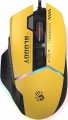 | 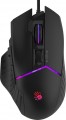 |
|---|---|---|
| A4Tech Bloody W95 Max Sports | A4Tech Bloody W95 Max | |
| Outdated Product | from $53.40 | |
| User reviews | ||
| TOP sellers | ||
| Product type | mouse | mouse |
| Connection | wired | wired |
| Sensor | optical | optical |
| Type | for game | for game |
Sensor and control | ||
| Sensor resolution | 100 – 12000 DPI | 100 – 12000 DPI |
| Max. acceleration | 35 G | 35 G |
| Max. speed | 250 ips | 250 ips |
| Max. polling rate | 2000 Hz (0.5 ms) | |
| Number of buttons | 6 | 6 |
| Side buttons |  | |
| DPI-button | | |
| Scroll wheels | 2 | 2 |
Additional features | ||
| Programmable buttons | | |
| Built-in memory | | |
| Lighting | RGB | RGB |
| Lighting effects | + | + |
| Feet material | metal | metal |
Connection and power supply | ||
| Cable | USB-A braided | USB-A braided |
| Cable length | 1.8 m | 1.8 m |
General | ||
| Size (LxWxH) | 135x77x43 mm | 135x77x43 mm |
| Weight | 106 g | |
| Color | ||
| Added to E-Catalog | july 2023 | march 2023 |


Compare A4Tech Bloody W95 Max Sports and W95 Max
Мice A4Tech Bloody W95 Max Sports and A4Tech Bloody W95 Max share similar features such as wired connectivity, an optical sensor with up to 12000 DPI resolution, and 6 buttons. However, the Bloody W95 Max stands out with a higher polling rate of 2000 Hz, which can provide faster response in games. While the Bloody W95 Max Sports is available in several colors (yellow, red, white), the Bloody W95 Max is only available in black. Both devices feature RGB lighting and programmable buttons, making them suitable for gamers.
You may be interested in
My comparisons
A4Tech Bloody W95 Max Sports often compared


A4Tech Bloody W95 Max often compared


Glossary
Max. polling rate
The polling rate shows how often the mouse sensor exchanges data with the computer about cursor movement. This parameter is measured in hertz (Hz), with one second being taken as the unit of time for its assessment. The smoothness and speed of cursor movement directly depend on the polling rate of the sensor. Directly connected to it is the mouse response time — this is the time interval required for the signal about the manipulator's movement to reach the display of the cursor position change on the screen. Response time is measured in milliseconds (ms). The higher the mouse's "hertz rate," the lesser the response time it demonstrates. The most common value can be considered 1000 Hz with a response time of 1 millisecond. For competitive games, attention should be paid to faster mice, including 2000 Hz, 4000 Hz, and 8000 Hz. Values below might negatively manifest just in gaming scenarios.
Weight
The total weight of the mouse. For models with a wired connection, usually, it is indicated without cable, and for devices with weight adjustment (see above) — without weights.
This parameter is important primarily for professional gaming applications, although it is often relevant for ordinary users. Theoretically, less weight promotes speed and reduces fatigue. At the same time, in fact, much depends on the personal habits and preferences of the user: a mouse that is too light may “not be felt in the hands” and not give familiar feedback. Therefore, although most mice have a lower weight limit of 60 – 80 g, however, even among professional gaming models there are much more massive devices — 120 – 140 g or more. The lightest variety of "rodents" is laptop (see "In the direction"), among them devices come across and less than 60 g.
Also note that the weight to some extent depends on the size and “tricked out” of the device, but there is no unambiguous dependence here: models similar in size and functionality can differ markedly in weight.
This parameter is important primarily for professional gaming applications, although it is often relevant for ordinary users. Theoretically, less weight promotes speed and reduces fatigue. At the same time, in fact, much depends on the personal habits and preferences of the user: a mouse that is too light may “not be felt in the hands” and not give familiar feedback. Therefore, although most mice have a lower weight limit of 60 – 80 g, however, even among professional gaming models there are much more massive devices — 120 – 140 g or more. The lightest variety of "rodents" is laptop (see "In the direction"), among them devices come across and less than 60 g.
Also note that the weight to some extent depends on the size and “tricked out” of the device, but there is no unambiguous dependence here: models similar in size and functionality can differ markedly in weight.