
Comparison Ugreen HiTune Max5C vs Edifier W830NB
Add to comparison | 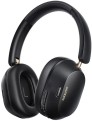 | 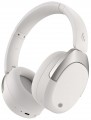 |
|---|---|---|
| Ugreen HiTune Max5C | Edifier W830NB | |
| Compare prices 1 | Compare prices 1 | |
| User reviews | ||
| TOP sellers | ||
Active noise cancellation, long battery life. | Game mode, Hi-Res Audio support, excellent battery life. Active noise cancellation is equipped with DNN – Deep Neural Network (deep neural network) | |
Connection and design | ||
| Design | overhead, closed full size Over-Ear foldable swiveling earcups | overhead, closed full size Over-Ear foldable swiveling earcups |
| Connection type | combined | combined |
| Connection | USB-C Bluetooth v5.4 | USB-C Bluetooth v5.4 |
| Plug | straight | straight |
| Cable supply | single-sided | single-sided |
| Range | 10 m | 10 m |
| Cable type | round | round |
| Detachable cable |  | |
Specs | ||
| Hi-Res Audio | | |
| Game mode (low input lag) | | |
| Audio delay | 60 ms | 80 ms |
| Impedance | 32 Ohm | |
| Frequency range | 20 – 40000 Hz | |
| Sensitivity | 91 dB | |
| Speaker size | 40 mm | 40 mm |
| Emitter type | dynamic | dynamic |
Microphone specs | ||
| Microphone | built into the case | built into the case |
| Microphone noise canceling | ENC | ENC |
Features | ||
| Mobile app | | |
| Volume control | | |
| Noise cancellation | ANC | ANC |
| Transparent mode | | |
| Multipoint | | |
| Codec support | AAC LDAC | AAC LDAC |
Power supply | ||
| Power source | battery | battery |
| Headphone battery capacity | 600 mAh | 670 mAh |
| Charging time | 1.5 h | 1.5 h |
| Operating time (music) | 45 h | 54 h |
| Operating time (no noise canceling) | 75 h | 94 h |
| Fast charge | 5 minutes for 5 hours of work | 15 minutes for 10 hours of work |
| Charging port | USB-C | USB-C |
General | ||
| Ear cushion material | leatherette | leatherette |
| Weight | 267 g | |
| In box | case | |
| Color | ||
| Added to E-Catalog | march 2025 | august 2024 |


Compare Ugreen HiTune Max5C and Edifier W830NB
Headphones Ugreen HiTune Max5C and Edifier W830NB have a similar design — both are on-ear and over-ear with a closed-back type. Both devices support Bluetooth 5.4 and offer active noise cancellation (ANC). However, according to user reviews, Edifier W830NB stands out with better autonomy, providing up to 54 hours of use with noise cancellation and 94 hours without it, while Ugreen HiTune Max5C offers 45 and 75 hours respectively. Additionally, W830NB supports a fast charging feature, allowing for 10 hours of use with just 15 minutes of charging. In terms of sound, both devices support Hi-Res Audio, but W830NB has a wider frequency range (20 – 40000 Hz) and lower sound delay (80 ms compared to 60 ms on Max5C). Users note that Edifier W830NB also offers a more advanced noise cancellation system thanks to the use of deep neural networks.
Price comparison
You may be interested in
My comparisons
Ugreen HiTune Max5C often compared


Edifier W830NB often compared


Glossary
Audio delay
Sound delay in wireless headphones is a natural process caused by the specifics of audio data transmission over Bluetooth. It can be either almost imperceptible or clearly interfere with comfortable gameplay or watching video content. This paragraph provides the declared sound delay time in milliseconds, which is written in the technical specifications for a particular headphone model.
Impedance
Impedance refers to the headphone's nominal resistance to AC current, such as an audio signal.
Other things being equal, a higher impedance reduces distortion, but requires a more powerful amplifier — otherwise the headphones simply will not be able to produce sufficient volume. Thus, the choice of resistance depends primarily on which signal source you plan to connect the "ears". So, for a portable gadget (smartphone, pocket player), an indicator of 16 ohms or less is considered optimal, 17 – 32 ohms is not bad. Higher values — 33 – 64 ohms and 65 – 96 ohms — will require quite powerful amplifiers, like those used in computers and televisions. And models with a resistance of 96 – 250 ohms and above are designed mainly for Hi-End audio equipment and professional use; for such cases, detailed recommendations for selection can be found in special sources.
Other things being equal, a higher impedance reduces distortion, but requires a more powerful amplifier — otherwise the headphones simply will not be able to produce sufficient volume. Thus, the choice of resistance depends primarily on which signal source you plan to connect the "ears". So, for a portable gadget (smartphone, pocket player), an indicator of 16 ohms or less is considered optimal, 17 – 32 ohms is not bad. Higher values — 33 – 64 ohms and 65 – 96 ohms — will require quite powerful amplifiers, like those used in computers and televisions. And models with a resistance of 96 – 250 ohms and above are designed mainly for Hi-End audio equipment and professional use; for such cases, detailed recommendations for selection can be found in special sources.
Frequency range
The range of sound frequencies that headphones can reproduce.
The wider this range, the more fully the headphones reproduce the spectrum of sound frequencies, the lower the likelihood that too low or too high frequencies will be inaccessible. However, there are some nuances to consider here. First of all, let us remind you that the perceptual range of the human ear is on average from 16 Hz to 22 kHz, and for the complete picture it is enough for headphones to cover this range. However, modern models can significantly exceed these boundaries: in many devices the lower threshold does not exceed 15 Hz, or even 10 Hz, and the upper limit can reach 25 kHz, 30 kHz and even more. Such wide ranges in themselves do not provide practical advantages, but they usually indicate a high class of headphones, and are sometimes given only for advertising purposes.
The second important point is that a wide frequency range in itself is not a guarantee of good sound: sound quality also depends on a number of parameters, primarily the amplitude-frequency response of the headphones.
The wider this range, the more fully the headphones reproduce the spectrum of sound frequencies, the lower the likelihood that too low or too high frequencies will be inaccessible. However, there are some nuances to consider here. First of all, let us remind you that the perceptual range of the human ear is on average from 16 Hz to 22 kHz, and for the complete picture it is enough for headphones to cover this range. However, modern models can significantly exceed these boundaries: in many devices the lower threshold does not exceed 15 Hz, or even 10 Hz, and the upper limit can reach 25 kHz, 30 kHz and even more. Such wide ranges in themselves do not provide practical advantages, but they usually indicate a high class of headphones, and are sometimes given only for advertising purposes.
The second important point is that a wide frequency range in itself is not a guarantee of good sound: sound quality also depends on a number of parameters, primarily the amplitude-frequency response of the headphones.
Sensitivity
Rated headphone sensitivity. Technically, this is the volume at which they sound when a certain standard signal from the amplifier is connected to them. Thus, sensitivity is one of the parameters that determine the overall volume of the headphones: the higher it is, the louder the sound will be with the same input signal level and other things being equal. However, we must not forget that the volume level also depends on the resistance (impedance, see above); moreover, it is worth choosing “ears” for a specific device first by impedance, and only then by sensitivity. In this case, one parameter can be compensated for by another: for example, a model with high resistance and high sensitivity can work even on a relatively weak amplifier.
As for specific figures, headphones with indicators of 100 dB or less are designed mainly for use in a quiet environment (in some similar models, the sensitivity does not exceed 90 dB). For use on the street, in transport and other similar conditions, it is desirable to have more sensitive headphones — about 101 – 105 dB, or even 110 dB. And in some models, this figure can reach 116 – 120 dB. and even more.
It is also worth noting that this parameter is relevant only for a wired connection according to the analogue standard — for example, via a 3.5 mm mini-...jack. When using digital interfaces like USB and wireless channels like Bluetooth, the sound is processed in the built-in headphone converter, and if you plan to mainly use this kind of application, you can not pay much attention to sensitivity.
As for specific figures, headphones with indicators of 100 dB or less are designed mainly for use in a quiet environment (in some similar models, the sensitivity does not exceed 90 dB). For use on the street, in transport and other similar conditions, it is desirable to have more sensitive headphones — about 101 – 105 dB, or even 110 dB. And in some models, this figure can reach 116 – 120 dB. and even more.
It is also worth noting that this parameter is relevant only for a wired connection according to the analogue standard — for example, via a 3.5 mm mini-...jack. When using digital interfaces like USB and wireless channels like Bluetooth, the sound is processed in the built-in headphone converter, and if you plan to mainly use this kind of application, you can not pay much attention to sensitivity.
Headphone battery capacity
The capacity of the battery installed in the headphones of the corresponding design (see "Power").
Theoretically, a higher capacity allows to achieve greater battery life, but in fact, the operating time also depends on the power consumption of the headphones — and it can be very different, depending on the characteristics and design features. So this parameter is secondary, and when choosing it is worth paying attention not so much to the battery capacity, but to the directly claimed operating time (see below).
Theoretically, a higher capacity allows to achieve greater battery life, but in fact, the operating time also depends on the power consumption of the headphones — and it can be very different, depending on the characteristics and design features. So this parameter is secondary, and when choosing it is worth paying attention not so much to the battery capacity, but to the directly claimed operating time (see below).
Operating time (music)
The declared operating time of headphones with autonomous power supply (see above) when listening to music on a single battery charge or a set of batteries.
As a rule, the characteristics indicate a certain average operating time in music listening mode, for standard conditions; in practice, it will depend on the intensity of use, volume level and other operating parameters, and in models with replaceable batteries - also on the quality of specific batteries. However, based on the stated time, you can fairly reliably assess the autonomy of the selected headphones and compare them with other models. As for specific values, relatively “short-lived” devices have a battery life of up to 8 hours, a figure of 8 – 12 hours can be called quite good, 12 – 20 hours – very good, and in the most “long-lasting” headphones the operating time can exceed 20 hours.
As a rule, the characteristics indicate a certain average operating time in music listening mode, for standard conditions; in practice, it will depend on the intensity of use, volume level and other operating parameters, and in models with replaceable batteries - also on the quality of specific batteries. However, based on the stated time, you can fairly reliably assess the autonomy of the selected headphones and compare them with other models. As for specific values, relatively “short-lived” devices have a battery life of up to 8 hours, a figure of 8 – 12 hours can be called quite good, 12 – 20 hours – very good, and in the most “long-lasting” headphones the operating time can exceed 20 hours.
Operating time (no noise canceling)
How long does the active noise canceling headphones (see above) last on a single battery charge (or a set of batteries) when noise canceling is not used.
This function is quite “gluttonous” in terms of battery consumption, up to half of the total energy consumed by the headphones can go to its work. Thus, models with noise reduction can indicate both overall battery life (see "Operating time"), and battery life with the noise reduction turned off.
This function is quite “gluttonous” in terms of battery consumption, up to half of the total energy consumed by the headphones can go to its work. Thus, models with noise reduction can indicate both overall battery life (see "Operating time"), and battery life with the noise reduction turned off.
Fast charge
The function reduces the charging time of the headphones compared to the duration of the standard procedure. For this, increased voltage and / or current strength is used, as well as a special "smart" process control. The capabilities and features of fast charging may vary depending on the specific implementation of the technology. Most often, accelerated charging implies the possibility of literally 5-10 minutes. extend the battery life of the headphones in the accompanying charging case by at least one hour of additional playback.
Weight
The total weight of the headphones; for true wireless models (see "Cable Type"), the weight of each individual earbud is listed.
This parameter is directly related to the design (see above) and some features of the functionality. Thus, the mentioned true wireless devices are very light, their weight does not exceed 25 g. More traditional in-ears and in-ears can be noticeably heavier, up to 50g for in-ears and up to 100g for most in-ears. Overhead models, for the most part, are quite massive: among them there are many models weighing 200 – 250 g, 250 – 300 g and even more than 300 g. It should be noted that a significant weight for false ears is often not a disadvantage, but an advantage: it allows them to stay on the head more securely, creates an impression of solidity and reliability, and most often does not create significant inconvenience.
This parameter is directly related to the design (see above) and some features of the functionality. Thus, the mentioned true wireless devices are very light, their weight does not exceed 25 g. More traditional in-ears and in-ears can be noticeably heavier, up to 50g for in-ears and up to 100g for most in-ears. Overhead models, for the most part, are quite massive: among them there are many models weighing 200 – 250 g, 250 – 300 g and even more than 300 g. It should be noted that a significant weight for false ears is often not a disadvantage, but an advantage: it allows them to stay on the head more securely, creates an impression of solidity and reliability, and most often does not create significant inconvenience.