
Comparison OnePlus Buds V vs OnePlus Buds Ace
Add to comparison |  | 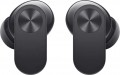 |
|---|---|---|
| OnePlus Buds V | OnePlus Buds Ace | |
from $31.99 | Compare prices 1 | |
| TOP sellers | ||
Active noise cancellation, long battery life. Enhanced sound with Dolby Panoramic Sound. | Active noise cancellation. | |
Connection and design | ||
| Design | in-ear | in-ear |
| Connection type | wireless | wireless |
| Connection | Bluetooth v5.3 | Bluetooth v5.3 |
| Range | 10 m | 10 m |
Specs | ||
| Game mode (low input lag) |  |  |
| Audio delay | 94 ms | |
| Impedance | 32 Ohm | |
| Frequency range | 20 – 20000 Hz | 20 – 20000 Hz |
| Sensitivity | 111 dB | |
| Speaker size | 12.4 mm | 12.4 mm |
| Emitter type | dynamic | dynamic |
Microphone specs | ||
| Microphone | built into the case | built into the case |
| Number of microphones | 2 pcs in each earphone | |
| Sensitivity | -38 dB | |
| Microphone noise canceling | ENC | ENC |
Features | ||
| Mobile app | | |
| Bass Boost | | |
| Noise cancellation | ANC | ANC |
| Transparent mode | | |
| Codec support | AAC | AAC |
| Voice assistant | Google Assistant | |
Power supply | ||
| Power source | battery | battery |
| Headphone battery capacity | 36 mAh | 41 mAh |
| Case battery capacity | 480 mAh | 480 mAh |
| Charging time | 1 h | |
| Operating time (music) | 8 h | 5 h |
| Operating time (talk) | 4 h | |
| Operating time (with case) | 38 h | 27 h |
| Battery life (with case, without ANC) | 36 h | |
| Fast charge | 10 minutes for 5 hours of work | |
| Charging port | USB-C | USB-C |
General | ||
| Touch control | | |
| Waterproof | IP55 | IP55 |
| In box | silicone tips 3 pairs charging case | silicone tips charging case |
| Added to E-Catalog | december 2024 | june 2023 |



Compare OnePlus Buds V and Buds Ace
The headphones OnePlus Buds V and OnePlus Buds Ace have similar features, but there are key differences. Buds V offer a gaming mode with low audio latency (94 ms) and long battery life of up to 38 hours with the case, making them more suitable for extended listening sessions. Meanwhile, the Buds Ace have a slightly larger battery capacity in the earbuds (41 mAh), but the total battery life with the case is 27 hours (36 hours without active noise cancellation). Both devices support active noise cancellation and have an IP55 water resistance rating. However, Buds V stand out with support for the HeyMelody mobile app and Dolby Panoramic Sound technology for enhanced sound, while Buds Ace offer a BassWave feature for boosted bass. The choice between them will depend on preferences in sound characteristics and battery life.
Price comparison
You may be interested in
My comparisons
OnePlus Buds V often compared

OnePlus Buds Ace often compared


Glossary
Game mode (low input lag)
A special game mode in wireless headphones that minimizes the delay in transmitting an audio track from a connected source. Low Input Lag) provides the ability to quickly respond to what is happening in virtual battles and prevents the picture from being out of sync with the sound. At the same time, when you activate the game mode, wireless headphones will be discharged faster.
Audio delay
Sound delay in wireless headphones is a natural process caused by the specifics of audio data transmission over Bluetooth. It can be either almost imperceptible or clearly interfere with comfortable gameplay or watching video content. This paragraph provides the declared sound delay time in milliseconds, which is written in the technical specifications for a particular headphone model.
Impedance
Impedance refers to the headphone's nominal resistance to AC current, such as an audio signal.
Other things being equal, a higher impedance reduces distortion, but requires a more powerful amplifier — otherwise the headphones simply will not be able to produce sufficient volume. Thus, the choice of resistance depends primarily on which signal source you plan to connect the "ears". So, for a portable gadget (smartphone, pocket player), an indicator of 16 ohms or less is considered optimal, 17 – 32 ohms is not bad. Higher values — 33 – 64 ohms and 65 – 96 ohms — will require quite powerful amplifiers, like those used in computers and televisions. And models with a resistance of 96 – 250 ohms and above are designed mainly for Hi-End audio equipment and professional use; for such cases, detailed recommendations for selection can be found in special sources.
Other things being equal, a higher impedance reduces distortion, but requires a more powerful amplifier — otherwise the headphones simply will not be able to produce sufficient volume. Thus, the choice of resistance depends primarily on which signal source you plan to connect the "ears". So, for a portable gadget (smartphone, pocket player), an indicator of 16 ohms or less is considered optimal, 17 – 32 ohms is not bad. Higher values — 33 – 64 ohms and 65 – 96 ohms — will require quite powerful amplifiers, like those used in computers and televisions. And models with a resistance of 96 – 250 ohms and above are designed mainly for Hi-End audio equipment and professional use; for such cases, detailed recommendations for selection can be found in special sources.
Sensitivity
Rated headphone sensitivity. Technically, this is the volume at which they sound when a certain standard signal from the amplifier is connected to them. Thus, sensitivity is one of the parameters that determine the overall volume of the headphones: the higher it is, the louder the sound will be with the same input signal level and other things being equal. However, we must not forget that the volume level also depends on the resistance (impedance, see above); moreover, it is worth choosing “ears” for a specific device first by impedance, and only then by sensitivity. In this case, one parameter can be compensated for by another: for example, a model with high resistance and high sensitivity can work even on a relatively weak amplifier.
As for specific figures, headphones with indicators of 100 dB or less are designed mainly for use in a quiet environment (in some similar models, the sensitivity does not exceed 90 dB). For use on the street, in transport and other similar conditions, it is desirable to have more sensitive headphones — about 101 – 105 dB, or even 110 dB. And in some models, this figure can reach 116 – 120 dB. and even more.
It is also worth noting that this parameter is relevant only for a wired connection according to the analogue standard — for example, via a 3.5 mm mini-...jack. When using digital interfaces like USB and wireless channels like Bluetooth, the sound is processed in the built-in headphone converter, and if you plan to mainly use this kind of application, you can not pay much attention to sensitivity.
As for specific figures, headphones with indicators of 100 dB or less are designed mainly for use in a quiet environment (in some similar models, the sensitivity does not exceed 90 dB). For use on the street, in transport and other similar conditions, it is desirable to have more sensitive headphones — about 101 – 105 dB, or even 110 dB. And in some models, this figure can reach 116 – 120 dB. and even more.
It is also worth noting that this parameter is relevant only for a wired connection according to the analogue standard — for example, via a 3.5 mm mini-...jack. When using digital interfaces like USB and wireless channels like Bluetooth, the sound is processed in the built-in headphone converter, and if you plan to mainly use this kind of application, you can not pay much attention to sensitivity.
Number of microphones
The number of microphones in headphones indicates how many separate microphone capsules are used in the headset for voice transmission and sound processing algorithms. In simple models, there is one microphone, which is sufficient for occasional calls in a quiet room. More advanced TWS, office, and gaming headsets have 2–3 microphones per earbud: some "listen" to the voice, others to the surrounding noise, so the electronics can better eliminate interference and make speech clearer to the listener. A large number of microphones is especially important during conversations outdoors, on public transport, in an open-plan office, and for features like wind noise reduction or precise sound direction detection in gaming models. For instance, a headset with multiple microphones will transmit a voice much better during a conference call or online gaming than basic headphones with one microphone, though it may be slightly more expensive.
Sensitivity
The sensitivity of the headphone's own microphone.
The more sensitive the microphone, the higher the signal level from it, at the same sound volume, and the better this model is suitable for picking up quiet sounds. Conversely, low sensitivity filters out background noise. At the same time, we note that these nuances are important mainly in professional work with sound. And for simple tasks like voice communication over the phone or via the Internet, sensitivity does not really matter: in headphones of this specialization, it is selected in such a way as to ensure that the microphone is guaranteed to work.
The more sensitive the microphone, the higher the signal level from it, at the same sound volume, and the better this model is suitable for picking up quiet sounds. Conversely, low sensitivity filters out background noise. At the same time, we note that these nuances are important mainly in professional work with sound. And for simple tasks like voice communication over the phone or via the Internet, sensitivity does not really matter: in headphones of this specialization, it is selected in such a way as to ensure that the microphone is guaranteed to work.
Mobile app
The ability to operate the functions and settings of headphones through a mobile application for a smartphone or tablet. Communication between the device and gadgets is usually carried out via the Bluetooth wireless protocol. The mobile application may provide tools for flexible sound settings (equalizer, bass boost, etc.), switching noise reduction and transparency modes, reassigning buttons and gestures, finding lost headphones, etc. Also, the ability to update the headphone firmware is often implemented through the mobile application.
Voice assistant
Headphones with voice assistant support the user interaction with the device to a new level. The call of the assistant. is carried out by pressing one of the control buttons on the headphones or by a specific voice command (for example, «Ok, Google» for the Google Assistant virtual apprentice). The assistant pauses playback, instantly changes the volume of the music, can notify the user of new alerts, helps to answer messages without the help of hands, and commands are given to the paired smartphone via voice control from the headphones.
Headphone battery capacity
The capacity of the battery installed in the headphones of the corresponding design (see "Power").
Theoretically, a higher capacity allows to achieve greater battery life, but in fact, the operating time also depends on the power consumption of the headphones — and it can be very different, depending on the characteristics and design features. So this parameter is secondary, and when choosing it is worth paying attention not so much to the battery capacity, but to the directly claimed operating time (see below).
Theoretically, a higher capacity allows to achieve greater battery life, but in fact, the operating time also depends on the power consumption of the headphones — and it can be very different, depending on the characteristics and design features. So this parameter is secondary, and when choosing it is worth paying attention not so much to the battery capacity, but to the directly claimed operating time (see below).