
Comparison OnePlus Buds 3 vs CMF Buds Pro 2
Add to comparison | 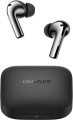 |  |
|---|---|---|
| OnePlus Buds 3 | CMF Buds Pro 2 | |
from $89.03 | Compare prices 1 | |
| User reviews | ||
| TOP sellers | ||
Hi-Res certification, adaptive noise cancellation, low-latency gaming mode, and good battery life with the case. | Adaptive noise cancellation, long battery life, earphones search function, gaming mode. Spatial Audio surround sound technology. | |
Connection and design | ||
| Design | in-ear | in-ear |
| Connection type | wireless | wireless |
| Connection | Bluetooth v5.3 | Bluetooth v5.3 |
| Range | 10 m | 10 m |
Specs | ||
| Hi-Res Audio |  | |
| Game mode (low input lag) | | |
| Audio delay | 94 ms | |
| Power | 10 mW | |
| Frequency range | 15 – 40000 Hz | |
| Speaker size | 10.4 mm | |
| Emitter type | dynamic | hybrid |
| Number of emitters | 2 | 2 |
Microphone specs | ||
| Microphone | built into the case | built into the case |
| Number of microphones | 3 pcs in each earphone | |
| Sensitivity | -38 dB | |
| Microphone noise canceling | ENC | |
| Microphone mute |  | |
Features | ||
| Mobile app | | |
| Volume control | | |
| Bass Boost | | |
| Autopause | | |
| Noise cancellation | adaptive ANC | adaptive ANC |
| Transparent mode | | |
| Multipoint | | |
| Codec support | AAC LHDC | AAC LDAC |
| Voice assistant | Google Assistant | |
| Headphone search | | |
Power supply | ||
| Power source | battery | battery |
| Headphone battery capacity | 58 mAh | 60 mAh |
| Case battery capacity | 520 mAh | 460 mAh |
| Operating time (music) | 6.5 h | 4.3 h |
| Operating time (talk) | 4 h | |
| Operating time (no noise canceling) | 10 h | 11 h |
| Operating time (with case) | 28 h | 21 h |
| Battery life (with case, without ANC) | 44 h | 43 h |
| Fast charge | 10 minutes for 7 hours of work | 10 minutes for 3 hours of work |
| Charging port | USB-C | USB-C |
General | ||
| Touch control | | |
| Waterproof | IP55 | IP55 |
| Weight | 5 g | |
| In box | silicone tips 3 pairs charging case | silicone tips 3 pairs charging case |
| Color | ||
| Added to E-Catalog | december 2024 | august 2024 |



Compare OnePlus Buds 3 and CMF Buds Pro 2
Headphones OnePlus Buds 3 and CMF Buds Pro 2 have similar features, but there are key differences. The OnePlus Buds 3 offer a wide frequency range (15 – 40000 Hz) and support for AAC and LHDC codecs, which may be an advantage for users seeking high sound quality. Meanwhile, the CMF Buds Pro 2 stand out with their active noise cancellation system and Smart Dial control on the charging case. In terms of battery life, the OnePlus Buds 3 provide up to 28 hours with the case, while the CMF Buds Pro 2 offer 21 hours with the case. Reviews note that the noise cancellation on CMF Buds Pro 2 works better. If sound control and convenience are important to you, consider the CMF Buds Pro 2, while if sound quality and longer battery life are a priority, the OnePlus Buds 3 may be the better choice.
Price comparison
You may be interested in
OnePlus Buds 3 often compared


CMF Buds Pro 2 often compared


Glossary
Audio delay
Sound delay in wireless headphones is a natural process caused by the specifics of audio data transmission over Bluetooth. It can be either almost imperceptible or clearly interfere with comfortable gameplay or watching video content. This paragraph provides the declared sound delay time in milliseconds, which is written in the technical specifications for a particular headphone model.
Power
Headphone power is expressed in milliwatts (mW) - this figure can vary from a modest figure of 1 mW to an impressive level of 5000 mW. For the vast majority of headphones, power is not a decisive factor. In essence, this is an indicator of how loud the sound can be without the risk of damaging the drivers. At the same time, the parameter is important for some professional studio and audiophile models - in this case, power means the maximum audio signal level that is allowed to be supplied to the headphones from the sound source. If the headphones are used with a device that supplies too strong a signal, they may distort the sound or fail.
Frequency range
The range of sound frequencies that headphones can reproduce.
The wider this range, the more fully the headphones reproduce the spectrum of sound frequencies, the lower the likelihood that too low or too high frequencies will be inaccessible. However, there are some nuances to consider here. First of all, let us remind you that the perceptual range of the human ear is on average from 16 Hz to 22 kHz, and for the complete picture it is enough for headphones to cover this range. However, modern models can significantly exceed these boundaries: in many devices the lower threshold does not exceed 15 Hz, or even 10 Hz, and the upper limit can reach 25 kHz, 30 kHz and even more. Such wide ranges in themselves do not provide practical advantages, but they usually indicate a high class of headphones, and are sometimes given only for advertising purposes.
The second important point is that a wide frequency range in itself is not a guarantee of good sound: sound quality also depends on a number of parameters, primarily the amplitude-frequency response of the headphones.
The wider this range, the more fully the headphones reproduce the spectrum of sound frequencies, the lower the likelihood that too low or too high frequencies will be inaccessible. However, there are some nuances to consider here. First of all, let us remind you that the perceptual range of the human ear is on average from 16 Hz to 22 kHz, and for the complete picture it is enough for headphones to cover this range. However, modern models can significantly exceed these boundaries: in many devices the lower threshold does not exceed 15 Hz, or even 10 Hz, and the upper limit can reach 25 kHz, 30 kHz and even more. Such wide ranges in themselves do not provide practical advantages, but they usually indicate a high class of headphones, and are sometimes given only for advertising purposes.
The second important point is that a wide frequency range in itself is not a guarantee of good sound: sound quality also depends on a number of parameters, primarily the amplitude-frequency response of the headphones.
Speaker size
The diameter of the speaker installed in the headphones; models with multiple drivers (see "Number of drivers"), usually, the size of the largest speaker is taken into account, other dimensions can be specified in the notes.
In general, this parameter is relevant primarily for over-ear headphones (see "Design"). In them, emitters can have different sizes; the larger it is, the more saturated the sound is and the better the speaker reproduces the bass, however, large emitters have a corresponding effect on the dimensions, weight and price of the headphones. But in-ear "ears" and earbuds, by definition, have very small speakers, and rich bass in them is achieved due to other design features.
In general, this parameter is relevant primarily for over-ear headphones (see "Design"). In them, emitters can have different sizes; the larger it is, the more saturated the sound is and the better the speaker reproduces the bass, however, large emitters have a corresponding effect on the dimensions, weight and price of the headphones. But in-ear "ears" and earbuds, by definition, have very small speakers, and rich bass in them is achieved due to other design features.
Emitter type
The type of sound emitters installed in the headphones. The type determines the principle of operation of emitters and some features of their design.
— Dynamic. The simplest type of emitters operating on the principle of an electromagnet. Due to the combination of low cost with quite decent performance, it is also the most common, especially among entry-level and mid-range headphones. Such an emitter consists of a magnet, a coil placed in its field, and a membrane attached to the coil. When an alternating current (signal) enters the coil, it begins to vibrate, transmitting vibrations to the membrane and creating sound. From an acoustic point of view, the main advantages of dynamic radiators are a wide frequency range and good volume, the disadvantage is a relatively high probability of distortion, especially with a worn membrane.
— Reinforcing. A peculiar modification of dynamic emitters (see the relevant paragraph), used mainly in high-end in-ear headphones. The basis of the design of such a radiator is a U-shaped metal plate. One of its ends is fixed motionless, the second, movable, is located between the poles of a permanent magnet, and a coil is wound around it (closer to the crossbar), through which the signal current passes. Vibrating under the action of this current, the movable part of the plate transmits vibrations to a rigid membrane, with which it is connected by a thin need...le. This technology allows you to achieve good volume and low distortion with a very small size of the earpiece itself. The disadvantages of reinforcing radiators, in addition to high cost, are uneven frequency response and a relatively narrow frequency range. However, in expensive headphones of this type, several emitters can be provided at once, including on a hybrid basis (see relevant paragraph).
— Hybrid. Hybrid devices are usually called devices that combine dynamic and reinforcing emitters. See above for more details on these varieties; and their combination is used to combine advantages and compensate for disadvantages. Usually, in such headphones there is only one dynamic emitter, it is responsible for low frequencies, and there can be several reinforcing ones, they share the midrange and high frequencies. This allows you to achieve a more uniform frequency response than in purely armature models, but it significantly affects the price.
— Planar. The design of emitters of this type includes two powerful permanent magnets, between which there is a thin film membrane. The shape of the headphones themselves can be either round (orthodynamic emitters) or rectangular (isodynamic). According to the principle of operation, such systems are similar to dynamic ones, with the adjustment for the fact that there is no coil in the design — its role is played by the membrane itself with applied conductive tracks, to which the audio signal is fed. Due to this, distortions associated with the uneven oscillations of the membrane are practically absent; in addition, the sound as a whole is clear and reliable, and the frequency response is uniform. The main disadvantages of planar magnetic headphones are high cost, increased requirements for signal quality, and rather large dimensions. In addition, they are somewhat inferior to dynamic ones in terms of volume and overall frequency range.
— Electrostatic. Like planar-magnetic (see the relevant paragraph), such emitters are designed according to the "sandwich" principle. However, the membrane in them is located not between the magnets, but between the metal grids, and is made of a very thin metallized film. An audio signal is connected to such a system in a special way, and the membrane begins to oscillate due to attraction and repulsion from the grids, creating sound. Electrostatic drivers achieve very high sound quality, low distortion, and high fidelity, but they are bulky, complex, and expensive to use. And it's not just the high cost of the headphones themselves — their operation requires additional matching amplifiers with a voltage range of hundreds or even thousands of volts, and such devices cost a lot, and have the appropriate dimensions.
— Dynamic. The simplest type of emitters operating on the principle of an electromagnet. Due to the combination of low cost with quite decent performance, it is also the most common, especially among entry-level and mid-range headphones. Such an emitter consists of a magnet, a coil placed in its field, and a membrane attached to the coil. When an alternating current (signal) enters the coil, it begins to vibrate, transmitting vibrations to the membrane and creating sound. From an acoustic point of view, the main advantages of dynamic radiators are a wide frequency range and good volume, the disadvantage is a relatively high probability of distortion, especially with a worn membrane.
— Reinforcing. A peculiar modification of dynamic emitters (see the relevant paragraph), used mainly in high-end in-ear headphones. The basis of the design of such a radiator is a U-shaped metal plate. One of its ends is fixed motionless, the second, movable, is located between the poles of a permanent magnet, and a coil is wound around it (closer to the crossbar), through which the signal current passes. Vibrating under the action of this current, the movable part of the plate transmits vibrations to a rigid membrane, with which it is connected by a thin need...le. This technology allows you to achieve good volume and low distortion with a very small size of the earpiece itself. The disadvantages of reinforcing radiators, in addition to high cost, are uneven frequency response and a relatively narrow frequency range. However, in expensive headphones of this type, several emitters can be provided at once, including on a hybrid basis (see relevant paragraph).
— Hybrid. Hybrid devices are usually called devices that combine dynamic and reinforcing emitters. See above for more details on these varieties; and their combination is used to combine advantages and compensate for disadvantages. Usually, in such headphones there is only one dynamic emitter, it is responsible for low frequencies, and there can be several reinforcing ones, they share the midrange and high frequencies. This allows you to achieve a more uniform frequency response than in purely armature models, but it significantly affects the price.
— Planar. The design of emitters of this type includes two powerful permanent magnets, between which there is a thin film membrane. The shape of the headphones themselves can be either round (orthodynamic emitters) or rectangular (isodynamic). According to the principle of operation, such systems are similar to dynamic ones, with the adjustment for the fact that there is no coil in the design — its role is played by the membrane itself with applied conductive tracks, to which the audio signal is fed. Due to this, distortions associated with the uneven oscillations of the membrane are practically absent; in addition, the sound as a whole is clear and reliable, and the frequency response is uniform. The main disadvantages of planar magnetic headphones are high cost, increased requirements for signal quality, and rather large dimensions. In addition, they are somewhat inferior to dynamic ones in terms of volume and overall frequency range.
— Electrostatic. Like planar-magnetic (see the relevant paragraph), such emitters are designed according to the "sandwich" principle. However, the membrane in them is located not between the magnets, but between the metal grids, and is made of a very thin metallized film. An audio signal is connected to such a system in a special way, and the membrane begins to oscillate due to attraction and repulsion from the grids, creating sound. Electrostatic drivers achieve very high sound quality, low distortion, and high fidelity, but they are bulky, complex, and expensive to use. And it's not just the high cost of the headphones themselves — their operation requires additional matching amplifiers with a voltage range of hundreds or even thousands of volts, and such devices cost a lot, and have the appropriate dimensions.
Number of microphones
The number of microphones in headphones indicates how many separate microphone capsules are used in the headset for voice transmission and sound processing algorithms. In simple models, there is one microphone, which is sufficient for occasional calls in a quiet room. More advanced TWS, office, and gaming headsets have 2–3 microphones per earbud: some "listen" to the voice, others to the surrounding noise, so the electronics can better eliminate interference and make speech clearer to the listener. A large number of microphones is especially important during conversations outdoors, on public transport, in an open-plan office, and for features like wind noise reduction or precise sound direction detection in gaming models. For instance, a headset with multiple microphones will transmit a voice much better during a conference call or online gaming than basic headphones with one microphone, though it may be slightly more expensive.
Sensitivity
The sensitivity of the headphone's own microphone.
The more sensitive the microphone, the higher the signal level from it, at the same sound volume, and the better this model is suitable for picking up quiet sounds. Conversely, low sensitivity filters out background noise. At the same time, we note that these nuances are important mainly in professional work with sound. And for simple tasks like voice communication over the phone or via the Internet, sensitivity does not really matter: in headphones of this specialization, it is selected in such a way as to ensure that the microphone is guaranteed to work.
The more sensitive the microphone, the higher the signal level from it, at the same sound volume, and the better this model is suitable for picking up quiet sounds. Conversely, low sensitivity filters out background noise. At the same time, we note that these nuances are important mainly in professional work with sound. And for simple tasks like voice communication over the phone or via the Internet, sensitivity does not really matter: in headphones of this specialization, it is selected in such a way as to ensure that the microphone is guaranteed to work.
Microphone noise canceling
The presence of a noise reduction system in its own headphone microphone.
In accordance with the name, such a system is designed to eliminate extraneous noise - primarily during conversations. It is usually based on an electronic filter that passes the sound of a human voice and cuts off background sounds such as city noise, the rumble of wind in the microphone grille, etc. As a result, even in noisy environments, thanks to the noise reduction of the microphone, speech is clear and intelligible; True, the system inevitably introduces distortions into the final sound, but they are not critical in this case.
— ENC. ENC (Environment Noise Cancellation) technology significantly reduces ambient noise with directional microphones. It is used both in gaming devices so that gamers can easily communicate in voice chat, and in TWS earphone models so that you can comfortably talk on the phone in a noisy environment.
— cVc. Microphone noise reduction cVc (Clear Voice Capture) is an advanced technology that is found mainly in expensive headphone models. cVc algorithms effectively suppress echo and noise from the environment. Sound processing using this technology is carried out at several levels at once - the algorithm determines the reference signal-to-noise level, automatically adjusts speech to the desired volume level, applies adaptive equalizers to process the entire voice, as well as specialized filters to remove...low-frequency bubbling, sibilants and hissing.
In accordance with the name, such a system is designed to eliminate extraneous noise - primarily during conversations. It is usually based on an electronic filter that passes the sound of a human voice and cuts off background sounds such as city noise, the rumble of wind in the microphone grille, etc. As a result, even in noisy environments, thanks to the noise reduction of the microphone, speech is clear and intelligible; True, the system inevitably introduces distortions into the final sound, but they are not critical in this case.
— ENC. ENC (Environment Noise Cancellation) technology significantly reduces ambient noise with directional microphones. It is used both in gaming devices so that gamers can easily communicate in voice chat, and in TWS earphone models so that you can comfortably talk on the phone in a noisy environment.
— cVc. Microphone noise reduction cVc (Clear Voice Capture) is an advanced technology that is found mainly in expensive headphone models. cVc algorithms effectively suppress echo and noise from the environment. Sound processing using this technology is carried out at several levels at once - the algorithm determines the reference signal-to-noise level, automatically adjusts speech to the desired volume level, applies adaptive equalizers to process the entire voice, as well as specialized filters to remove...low-frequency bubbling, sibilants and hissing.
Microphone mute
The ability to turn off your own headphone microphone using a special button or switch.
This feature is relevant mainly for phone calls, Skype, etc. It is useful in situations where you need to distract from the main conversation and say something that the interlocutor does not need to hear. Disconnecting the microphone is easier and more reliable than covering it with your hand or disconnecting the headphones entirely.
Note that the ability to turn off the microphone may be provided in the communication programme itself (the same Skype, for example). However, again, using the switch on the headphones is more convenient.
This feature is relevant mainly for phone calls, Skype, etc. It is useful in situations where you need to distract from the main conversation and say something that the interlocutor does not need to hear. Disconnecting the microphone is easier and more reliable than covering it with your hand or disconnecting the headphones entirely.
Note that the ability to turn off the microphone may be provided in the communication programme itself (the same Skype, for example). However, again, using the switch on the headphones is more convenient.