
Comparison CMF Buds vs CMF Buds Pro
Add to comparison |  | 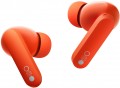 |
|---|---|---|
| CMF Buds | CMF Buds Pro | |
| Compare prices 6 | from $37.05 | |
| User reviews | ||
| TOP sellers | ||
Active noise cancellation, long battery life, headphone search function, game mode, Dirac Opteo sound enhancement technology. | Active noise cancellation, long battery life, headphone search function, game mode. | |
Connection and design | ||
| Design | in-ear | in-ear |
| Connection type | wireless | wireless |
| Connection | Bluetooth v5.3 | Bluetooth v5.3 |
| Range | 10 m | 10 m |
Specs | ||
| Game mode (low input lag) |  | |
| Speaker size | 12.4 mm | |
| Emitter type | dynamic | dynamic |
Microphone specs | ||
| Microphone | built into the case | built into the case |
| Number of microphones | 2 pcs in each earphone | 3 pcs in each earphone |
| Microphone mute | | |
Features | ||
| Mobile app | | |
| Bass Boost | |  |
| Autopause | | |
| Noise cancellation | ANC | ANC |
| Transparent mode | | |
| Multipoint | | |
| Codec support | AAC | AAC |
| Headphone search | | |
Power supply | ||
| Power source | battery | battery |
| Headphone battery capacity | 45 mAh | 55 mAh |
| Case battery capacity | 460 mAh | 460 mAh |
| Operating time (music) | 4.7 h | 6.5 h |
| Operating time (no noise canceling) | 8 h | 11 h |
| Operating time (with case) | 21 h | 22 h |
| Battery life (with case, without ANC) | 35.5 h | 39 h |
| Fast charge | 10 minutes for 6.5 hours of work | 10 minutes for 3 hours of work |
| Charging port | USB-C | USB-C |
General | ||
| Touch control | | |
| Waterproof | IP54 | IP54 |
| Weight | 5 g | |
| In box | silicone tips 3 pairs charging case | silicone tips 3 pairs charging case |
| Color | ||
| Added to E-Catalog | july 2024 | september 2023 |




Compare CMF Buds and Buds Pro
Headphones CMF Buds and CMF Buds Pro have similar features, but there are a few key differences. CMF Buds Pro offer longer battery life — up to 11 hours without active noise cancellation (compared to 8 hours for Buds) and 6.5 hours with ANC, while Buds work for 4.7 hours with ANC. Additionally, the Pro version is equipped with three microphones per earbud, enhancing sound quality during calls, whereas Buds have only two. In terms of active noise cancellation, the Pro version offers three adjustment levels, providing more control, while Buds have standard ANC. Overall, if longer battery life and better sound quality during calls are important to you, CMF Buds Pro are worth considering.
Price comparison
You may be interested in
My comparisons
CMF Buds often compared


CMF Buds Pro often compared

Glossary
Speaker size
The diameter of the speaker installed in the headphones; models with multiple drivers (see "Number of drivers"), usually, the size of the largest speaker is taken into account, other dimensions can be specified in the notes.
In general, this parameter is relevant primarily for over-ear headphones (see "Design"). In them, emitters can have different sizes; the larger it is, the more saturated the sound is and the better the speaker reproduces the bass, however, large emitters have a corresponding effect on the dimensions, weight and price of the headphones. But in-ear "ears" and earbuds, by definition, have very small speakers, and rich bass in them is achieved due to other design features.
In general, this parameter is relevant primarily for over-ear headphones (see "Design"). In them, emitters can have different sizes; the larger it is, the more saturated the sound is and the better the speaker reproduces the bass, however, large emitters have a corresponding effect on the dimensions, weight and price of the headphones. But in-ear "ears" and earbuds, by definition, have very small speakers, and rich bass in them is achieved due to other design features.
Number of microphones
The number of microphones in headphones indicates how many separate microphone capsules are used in the headset for voice transmission and sound processing algorithms. In simple models, there is one microphone, which is sufficient for occasional calls in a quiet room. More advanced TWS, office, and gaming headsets have 2–3 microphones per earbud: some "listen" to the voice, others to the surrounding noise, so the electronics can better eliminate interference and make speech clearer to the listener. A large number of microphones is especially important during conversations outdoors, on public transport, in an open-plan office, and for features like wind noise reduction or precise sound direction detection in gaming models. For instance, a headset with multiple microphones will transmit a voice much better during a conference call or online gaming than basic headphones with one microphone, though it may be slightly more expensive.
Bass Boost
Bass boost function for powerful and rich bass. Often implemented as a single button, with which you can actually "turn the bass on and off." Bass Boost is more convenient than adjusting low frequencies with an equalizer; in addition, various special technologies can be used to enhance the bass.
Multipoint
A technology used in Bluetooth models (see "Connection") that allows the headphones to connect to multiple devices at the same time. Thanks to this, you can, for example, listen to music from a laptop, and when a call comes in on a mobile phone, switch the headphones to a conversation. This technology has its own characteristics for different manufacturers, and therefore, if the multipoint function is critical for you, you should separately clarify the details of its operation in the selected model.
Headphone battery capacity
The capacity of the battery installed in the headphones of the corresponding design (see "Power").
Theoretically, a higher capacity allows to achieve greater battery life, but in fact, the operating time also depends on the power consumption of the headphones — and it can be very different, depending on the characteristics and design features. So this parameter is secondary, and when choosing it is worth paying attention not so much to the battery capacity, but to the directly claimed operating time (see below).
Theoretically, a higher capacity allows to achieve greater battery life, but in fact, the operating time also depends on the power consumption of the headphones — and it can be very different, depending on the characteristics and design features. So this parameter is secondary, and when choosing it is worth paying attention not so much to the battery capacity, but to the directly claimed operating time (see below).
Operating time (music)
The declared operating time of headphones with autonomous power supply (see above) when listening to music on a single battery charge or a set of batteries.
As a rule, the characteristics indicate a certain average operating time in music listening mode, for standard conditions; in practice, it will depend on the intensity of use, volume level and other operating parameters, and in models with replaceable batteries - also on the quality of specific batteries. However, based on the stated time, you can fairly reliably assess the autonomy of the selected headphones and compare them with other models. As for specific values, relatively “short-lived” devices have a battery life of up to 8 hours, a figure of 8 – 12 hours can be called quite good, 12 – 20 hours – very good, and in the most “long-lasting” headphones the operating time can exceed 20 hours.
As a rule, the characteristics indicate a certain average operating time in music listening mode, for standard conditions; in practice, it will depend on the intensity of use, volume level and other operating parameters, and in models with replaceable batteries - also on the quality of specific batteries. However, based on the stated time, you can fairly reliably assess the autonomy of the selected headphones and compare them with other models. As for specific values, relatively “short-lived” devices have a battery life of up to 8 hours, a figure of 8 – 12 hours can be called quite good, 12 – 20 hours – very good, and in the most “long-lasting” headphones the operating time can exceed 20 hours.
Operating time (no noise canceling)
How long does the active noise canceling headphones (see above) last on a single battery charge (or a set of batteries) when noise canceling is not used.
This function is quite “gluttonous” in terms of battery consumption, up to half of the total energy consumed by the headphones can go to its work. Thus, models with noise reduction can indicate both overall battery life (see "Operating time"), and battery life with the noise reduction turned off.
This function is quite “gluttonous” in terms of battery consumption, up to half of the total energy consumed by the headphones can go to its work. Thus, models with noise reduction can indicate both overall battery life (see "Operating time"), and battery life with the noise reduction turned off.
Operating time (with case)
The maximum operating time of TWS headphones, taking into account recharging with a native case. But this time is not continuous use, it takes into account breaks for "refueling". Anyway, this parameter allows you to understand for how long you can leave the network (for example, how many nights to spend in a tent to the accompaniment of your favorite artist).
Battery life (with case, without ANC)
Total battery life of the set when active noise cancellation is turned off, considering charging from the case. To put it simply, it starts by calculating how many hours the headphones themselves can play music on a single charge, then how many times the charging case can fully "recharge" them, and as a result, the total reserve is obtained — for example, 20-30 hours or more. The indicator of operating time (with the case, without ANC noise cancellation) is important for those who frequently travel or don't like to constantly charge the headset: during trips, business trips, long walks, or days when music and calls play almost continuously. Compared to the mode with noise cancellation turned on, these values are usually noticeably higher, so this parameter helps to understand the maximum potential "range" of a model with more economical use.