
Comparison TOTO TPS-02 vs TOTO TPS-03
Add to comparison | 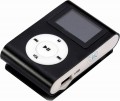 | 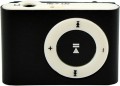 |
|---|---|---|
| TOTO TPS-02 | TOTO TPS-03 | |
| Outdated Product | Outdated Product | |
| TOP sellers | ||
| Type | audio | audio |
| For sports |  | |
| Memory card type | microSD | microSD |
| Max. memory card size | 16 GB | 16 GB |
Features | ||
| Audio formats support | MP3 | MP3 |
Connection | ||
| Outputs | mini-Jack (3.5 mm) | |
Screen | ||
| Screen | monochrome | |
General | ||
| Charging connector | MiniUSB | |
| Carrying clip | | |
| Material | plastic | plastic |
| Size (HxWxT) | 30x48x15 mm | 27x41x11 mm |
| Weight | 29 g | 12 g |
| Color | ||
| Added to E-Catalog | september 2017 | september 2017 |


Compare TOTO TPS-02 and TPS-03
You may be interested in
My comparisons
TOTO TPS-02 often compared

TOTO TPS-03 often compared


Glossary
Outputs
— micro-Jack (2.5 mm). The micro-Jack connector belongs to the category of TRS connections (Tip, Ring, Sleeve). The 2.5mm plug is the smallest diameter TRS plug. Micro-Jack connection (2.5 mm) is typical for mobile devices and compact portable audio equipment. The connector is backwards compatible with mini-Jack (3.5 mm) and Jack (6.35 mm), but for this you must use the appropriate adapters. Of course, when using adapters, note that the presence of an additional connection reduces the overall quality of the audio signal. To prevent degradation in quality, some MP3 players are equipped with a micro-Jack output in parallel with the mini-Jack or Jack.
— mini-Jack (3.5 mm). The mini-Jack (3.5 mm) connection is the most common type of TRS (Tip, Ring, Sleeve) interface. The mini-Jack output is found on the vast majority of consumer-grade MP3 players. The mini-Jack connector has a 3.5 mm plug — this is the middle (intermediate) type of TRS connections. The mini-Jack output is capable of transmitting an audio signal of sufficiently high quality. The mini-Jack connection is ready to satisfy the needs of both beginners and advanced music lovers.
— Pentaconn (4.4 mm). Pentaconn connection — 5-pin balanced output. Thanks to this connection, you can connect powerful amplifiers or DACs to your MP3 player. Additionally, the connector is also suitabl...e for connecting good high-impedance headphones. Pentaconn uses a larger than the mini-Jack plug, its diameter is 4.4 mm, it is stronger and more reliable than the 3.5 mm connection. The Pentaconn's balanced connection makes it possible to handle higher power audio signals. Thanks to this connection, it is possible to transmit a signal over a fairly long distance.
— Coaxial. The coaxial connection (S/PDIF) enables the transmission of an enhanced audio signal. In the coaxial signal algorithm, there is no digital to analogue conversion stage, which has a positive effect on the quality characteristics of the sound. RCA or TOSLINK connectors can be used for coaxial connection. Coaxial output is found mainly in Hi-End MP3 players. This is an expensive technique that requires the use of fairly expensive accessories. But in return, these players provide high-quality sound, designed for professional musicians and advanced music lovers.
— Optical. The optical connection is represented by a TOSLINK connector and a fibre optic cable. The essence of the optical connection is that the audio signal is converted from electrical to optical. At the other end of the cable, the optics are transformed back into digital sound. Being in optical form, the signal ceases to be subjected to interference and other interference. The optical signal does not lose its original quality even when transmitted over long distances. MP3 players with optical output provide the ability to listen to audio in high quality. The vast majority of MP3 players with a TOSLINK connector are premium models that can satisfy the needs of musicians, music lovers and advanced audiophiles.
— mini-Jack (3.5 mm). The mini-Jack (3.5 mm) connection is the most common type of TRS (Tip, Ring, Sleeve) interface. The mini-Jack output is found on the vast majority of consumer-grade MP3 players. The mini-Jack connector has a 3.5 mm plug — this is the middle (intermediate) type of TRS connections. The mini-Jack output is capable of transmitting an audio signal of sufficiently high quality. The mini-Jack connection is ready to satisfy the needs of both beginners and advanced music lovers.
— Pentaconn (4.4 mm). Pentaconn connection — 5-pin balanced output. Thanks to this connection, you can connect powerful amplifiers or DACs to your MP3 player. Additionally, the connector is also suitabl...e for connecting good high-impedance headphones. Pentaconn uses a larger than the mini-Jack plug, its diameter is 4.4 mm, it is stronger and more reliable than the 3.5 mm connection. The Pentaconn's balanced connection makes it possible to handle higher power audio signals. Thanks to this connection, it is possible to transmit a signal over a fairly long distance.
— Coaxial. The coaxial connection (S/PDIF) enables the transmission of an enhanced audio signal. In the coaxial signal algorithm, there is no digital to analogue conversion stage, which has a positive effect on the quality characteristics of the sound. RCA or TOSLINK connectors can be used for coaxial connection. Coaxial output is found mainly in Hi-End MP3 players. This is an expensive technique that requires the use of fairly expensive accessories. But in return, these players provide high-quality sound, designed for professional musicians and advanced music lovers.
— Optical. The optical connection is represented by a TOSLINK connector and a fibre optic cable. The essence of the optical connection is that the audio signal is converted from electrical to optical. At the other end of the cable, the optics are transformed back into digital sound. Being in optical form, the signal ceases to be subjected to interference and other interference. The optical signal does not lose its original quality even when transmitted over long distances. MP3 players with optical output provide the ability to listen to audio in high quality. The vast majority of MP3 players with a TOSLINK connector are premium models that can satisfy the needs of musicians, music lovers and advanced audiophiles.
Screen
Characteristics of the display installed in the player.
— Color(color/monochrome). The display color is selected by the manufacturer taking into account the functionality of the player. So, for a device that supports video and graphic materials (see “Other formats”), a color display is mandatory, and if the player only works with audio, a monochrome (one-color) screen is quite sufficient for it, especially since such screens are cheaper and consume less energy.
- Size. The diagonal dimensions of the display is directly related to the type of device (see above). Thus, classic audio players do not require large screens, in most of them this figure does not exceed 1.5"; but for a media player, 1.5" is, in fact, the absolute minimum, usually the diagonal is 3" or more. Also large Hi-Fi players are equipped with screens, they also provide a similar feature for the convenience of working with special tools.In general, a large screen, on the one hand, is convenient to use, on the other hand, it affects the dimensions and price of the device.
— Display resolution. Display dimensions in pixels vertically and horizontally. With the same diagonal, a higher resolution provides a clearer and more detailed image, but increases the cost of the player. In addition, not every player needs high detail: if the screen is used only for service information like the title of a so...ng, you can get by with small resolutions. Therefore, you should pay attention to this parameter only when it comes to a media player (see “Type”) on which you plan to often watch videos. In other cases, we can assume that the screen resolution is guaranteed to be sufficient for the tasks for which the device is intended.
— Sensor type. The type of matrix used in the screen.
— Color(color/monochrome). The display color is selected by the manufacturer taking into account the functionality of the player. So, for a device that supports video and graphic materials (see “Other formats”), a color display is mandatory, and if the player only works with audio, a monochrome (one-color) screen is quite sufficient for it, especially since such screens are cheaper and consume less energy.
- Size. The diagonal dimensions of the display is directly related to the type of device (see above). Thus, classic audio players do not require large screens, in most of them this figure does not exceed 1.5"; but for a media player, 1.5" is, in fact, the absolute minimum, usually the diagonal is 3" or more. Also large Hi-Fi players are equipped with screens, they also provide a similar feature for the convenience of working with special tools.In general, a large screen, on the one hand, is convenient to use, on the other hand, it affects the dimensions and price of the device.
— Display resolution. Display dimensions in pixels vertically and horizontally. With the same diagonal, a higher resolution provides a clearer and more detailed image, but increases the cost of the player. In addition, not every player needs high detail: if the screen is used only for service information like the title of a so...ng, you can get by with small resolutions. Therefore, you should pay attention to this parameter only when it comes to a media player (see “Type”) on which you plan to often watch videos. In other cases, we can assume that the screen resolution is guaranteed to be sufficient for the tasks for which the device is intended.
— Sensor type. The type of matrix used in the screen.
- OLED. An OLED matrix in which each pixel is actually a separate LED. In portable players, most of these screens are monochrome; for color displays it is more convenient to use other technologies.
- TFT. General name for liquid crystal displays. In this case, the TFT designation is used mainly for relatively simple screens that do not use advanced technologies like the IPS described below and have rather limited characteristics. However, such screens can be made in color and have high resolution.
- AMOLED. A development of the OLED technology described above, designed to create high-quality color displays. AMOLED screens are characterized by high brightness, rich colors and good viewing angles. Among their disadvantages, we can note a slightly shorter service life than the same IPS, as well as a tendency to fade in areas where bright parts of the image are often displayed.
- IPS. One of the most popular color screen technologies used in modern portable technology. Provides good color rendering quality and wide viewing angles; The picture quality is somewhat inferior to AMOLED, but is cheaper and lasts longer.
Charging connector
Type of connector used for charging the built-in battery of the player, specifically for connecting an external charger. Such a device can be a network or car adapter, power bank, or even a USB port of a PC or laptop. As for specific connectors, the following options are the most widespread:
— microUSB. A smaller version of the USB connector, created for portable devices. It appeared quite a while ago, yet it remains popular even nowadays, and is used by many manufacturers.
— MiniUSB. A connector similar to the one described above, differing only in size and shape of the socket — this interface is slightly larger than microUSB. Because of this, the connector is found less frequently.
— USB-C. A miniature USB connector, also positioned as a potential successor to microUSB. Unlike its predecessor, it has a reversible design, allowing the plug to be inserted into the socket in either direction.
— Lightning. Apple's proprietary connector. Like USB-C, it has a reversible design and is somewhat more convenient and reliable; however, the use of Lightning is limited to Apple products.
— Proprietary. A connection connector not related to widely accepted standards and used in a limited way — in the technology of one or several manufacturers. However, due to overall standardization, this option has almost vanished from the scene.
— microUSB. A smaller version of the USB connector, created for portable devices. It appeared quite a while ago, yet it remains popular even nowadays, and is used by many manufacturers.
— MiniUSB. A connector similar to the one described above, differing only in size and shape of the socket — this interface is slightly larger than microUSB. Because of this, the connector is found less frequently.
— USB-C. A miniature USB connector, also positioned as a potential successor to microUSB. Unlike its predecessor, it has a reversible design, allowing the plug to be inserted into the socket in either direction.
— Lightning. Apple's proprietary connector. Like USB-C, it has a reversible design and is somewhat more convenient and reliable; however, the use of Lightning is limited to Apple products.
— Proprietary. A connection connector not related to widely accepted standards and used in a limited way — in the technology of one or several manufacturers. However, due to overall standardization, this option has almost vanished from the scene.