
Comparison Yaber K3 vs Xiaomi Mi Smart Projector 2 Pro
Add to comparison |  | 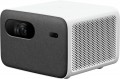 |
|---|---|---|
| Yaber K3 | Xiaomi Mi Smart Projector 2 Pro | |
| Compare prices 1 | from $2,199.99 | |
| TOP sellers | ||
NFC | Advanced smart features. HDR support. Extended light source lifespan. Motorized autofocus. | |
| Main function | home | home |
| Operating system | Google TV | Android TV 9.0 |
Lamp and image | ||
| Lamp type | LED | LED |
| Service life (energy-saving) | 30000 h | |
| Brightness ANSI Lumens | 1600 lm | 1300 lm |
| Dynamic contrast | 10 000:1 | |
Projection system | ||
| Technology | LCD | DLP |
| Size | 0.47" | |
| Real resolution | 1920x1080 px | 1920x1080 px |
| Image format support | 16:9 | 4:3, 16:9, 16:10 |
| HDR support | + | |
Projecting | ||
| Rear projection |  | |
| Throw distance, min | 1.1 m | 1.46 m |
| Throw distance, max | 5.3 m | 2.92 m |
| Image size | 40 – 200 " | 60 – 120 " |
| Throw ratio | 1.2:1 | 1.1:1 |
| Zoom and focus | motorized (remote-controlled) | |
| Autofocus | | |
| Auto keystone correction | | |
Features | ||
| Features | voice assistant | DLNA support voice control voice assistant |
| Bluetooth | v 5.0 | v 4.1 |
| Wi-Fi | Wi-Fi 6 (802.11ax) | Wi-Fi 4 (802.11n) |
| AirPlay | + | + |
| Google Cast (Chromecast) |  | |
| Miracast | | |
| Audio decoders | DTS-HD, Dolby Audio | |
Hardware | ||
| RAM | 2 GB | |
| Built-in memory | 16 GB | |
| USB-A 2.0 | 1 pcs | 2 pcs |
| Speaker system | JBL | |
| Number of speakers | 2 | 2 |
| Subwoofer | | |
| Sound power | 15 W | 20 W |
| HDMI inputs | 2 | 2 |
| Audio connectors | 3.5 mm output (mini-Jack) RCA (audio) | 3.5 mm output (mini-Jack) optical |
| Service connectors | LAN (RJ-45) | LAN (RJ-45) |
General | ||
| Noise level (nominal) | 27 dB | 28 dB |
| Power source | mains | mains |
| Size (HxWxD) | 154x290x323 mm | 143x215x201 mm |
| Weight | 5.1 kg | 3.7 kg |
| Color | ||
| Added to E-Catalog | march 2025 | august 2021 |



Compare Yaber K3 and Xiaomi Mi Smart Projector 2 Pro
The Yaber K3 and Xiaomi Mi Smart Projector 2 Pro are designed for home theater use, but they have different features. The Yaber K3 offers a brightness of 1600 ANSI lumens and a dynamic contrast ratio of 10,000:1, which provides a brighter and more contrast-rich image. Meanwhile, the Xiaomi Mi Smart Projector 2 Pro has a brightness of 1300 ANSI lumens but supports HDR and has a longer lamp lifespan—up to 30,000 hours. The Yaber K3 supports Wi-Fi 6 and Bluetooth 5.0, whereas Xiaomi uses the older versions Wi-Fi 4 and Bluetooth 4.1. In terms of sound, Xiaomi has a power output of 20W, which is slightly higher than Yaber's 15W. Both projectors feature autofocus and auto keystone correction, but Xiaomi offers motorized focusing. Overall, the choice depends on preferences: Yaber K3 is better for brightness and contrast, while Xiaomi Mi Smart Projector 2 Pro is optimal for smart functions and durability.
Price comparison
You may be interested in
My comparisons
Yaber K3 often compared

Xiaomi Mi Smart Projector 2 Pro often compared


Glossary
Operating system
— Smart TV (proprietary system). The operating system of the projector is represented by the proprietary software shell of the manufacturer. Usually such operating systems have an attractive and convenient menu, similar to a traditional Smart TV. A proprietary operating system is developed by the manufacturer for the hardware resources of a particular projector model or a whole line. But, as practice shows, compared to the classic Smart TV, the functionality of proprietary system often has significant limitations, and the system itself, in fact, is a stripped-down version of a full-fledged Smart TV.
— Smart TV (Android AOSP). This type of operating system is a modification of the popular Android OS, mainly notable for being open source. It is a versatile operating system that gives the user much more freedom to create changes and customizations within the system. At the same time, the installation and work stability of certain applications on this platform are not guaranteed, and the overall system management was not specially “tailored” for large screens, which may cause some inconvenience. First of all, such solutions will will generate interest among users who understand the features of the Android OS, like to customize and control everything, and have time for this.
— Android TV. This type of projector has full-fledged Android TV software, spec...ially adapted to work on large screens. In accordance with the name, it is a type of Android OS, specially designed for projectors/TVs, etc. In addition to the common features of all “Androids” (such as the ability to install additional applications, including even games), it has a number of special features: optimized interface, integration with smartphones (including the ability to use them as a remote control), voice search, etc. Thanks to this, TVs with this feature are significantly superior in functionality to models with a Smart TV. Of course, a dedicated processor, graphics subsystem and memory are provided for the operation of a multifunctional OS, and the presence of such hardware resources is reflected in the total cost of the projector. Given the same optical design, models with Android TV will cost more than classic projectors with a simple multi-line menu.
Service life (energy-saving)
When working in economy mode, the brightness of the backlight is noticeably reduced, on average by 30-50%. With a decrease in brightness, heat dissipation also decreases, which saves the working life of the illuminator, thereby increasing the lamp life. Thus, the ECO mode allows you to extend the lamp life by an average of 30%. If the typical projector lamp life is 4000 hours, regular use of the ECO mode will extend the backlight life to approximately 5500 hours.
Brightness ANSI Lumens
This parameter largely determines the ability of the projector to work in a well-lit room. For a dark room, 1000 lumens is enough to make the projection picture bright, rich, clear and understandable. But when working in a lit room, the projector will need at least 3500-4000 lumens. Do not confuse ANSI lumens with Peak lumens. These are two different brightness standards. To convert one type of brightness to another, you need to multiply Peak lumens by 10-12. The result will be an approximate value of ANSI Lumens.
However, experts do not recommend chasing high ANSI lumen brightness values. There are many professional projectors with brightness up to 3500 lm. The lower the brightness, the lower the power consumption, and at the same time, the life of the illuminator increases. Of course, if the projector will be installed in a work office or classroom where good lighting is required, it is recommended to purchase a model with ANSI Lumens brightness of 4000 lumens and more.
Dynamic contrast
The dynamic image contrast provided by the projector.
Dynamic contrast ratio is the ratio between the brightest white and darkest black colour that a projector can produce. Recall that the quality of colour reproduction and detailing depend on contrast, the higher this indicator, the lower the likelihood that details will be indistinguishable in bright or dark areas. However, dynamic contrast is a rather specific parameter. The fact is that when it is calculated, the brightest white at the maximum brightness settings and the darkest black at the minimum are taken into account. As a result, the figures in this column can be very impressive, but it is impossible to achieve such a contrast within one frame.
By introducing this parameter, the manufacturers went to a certain trick. However, this is not to say that dynamic contrast has nothing to do with image quality at all. Projectors can use automatic brightness control, in which the overall brightness, depending on the "picture" on the screen, can increase or decrease. This format of work is based on the fact that the human eye does not need too bright areas on a general dark background and very dark areas on a bright one, the image is normally perceived even without it. The maximum brightness difference achievable in this mode of operation is exactly what described by dynamic contrast.
Dynamic contrast ratio is the ratio between the brightest white and darkest black colour that a projector can produce. Recall that the quality of colour reproduction and detailing depend on contrast, the higher this indicator, the lower the likelihood that details will be indistinguishable in bright or dark areas. However, dynamic contrast is a rather specific parameter. The fact is that when it is calculated, the brightest white at the maximum brightness settings and the darkest black at the minimum are taken into account. As a result, the figures in this column can be very impressive, but it is impossible to achieve such a contrast within one frame.
By introducing this parameter, the manufacturers went to a certain trick. However, this is not to say that dynamic contrast has nothing to do with image quality at all. Projectors can use automatic brightness control, in which the overall brightness, depending on the "picture" on the screen, can increase or decrease. This format of work is based on the fact that the human eye does not need too bright areas on a general dark background and very dark areas on a bright one, the image is normally perceived even without it. The maximum brightness difference achievable in this mode of operation is exactly what described by dynamic contrast.
Technology
The technology by which the projector sensor is built.
— DLP. This technology is based on a chip with thousands of rotary micromirrors. Each such mirror corresponds to one pixel and has two fixed positions — “lit” and “darkened”. In most DLP projectors, there is only one sensor, and the output of a colour image is provided by the colour wheel, thanks to which the projector alternately displays the red, green and blue image; they are replaced so quickly that the viewer perceives not individual frames, but a whole colour picture. Compared to LCD models (see related section), these single-sensor projectors are more compact and offer better image contrast with deep black levels (which improves black and white image quality). However, the brightness of the colour image in DLP devices is relatively low, in addition, they are subject to the "rainbow effect": in dynamic scenes, colour artifacts may be noticeable due to the mismatch of red, green and blue image components. Three-sensor DLP projectors don`t have these shortcomings; however, such a design is very expensive, so it is found rarely, mainly among premium devices.
— 3LCD. Technology based on the use of translucent LCD sensors. There are three such sensors, each of them is translucent with its base colour (red, green or blue), and the final colour “picture” is formed from three images simultaneously superimposed on each other. Thanks to...this format of operation, you can achieve brighter, more saturated colours than in single-sensor DLP projectors (see the relevant paragraph); in addition, this technology is completely devoid of the "rainbow effect". Among its shortcomings are the relatively low contrast ratio (in particular, due to the low black depth) and the larger size of the projectors.
— LCD(Liquid Crystal Display) — a colour rendering technology based on the modulation of light by liquid crystals. Do not confuse LCD and 3LCD sensors. 3LCD technology forms an image from three separate light streams, and in an LCD sensor, the image follows immediately from a single light beam. Sensors of this type provide a stable, contrasting and colour-rich image. Among the shortcomings of the technology, one can note the glimpse of the light grating, if you look at the picture from a close distance. Additionally, the substrate of LCD sensors is prone to fading, due to which the blue colour may begin to turn yellow over time (note that this can happen after a long time of active operation). LCD sensors require periodic maintenance, the service comes down to cleaning the air filter. LCD-sensor projectors are usually compact in size and light in weight, such models are prone to heat, and the noise threshold is above average.
— LCoS. A technology that combines the properties of DLP and LCD. Like LCD, it provides three separate sensors for the three primary colours (red, green, blue), and the final colour image is formed by the simultaneous superposition of these three components. The difference lies in the fact that in LCoS projectors the sensors are not translucent, but reflective. Thanks to this, you can achieve excellent contrast (as in DLP) combined with bright, high-quality colours without the "rainbow effect" (as in LCD). The main drawback of this technology is the impressive cost, which is why it is used mainly in premium projectors.
— DLP. This technology is based on a chip with thousands of rotary micromirrors. Each such mirror corresponds to one pixel and has two fixed positions — “lit” and “darkened”. In most DLP projectors, there is only one sensor, and the output of a colour image is provided by the colour wheel, thanks to which the projector alternately displays the red, green and blue image; they are replaced so quickly that the viewer perceives not individual frames, but a whole colour picture. Compared to LCD models (see related section), these single-sensor projectors are more compact and offer better image contrast with deep black levels (which improves black and white image quality). However, the brightness of the colour image in DLP devices is relatively low, in addition, they are subject to the "rainbow effect": in dynamic scenes, colour artifacts may be noticeable due to the mismatch of red, green and blue image components. Three-sensor DLP projectors don`t have these shortcomings; however, such a design is very expensive, so it is found rarely, mainly among premium devices.
— 3LCD. Technology based on the use of translucent LCD sensors. There are three such sensors, each of them is translucent with its base colour (red, green or blue), and the final colour “picture” is formed from three images simultaneously superimposed on each other. Thanks to...this format of operation, you can achieve brighter, more saturated colours than in single-sensor DLP projectors (see the relevant paragraph); in addition, this technology is completely devoid of the "rainbow effect". Among its shortcomings are the relatively low contrast ratio (in particular, due to the low black depth) and the larger size of the projectors.
— LCD(Liquid Crystal Display) — a colour rendering technology based on the modulation of light by liquid crystals. Do not confuse LCD and 3LCD sensors. 3LCD technology forms an image from three separate light streams, and in an LCD sensor, the image follows immediately from a single light beam. Sensors of this type provide a stable, contrasting and colour-rich image. Among the shortcomings of the technology, one can note the glimpse of the light grating, if you look at the picture from a close distance. Additionally, the substrate of LCD sensors is prone to fading, due to which the blue colour may begin to turn yellow over time (note that this can happen after a long time of active operation). LCD sensors require periodic maintenance, the service comes down to cleaning the air filter. LCD-sensor projectors are usually compact in size and light in weight, such models are prone to heat, and the noise threshold is above average.
— LCoS. A technology that combines the properties of DLP and LCD. Like LCD, it provides three separate sensors for the three primary colours (red, green, blue), and the final colour image is formed by the simultaneous superposition of these three components. The difference lies in the fact that in LCoS projectors the sensors are not translucent, but reflective. Thanks to this, you can achieve excellent contrast (as in DLP) combined with bright, high-quality colours without the "rainbow effect" (as in LCD). The main drawback of this technology is the impressive cost, which is why it is used mainly in premium projectors.
Size
The size of the panel/chip affects the depth and final quality of the image. The larger the panel/chip, the more light it is able to process, which means the picture will be clearer and more structured. The average projector has a sensor of 0.5-0.7″, advanced projectors use sensors of 1.2-1.5″ and more.
Image format support
Image formats supported by the projector.
In this case, format means the aspect ratio of the image. The general rule in this case is that the projector must support the same format in which the original content is recorded. Otherwise, the image will either be stretched in height or width, or with black stripes on the sides or top-bottom. Specifically, the formats can be divided into three main categories:
— Traditional, or rectangular. Classic formats in which the height of the picture is not much less than the width. The most popular options are 4:3, widely used in analogue TV, and 5:4, common in computer technology. Traditional formats are well suited for presentations, working with documents and graphics, and other similar tasks.
— Widescreen — formats in which the frame width is significantly (more than 1.5 times) greater than the height. The most popular of these standards are 16:9 and 16:10. These aspect ratios are well suited for games and movies; in particular, most high-definition content (HD 720p and above) is recorded in widescreen format.
— Extra wide. The formats are even wider than the widescreen ones described above — for example, 21:9. Mainly used in cinematography.
It is worth noting that many modern projectors are able to work with several types of formats at once — for example, with classic 4:3 and...wide-angle 16:9.
In this case, format means the aspect ratio of the image. The general rule in this case is that the projector must support the same format in which the original content is recorded. Otherwise, the image will either be stretched in height or width, or with black stripes on the sides or top-bottom. Specifically, the formats can be divided into three main categories:
— Traditional, or rectangular. Classic formats in which the height of the picture is not much less than the width. The most popular options are 4:3, widely used in analogue TV, and 5:4, common in computer technology. Traditional formats are well suited for presentations, working with documents and graphics, and other similar tasks.
— Widescreen — formats in which the frame width is significantly (more than 1.5 times) greater than the height. The most popular of these standards are 16:9 and 16:10. These aspect ratios are well suited for games and movies; in particular, most high-definition content (HD 720p and above) is recorded in widescreen format.
— Extra wide. The formats are even wider than the widescreen ones described above — for example, 21:9. Mainly used in cinematography.
It is worth noting that many modern projectors are able to work with several types of formats at once — for example, with classic 4:3 and...wide-angle 16:9.
HDR support
Support for HDR technology — expanded dynamic range — by the projector.
This technology allows for extending the brightness range displayed within a single frame — in simpler terms, it enables displaying both very bright and very dark colors on screen simultaneously. This significantly improves color reproduction; furthermore, small details on very bright or very dark parts of the frame that would be invisible on a regular image remain visible. However, it's worth noting that all the advantages of HDR become noticeable only on a high-quality screen with maximum dimming. Additionally, this function significantly affects the cost of the projector, and the content being played back must initially be recorded in HDR — using exactly the technology supported by the projector (this detail can be clarified in the manual). In light of this, HDR support is mainly found among high-end models for home theaters. It should also be noted that there are several different HDR technologies that are not compatible with each other. Therefore, when purchasing a projector with this function, it's crucial to clarify which exact version of HDR it supports. The following are available:
— HDR10. Historically the first of the consumer HDR formats, less advanced than the options described below but extremely widespread. In particular, HDR10 is supported by virtually all streaming services that provide HDR content at all, and it's also standard for...Blu-ray discs. It allows for working with a color depth of 10 bits (hence the name). At the same time, devices with this format are compatible with HDR10+ content, although its quality will be limited by the capabilities of the original HDR10.
— HDR10+. An enhanced version of HDR10. With the same color depth (10 bits), it uses so-called dynamic metadata, which allows transmitting information about color depth not only for groups of several frames but also for individual frames. This leads to further improvement in color reproduction.
— Dolby Vision. An advanced standard used, for example, in professional filmmaking. It achieves a color depth of 12 bits, uses the aforementioned dynamic metadata, and also allows transmitting two image variants simultaneously in one video stream — HDR and regular (SDR). Dolby Vision is based on the same technology as HDR10, so in modern video equipment, this format is usually combined with HDR10 or HDR10+.
— HLG. An HDR format initially designed for TV broadcasting and live transmissions; hence, it is designed for "working without metadata" and is easier to transfer between different sources. Unlike HDR10, which uses static metadata, and particularly HDR10+ / Dolby Vision, which can dynamically adjust the picture frame by frame, HLG often provides a more universal and predictable HDR signal, although not as precisely tuned for a specific display. However, HLG has a strong point — excellent compatibility: the same stream can appear acceptable even on devices that are not fully HDR-capable, which is crucial for broadcast/satellite content. An example of use is viewing HDR broadcasts and TV content from a set-top box/tuner or streaming where HLG is encountered: the projector will correctly receive the signal and display the extended brightness range and more vibrant colors without manual tweaking of settings.
This technology allows for extending the brightness range displayed within a single frame — in simpler terms, it enables displaying both very bright and very dark colors on screen simultaneously. This significantly improves color reproduction; furthermore, small details on very bright or very dark parts of the frame that would be invisible on a regular image remain visible. However, it's worth noting that all the advantages of HDR become noticeable only on a high-quality screen with maximum dimming. Additionally, this function significantly affects the cost of the projector, and the content being played back must initially be recorded in HDR — using exactly the technology supported by the projector (this detail can be clarified in the manual). In light of this, HDR support is mainly found among high-end models for home theaters. It should also be noted that there are several different HDR technologies that are not compatible with each other. Therefore, when purchasing a projector with this function, it's crucial to clarify which exact version of HDR it supports. The following are available:
— HDR10. Historically the first of the consumer HDR formats, less advanced than the options described below but extremely widespread. In particular, HDR10 is supported by virtually all streaming services that provide HDR content at all, and it's also standard for...Blu-ray discs. It allows for working with a color depth of 10 bits (hence the name). At the same time, devices with this format are compatible with HDR10+ content, although its quality will be limited by the capabilities of the original HDR10.
— HDR10+. An enhanced version of HDR10. With the same color depth (10 bits), it uses so-called dynamic metadata, which allows transmitting information about color depth not only for groups of several frames but also for individual frames. This leads to further improvement in color reproduction.
— Dolby Vision. An advanced standard used, for example, in professional filmmaking. It achieves a color depth of 12 bits, uses the aforementioned dynamic metadata, and also allows transmitting two image variants simultaneously in one video stream — HDR and regular (SDR). Dolby Vision is based on the same technology as HDR10, so in modern video equipment, this format is usually combined with HDR10 or HDR10+.
— HLG. An HDR format initially designed for TV broadcasting and live transmissions; hence, it is designed for "working without metadata" and is easier to transfer between different sources. Unlike HDR10, which uses static metadata, and particularly HDR10+ / Dolby Vision, which can dynamically adjust the picture frame by frame, HLG often provides a more universal and predictable HDR signal, although not as precisely tuned for a specific display. However, HLG has a strong point — excellent compatibility: the same stream can appear acceptable even on devices that are not fully HDR-capable, which is crucial for broadcast/satellite content. An example of use is viewing HDR broadcasts and TV content from a set-top box/tuner or streaming where HLG is encountered: the projector will correctly receive the signal and display the extended brightness range and more vibrant colors without manual tweaking of settings.
Throw distance, min
The closest distance to the screen that the projector can be used on. Typically, this is the minimum distance at which the image from the projector remains in focus.
This parameter is especially important if the device is to be placed at a small distance from the screen (for example, in a cramped room). Some modern projectors are able to work normally at a distance of 10 – 20 cm. Also note that the throw distances are determined primarily by the lens, and if the initial range of these distances does not suit you, perhaps the situation can be solved by replacing the optics.
This parameter is especially important if the device is to be placed at a small distance from the screen (for example, in a cramped room). Some modern projectors are able to work normally at a distance of 10 – 20 cm. Also note that the throw distances are determined primarily by the lens, and if the initial range of these distances does not suit you, perhaps the situation can be solved by replacing the optics.