
Comparison Hisense C2 Ultra vs Hisense C2 Pro
Add to comparison |  | 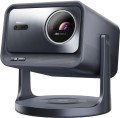 |
|---|---|---|
| Hisense C2 Ultra | Hisense C2 Pro | |
| Compare prices 3 | Compare prices 1 | |
| TOP sellers | ||
Support DTS Virtual X, DTS HD. Latency in game mode 60 ms. | Support DTS Virtual X, DTS HD. Latency in game mode 60 ms. | |
| Main function | universal | universal |
| Operating system | Smart TV (proprietary system) | Smart TV (proprietary system) |
Lamp and image | ||
| Lamp type | Laser-LED | Laser-LED |
| Service life | 25000 h | 25000 h |
| Brightness ANSI Lumens | 3000 lm | 2600 lm |
| Static contrast | 2 000:1 | 2 000:1 |
| Colour rendering | 1.07 billion colours | 1.07 billion colours |
| Input Lag | 60 ms | 60 ms |
Projection system | ||
| Technology | DLP | DLP |
| Real resolution | 3840x2160 px | 3840x2160 px |
| Image format support | 16:9 | 16:9 |
| HDR support | HDR10+ / Dolby Vision | HDR10+ / Dolby Vision |
| IMAX Enhanced |  | |
| Resolution enhancement | | |
Projecting | ||
| Rear projection | | |
| Throw distance, min | 1.3 m | 1.3 m |
| Throw distance, max | 10 m | 10 m |
| Image size | 65 – 300 " | 65 – 300 " |
| Throw ratio | 0.9:1 – 1.5:1 | 0.9:1 – 1.5:1 |
| Optical zoom | 1.67 x | 1.67 x |
| Zoom and focus | motorized (remote-controlled) | motorized (remote-controlled) |
| Autofocus | | |
| Auto keystone correction | | |
Features | ||
| Features | 3D support voice control voice assistant | 3D support voice control voice assistant |
| Bluetooth | v 5.3 | v 5.3 |
| Wi-Fi | Wi-Fi 6E (802.11ax) | Wi-Fi 6E (802.11ax) |
| AirPlay | v 2 | v 2 |
| Miracast | | |
| Audio decoders | DTS Virtual X, DTS HD | DTS Virtual X, DTS HD |
Hardware | ||
| USB-A 5Gbps | 2 pcs | 2 pcs |
| Speaker system | JBL | JBL |
| Number of speakers | 2 | 2 |
| Subwoofer | |  |
| Sound power | 40 W | 20 W |
| HDMI inputs | 2 | 2 |
| HDMI version | v 2.1 | v 2.1 |
| Audio connectors | 3.5 mm output (mini-Jack) optical | 3.5 mm output (mini-Jack) optical |
| Service connectors | LAN (RJ-45) | LAN (RJ-45) |
General | ||
| Power source | mains | mains |
| Power consumption | 180 W | 180 W |
| Size (HxWxD) | 286x247x247 mm | 254x247x247 mm |
| Weight | 6.3 kg | 5.7 kg |
| Color | ||
| Added to E-Catalog | december 2024 | november 2024 |




Compare Hisense C2 Ultra and C2 Pro
The Hisense C2 Ultra and C2 Pro projectors have many similar features, but there are key differences as well. Both devices use DLP technology with a resolution of 3840x2160 pixels and support HDR10+ and Dolby Vision, providing excellent image quality. However, the C2 Ultra offers a higher brightness of 3000 ANSI lumens, while the C2 Pro has 2600 ANSI lumens, which may affect visibility in brightly lit rooms. Additionally, the C2 Ultra is equipped with a more powerful acoustic system with an output of 40 W, whereas the C2 Pro has 20 W. Both projectors support 3D and have similar features, such as voice control and Wi-Fi 6E. Overall, the C2 Ultra will be the better choice for those seeking a brighter image and better sound quality.
Price comparison
You may be interested in
My comparisons
Hisense C2 Ultra often compared


Hisense C2 Pro often compared

Glossary
Brightness ANSI Lumens
This parameter largely determines the ability of the projector to work in a well-lit room. For a dark room, 1000 lumens is enough to make the projection picture bright, rich, clear and understandable. But when working in a lit room, the projector will need at least 3500-4000 lumens. Do not confuse ANSI lumens with Peak lumens. These are two different brightness standards. To convert one type of brightness to another, you need to multiply Peak lumens by 10-12. The result will be an approximate value of ANSI Lumens.
However, experts do not recommend chasing high ANSI lumen brightness values. There are many professional projectors with brightness up to 3500 lm. The lower the brightness, the lower the power consumption, and at the same time, the life of the illuminator increases. Of course, if the projector will be installed in a work office or classroom where good lighting is required, it is recommended to purchase a model with ANSI Lumens brightness of 4000 lumens and more.
Subwoofer
The projector has a built-in subwoofer.
The subwoofer is a specialized speaker that enhances the sound of low frequencies and makes it possible to achieve powerful and rich bass. Such features are especially important when watching action films with an abundance of shots and explosions, as well as concerts. However, while a projector with a subwoofer will definitely sound better than a projector without one, this feature is extremely rare for a number of reasons. One of these reasons is that built-in subwoofers are inferior to free-standing speakers in terms of sound quality and power, and for serious tasks (like building a home theater) a separate “sub” is usually required.
The subwoofer is a specialized speaker that enhances the sound of low frequencies and makes it possible to achieve powerful and rich bass. Such features are especially important when watching action films with an abundance of shots and explosions, as well as concerts. However, while a projector with a subwoofer will definitely sound better than a projector without one, this feature is extremely rare for a number of reasons. One of these reasons is that built-in subwoofers are inferior to free-standing speakers in terms of sound quality and power, and for serious tasks (like building a home theater) a separate “sub” is usually required.
Sound power
The nominal power of the sound system installed in the projector.
The higher this power, the louder the sound the device can produce, the better it will be heard in a large room and/or noisy environment. At the same time, it is worth noting two nuances. First, built-in speakers are usually made relatively low-power — otherwise they would take up too much space. Secondly, most modern projectors allow the connection of external sound system (see "Audio connectors"), more powerful than the built-in one. So it makes sense to pay attention to this indicator if you initially plan to use the "native" sound of the projector. Detailed recommendations on the required power for certain conditions can be found in special sources.
The higher this power, the louder the sound the device can produce, the better it will be heard in a large room and/or noisy environment. At the same time, it is worth noting two nuances. First, built-in speakers are usually made relatively low-power — otherwise they would take up too much space. Secondly, most modern projectors allow the connection of external sound system (see "Audio connectors"), more powerful than the built-in one. So it makes sense to pay attention to this indicator if you initially plan to use the "native" sound of the projector. Detailed recommendations on the required power for certain conditions can be found in special sources.