
Comparison Sony A6700 body vs Canon EOS R body
Add to comparison | 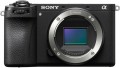 | 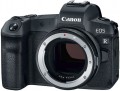 |
|---|---|---|
| Sony A6700 body | Canon EOS R body | |
| Compare prices 7 | Compare prices 5 | |
| User reviews | ||
| TOP sellers | ||
High resolution full frame sensor. 5655-point AF system with sensitivity down to -6 EV. Confident work at high ISO. Information screen on the top. No matrix stabilization. Shooting 4K with a maximum bitrate of 480 Mbps at 24 fps and 120 Mbps at 30 fps. | ||
| Camera type | "mirrorless" (MILC) | "mirrorless" (MILC) |
| DxOMark rating | 89 | |
Sensor | ||
| Sensor | CMOS BSI | CMOS (CMOS) |
| Sensor size | APS-C (23x15.5 mm) | full frame |
| Total MP | 32 | |
| Effective MP number | 26 | 30 |
| Maximum image size | 6192x4128 px | 6720x4480 px |
| Light sensitivity (ISO) | 50-102400 | 50-102400 |
| RAW format recording |  | |
Lens | ||
| Mount (bayonet) | Sony E | Canon RF |
| Manual focus | | |
| Image stabilization | with matrix shift | in absent |
| Min. focus distance | 4.5 cm | |
Photo shooting | ||
| HDR | | |
| White balance measuring | | |
| Exposure compensation | ± 5 EV, in 1/2 or 1/3 EV steps | ± 3 EV, in 1/2 or 1/3 EV steps |
| Auto bracketing | | |
| Exposure modes | auto shutter priority aperture priority manual mode | auto shutter priority aperture priority manual mode |
| Metering system | point centre-weighted sensor (estimated) | point centre-weighted sensor (estimated) |
Video recording | ||
| Full HD (1080) | 1920x1080 px 120 fps | 1920x1080 px 60 fps |
| Ultra HD (4K) | 3840x2160 px 120 fps | 3840x2160 px 30 fps |
| File recording formats | XAVC S, XAVC HS, XAVC S-I, H.264, H.265 | MPEG-4 (H.264) |
| Manual video focus | | |
| Connection ports | HDMI v 2.0 headphone Jack microphone Jack | HDMI v 1.4 headphone Jack microphone Jack |
Focus | ||
| Autofocus modes | one shot tracking in face | one shot AI focus tracking in face by smile animal in frame |
| Focus points | 759 шт | 5655 шт |
| Touch focus |  | |
| Front / back adjustment | | |
| Contour enhancement | | |
Viewfinder and shutter | ||
| Viewfinder | electronic | electronic |
| Viewfinder crop | 1.07 x | 0.76 x |
| Frame coverage | 100 % | 100 % |
| Shutter speed | 30 - 1/8000 с | 30-1/8000 с |
| Continuous shooting | 11 fps | 8 fps |
| Shutter type | electronic/mechanical | mechanical |
Screen | ||
| Screen size | 3 '' | 3.2 '' |
| Screen resolution | 1036 thousand pixels | 2100 thousand pixels |
| Touch screen | | |
| Rotary display | | |
| Additional screen | | |
Memory and communications | ||
| Memory cards types | SD, SDHC, SDXC | SD, SDHC, SDXC |
| Communications | Wi-Fi 4 (802.11n) Bluetooth NFC smartphone control | Wi-Fi Bluetooth smartphone control |
Flash | ||
| Built-in flash | | |
| External flash connect | | |
Power source | ||
| Power source | battery | battery |
| Battery model | LP-E6N | |
| Shots per charge | 570 шт | 370 шт |
General | ||
| Material | aluminium / plastic | magnesium alloy |
| Protection | dustproof, waterproof | |
| Dimensions (WxHxD) | 122x69x64 mm | 136x98x84 mm |
| Weight | 493 g | 660 g |
| Color | ||
| Added to E-Catalog | july 2023 | september 2018 |




Compare Sony A6700 and Canon EOS R
Price comparison
You may be interested in
My comparisons
Sony A6700 often compared


Canon EOS R often compared


Glossary
DxOMark rating
The result shown by the camera in the DxOMark ranking.
DxOMark is one of the most popular and respected resources for expert camera testing. According to the test results, the camera receives a certain number of points; The more points, the higher the final score.
DxOMark is one of the most popular and respected resources for expert camera testing. According to the test results, the camera receives a certain number of points; The more points, the higher the final score.
Sensor
— CCD (CCD). Abbreviation for Charge-Coupled Device. In such sensors, information is read from the photosensitive element according to the “line at a time” principle — an electronic signal is output to the image processor in the form of separate lines (there is also a “frame at a time” variant). In general, such matrices have good characteristics, but they are more expensive than CMOS. In addition, they are poorly suited for some specific conditions — for example, shooting with point light sources in the frame — which is why you have to use various additional technologies in the camera, which also affect the cost.
— CMOS (CMOS). The main advantages of CMOS matrices are ease of manufacture, low cost and power consumption, more compact dimensions than those of CCDs, and the ability to transfer a number of functions (focus, exposure metering, etc.) directly to the sensor, thus reducing the dimensions of the camera. In addition, the camera processor can read the entire image from such a matrix at once (rather than line by line, as in CCD); this avoids distortion when shooting fast-moving objects. The main disadvantage of CMOS is the increased possibility of noise, especially at high ISO values.
— CMOS (CMOS) BSI. BSI is an abbreviation for the English phrase "Backside Illumination". This is the name of "inverted" CMOS sensors, the light on which does not penetrate from the side of the photodiodes, but from the back of the matrix (from the side of the subst...rate). With this implementation, the photodiodes receive more light, since it is not blocked by other elements of the image sensor. As a result, back-illuminated sensors boast high light sensitivity, which allows you to create images of better quality with less noise when shooting in low light conditions. BSI CMOS sensors require less light to properly expose a photo. In production, back-illuminated sensors are more expensive than traditional CMOS sensors.
— LiveMOS. A variety of matrices made using the technology of metal oxide semiconductors (MOS, MOS — Metal-Oxide Semiconductor). Compared to CMOS sensors, it has a simplified design, which provides less tendency to overheat and, as a result, a lower noise level. It is well suited for the "live" viewing mode (viewing in real time) of the image from the matrix on the screen or in the camera's viewfinder, which is why it received the word "Live" in the title. They also feature high data transfer rates.
— CMOS (CMOS). The main advantages of CMOS matrices are ease of manufacture, low cost and power consumption, more compact dimensions than those of CCDs, and the ability to transfer a number of functions (focus, exposure metering, etc.) directly to the sensor, thus reducing the dimensions of the camera. In addition, the camera processor can read the entire image from such a matrix at once (rather than line by line, as in CCD); this avoids distortion when shooting fast-moving objects. The main disadvantage of CMOS is the increased possibility of noise, especially at high ISO values.
— CMOS (CMOS) BSI. BSI is an abbreviation for the English phrase "Backside Illumination". This is the name of "inverted" CMOS sensors, the light on which does not penetrate from the side of the photodiodes, but from the back of the matrix (from the side of the subst...rate). With this implementation, the photodiodes receive more light, since it is not blocked by other elements of the image sensor. As a result, back-illuminated sensors boast high light sensitivity, which allows you to create images of better quality with less noise when shooting in low light conditions. BSI CMOS sensors require less light to properly expose a photo. In production, back-illuminated sensors are more expensive than traditional CMOS sensors.
— LiveMOS. A variety of matrices made using the technology of metal oxide semiconductors (MOS, MOS — Metal-Oxide Semiconductor). Compared to CMOS sensors, it has a simplified design, which provides less tendency to overheat and, as a result, a lower noise level. It is well suited for the "live" viewing mode (viewing in real time) of the image from the matrix on the screen or in the camera's viewfinder, which is why it received the word "Live" in the title. They also feature high data transfer rates.
Sensor size
The physical size of the photosensitive element of a camera. Measured diagonally, often indicated in fractions of an inch — for example, 1/2.3" or 1/1.8" (accordingly, the second matrix will be larger than the first). Note that in such designations it is not the “ordinary” inch (2.54 cm) that is used, but the so-called "Vidiconovsky", which is less than a third and is about 17 mm. This is partly a tribute to the tradition that comes from television tubes — “vidicons” (the forerunners of modern matrices), partly a marketing ploy that gives buyers the impression that the matrices are larger than they actually are.
Anyway, at equal resolution (see Number of megapixels), a larger sensor size means a larger size of each individual pixel; accordingly, on large sensors, more light enters each pixel, which means that such sensors have a higher photosensitivity (see Light sensitivity) and a lower noise level, especially when shooting in low light conditions.
Most often in modern cameras there are such options:
— 1/2.3" and 1/1.7". Small matrices, typical for models without interchangeable lenses — compacts and digital ultrazooms(see "Camera type").
— 4/3. A kind of "transitional option" between small sensors of compact devices and large, but at the same time expensive "SLR" APS-C. The size of such a matri...x is 18x13.5 mm, which gives a diagonal of 22.5 mm (approximately 4/3 of the "Vidicon" inch described above, hence the name). It is used in SLR and "mirrorless" cameras (see "Camera type"), mainly entry-level, with Four Thirds and Micro Four Thirds mounts, respectively.
— APS-C. The size of matrices of this type can vary from 20.7x13.8 mm to 25.1x16.7 mm, depending on the manufacturer. They are widely used in entry-level and mid-level SLRs, as well as "mirrorless" models.
— APS-H. Somewhat larger than the APS-C described above (the size is 28.1x18.7 mm), otherwise it is almost completely the same.
— Full frame (or APS). The size of such a matrix is equal to the frame size of a classic photographic film — 36x24 mm. It is usually equipped with professional-grade SLR cameras.
— Big frame. This category includes all types of matrices, the size of which exceeds 36x24 mm (full frame). Cameras with similar sensors belong to the so-called medium format class and are, usually, professional models of the premium level. Large matrices allow you to use a resolution of tens of megapixels, while maintaining high clarity and colour quality, however, such devices cost accordingly.
Anyway, at equal resolution (see Number of megapixels), a larger sensor size means a larger size of each individual pixel; accordingly, on large sensors, more light enters each pixel, which means that such sensors have a higher photosensitivity (see Light sensitivity) and a lower noise level, especially when shooting in low light conditions.
Most often in modern cameras there are such options:
— 1/2.3" and 1/1.7". Small matrices, typical for models without interchangeable lenses — compacts and digital ultrazooms(see "Camera type").
— 4/3. A kind of "transitional option" between small sensors of compact devices and large, but at the same time expensive "SLR" APS-C. The size of such a matri...x is 18x13.5 mm, which gives a diagonal of 22.5 mm (approximately 4/3 of the "Vidicon" inch described above, hence the name). It is used in SLR and "mirrorless" cameras (see "Camera type"), mainly entry-level, with Four Thirds and Micro Four Thirds mounts, respectively.
— APS-C. The size of matrices of this type can vary from 20.7x13.8 mm to 25.1x16.7 mm, depending on the manufacturer. They are widely used in entry-level and mid-level SLRs, as well as "mirrorless" models.
— APS-H. Somewhat larger than the APS-C described above (the size is 28.1x18.7 mm), otherwise it is almost completely the same.
— Full frame (or APS). The size of such a matrix is equal to the frame size of a classic photographic film — 36x24 mm. It is usually equipped with professional-grade SLR cameras.
— Big frame. This category includes all types of matrices, the size of which exceeds 36x24 mm (full frame). Cameras with similar sensors belong to the so-called medium format class and are, usually, professional models of the premium level. Large matrices allow you to use a resolution of tens of megapixels, while maintaining high clarity and colour quality, however, such devices cost accordingly.
Total MP
The total number of individual light sensitive dots (pixels) provided in the camera's sensor. Denoted in megapixels - millions of pixels.
The total number of MPs, as a rule, is greater than the number of megapixels from which the frame is directly built (for more details, see "Effective number of MPs"). This is due to the presence of service areas on the matrix. In general, this parameter is more of a reference than practically significant: a larger total number of MPs with the same size and effective resolution means a slightly smaller size of each pixel, and, accordingly, an increased likelihood of noise (especially at high ISO values).
The total number of MPs, as a rule, is greater than the number of megapixels from which the frame is directly built (for more details, see "Effective number of MPs"). This is due to the presence of service areas on the matrix. In general, this parameter is more of a reference than practically significant: a larger total number of MPs with the same size and effective resolution means a slightly smaller size of each pixel, and, accordingly, an increased likelihood of noise (especially at high ISO values).
Effective MP number
The number of pixels (megapixels) of the matrix directly involved in the construction of the image, in fact — the number of points from which the captured image is built. Some manufacturers, in addition to this parameter, also indicate the total number of MPs, taking into account the service areas of the matrix. However, it is the effective number of MPs that is considered the main indicator — it is this that directly affects the maximum resolution of the resulting image (see “Maximum image size”).
A megapixel is 1 million pixels. Numerous megapixels ensures high resolution of the captured photos, but is not a guarantee of high-quality images — much also depends on the size of the sensor, its light sensitivity (see the relevant glossary items), as well as hardware and software image processing tools used in the camera. Note that for small matrices, high resolution can sometimes be more of an evil than a blessing — such sensors are very prone to the appearance of noise in the image.
A megapixel is 1 million pixels. Numerous megapixels ensures high resolution of the captured photos, but is not a guarantee of high-quality images — much also depends on the size of the sensor, its light sensitivity (see the relevant glossary items), as well as hardware and software image processing tools used in the camera. Note that for small matrices, high resolution can sometimes be more of an evil than a blessing — such sensors are very prone to the appearance of noise in the image.
Maximum image size
The maximum size of photos taken by the camera in normal (non-panoramic) mode. In fact, this paragraph indicates the highest resolution of photography — in pixels vertically and horizontally, for example, 3000x4000. This indicator directly depends on the resolution of the matrix: the number of dots in the image cannot exceed the effective number of megapixels (see above). For example, for the same 3000x4000, the matrix must have an effective resolution of at least 3000*4000 = 12 million dots, that is, 12 MP.
Theoretically, the larger the size of the photo, the more detailed the image, the more small details can be conveyed on it. At the same time, the overall image quality (including the visibility of fine details) depends not only on resolution, but also on a number of other technical and software factors; see "Effective MP number" for more details.
Theoretically, the larger the size of the photo, the more detailed the image, the more small details can be conveyed on it. At the same time, the overall image quality (including the visibility of fine details) depends not only on resolution, but also on a number of other technical and software factors; see "Effective MP number" for more details.
Mount (bayonet)
The type of bayonet mount — mount for interchangeable lenses — provided in a SLR or MILC camera (see "Camera type"). Bayonets come in different sizes, and interchangeable lens specifications usually indicate which mount it is designed for. Most often, mounts of different types are not compatible with each other, but there are exceptions (sometimes directly, sometimes using adapters).
Also note that one brand can use different mounts for different classes of cameras — and vice versa, one mount can be used by several manufacturers. So, Canon releases cameras with mounts EF-M, EF-S, EF and Canon RF. Leica has Leica M, Leica SL, Leica TL. Nikon has in its arsenal Nikon 1, Nikon F, Nikon Z. Pentax — Pentax 645, Pentax K, Pentax Q. Samsung offers NX and NX-M mounts. Sony cameras have Sony A and Sony E, Fuji has Fujifilm G and Fujifilm X. And as an example of a mount used by different brands, one can cit...e Micro 4/3, which is widespread in Olympus and Panasonic cameras.
Also note that one brand can use different mounts for different classes of cameras — and vice versa, one mount can be used by several manufacturers. So, Canon releases cameras with mounts EF-M, EF-S, EF and Canon RF. Leica has Leica M, Leica SL, Leica TL. Nikon has in its arsenal Nikon 1, Nikon F, Nikon Z. Pentax — Pentax 645, Pentax K, Pentax Q. Samsung offers NX and NX-M mounts. Sony cameras have Sony A and Sony E, Fuji has Fujifilm G and Fujifilm X. And as an example of a mount used by different brands, one can cit...e Micro 4/3, which is widespread in Olympus and Panasonic cameras.
Image stabilization
An image stabilization method provided by a camera. Note that optical and sensor-shift systems are sometimes combined under the term "true" stabilization, due to their effectiveness. See below for more details.
Stabilization itself (regardless of the operating principle) allows you to compensate for the "shake" effect when the camera is not positioned correctly - especially when shooting handheld. This is especially important when shooting with significant magnification or at long shutter speeds. However, in any case, this function reduces the risk of ruining the frame, so cameras with stabilization are extremely common. The operating principles can be as follows:
— Electronic. Stabilization is carried out by means of a kind of “reserve” — a section along the edges of the sensor, which is not initially involved in the formation of the final image. However, if the camera electronics detect vibrations, it compensates for them by selecting the necessary fragments of the image from the reserve. Electronic systems are extremely simple, compact, reliable and at the same time inexpensive. However, for their operation, it is necessary to allocate a fairly significant part of the sensor — and reducing the useful area of the sensor increases the noise level and degrades the image quality. And in some models, electronic stabilization is enabled only at lower resolutions and is not available at full...frame size. Therefore, in its pure form, this option is found mainly in relatively inexpensive cameras with non-replaceable optics.
— Optical. Stabilization is achieved when light passes through the lens — due to a system of moving lenses and gyroscopes. As a result, the image gets to the sensor already stabilized, and the entire area of the sensor can be used for it. Therefore, optical systems, despite their complexity and rather high cost, are considered more preferable for high-quality shooting than electronic ones. Separately, we note that in SLR and MILC cameras (see "Camera type") the presence of this function depends on the installed lens; therefore, for such models, optical stabilization is not indicated in our catalog in principle (even if the kit lens is equipped with a stabilizer).
— With sensor shift. Stabilization performed by shifting the sensor "following" the shifted image. Like the optical one described above, it is considered a fairly advanced option, although in general it is somewhat less effective. On the other hand, sensor shift systems have serious advantages — first of all, such stabilization will work regardless of the characteristics of the lens. For cameras with non-replaceable optics, this means that the lens can do without an optical stabilizer and make the optics simpler, cheaper and more reliable. In SLR and MILC cameras, sensor shift allows even "non-stabilized" lenses to be used with convenience, and when "stabilized" optics are installed, both systems work together, and their efficiency is very high. In addition, sensor shift is somewhat simpler and cheaper than traditional optical stabilizers.
— Optical and electronic. Stabilization that combines both of the above options: initially, it operates on an optical principle, and when the lens's capabilities are not enough, an electronic system is connected. This allows for an increase in overall efficiency in comparison with purely optical or purely electronic stabilizers. On the other hand, the disadvantages of both options in such systems are also combined: the optics are comparatively complex and expensive, and not the entire sensor is used. Therefore, such a combination is rare, mainly in individual advanced digital compacts.
— With sensor shift and electronic. Another type of combined stabilization systems. Like "optical + electronic", it improves the overall efficiency of stabilization, but at the same time combines the disadvantages of both methods (they are also similar: more complicated and more expensive camera plus a decrease in the useful area of the sensor). Therefore, this option is used extremely rarely - in single models of digital ultrazooms and advanced compacts.
Stabilization itself (regardless of the operating principle) allows you to compensate for the "shake" effect when the camera is not positioned correctly - especially when shooting handheld. This is especially important when shooting with significant magnification or at long shutter speeds. However, in any case, this function reduces the risk of ruining the frame, so cameras with stabilization are extremely common. The operating principles can be as follows:
— Electronic. Stabilization is carried out by means of a kind of “reserve” — a section along the edges of the sensor, which is not initially involved in the formation of the final image. However, if the camera electronics detect vibrations, it compensates for them by selecting the necessary fragments of the image from the reserve. Electronic systems are extremely simple, compact, reliable and at the same time inexpensive. However, for their operation, it is necessary to allocate a fairly significant part of the sensor — and reducing the useful area of the sensor increases the noise level and degrades the image quality. And in some models, electronic stabilization is enabled only at lower resolutions and is not available at full...frame size. Therefore, in its pure form, this option is found mainly in relatively inexpensive cameras with non-replaceable optics.
— Optical. Stabilization is achieved when light passes through the lens — due to a system of moving lenses and gyroscopes. As a result, the image gets to the sensor already stabilized, and the entire area of the sensor can be used for it. Therefore, optical systems, despite their complexity and rather high cost, are considered more preferable for high-quality shooting than electronic ones. Separately, we note that in SLR and MILC cameras (see "Camera type") the presence of this function depends on the installed lens; therefore, for such models, optical stabilization is not indicated in our catalog in principle (even if the kit lens is equipped with a stabilizer).
— With sensor shift. Stabilization performed by shifting the sensor "following" the shifted image. Like the optical one described above, it is considered a fairly advanced option, although in general it is somewhat less effective. On the other hand, sensor shift systems have serious advantages — first of all, such stabilization will work regardless of the characteristics of the lens. For cameras with non-replaceable optics, this means that the lens can do without an optical stabilizer and make the optics simpler, cheaper and more reliable. In SLR and MILC cameras, sensor shift allows even "non-stabilized" lenses to be used with convenience, and when "stabilized" optics are installed, both systems work together, and their efficiency is very high. In addition, sensor shift is somewhat simpler and cheaper than traditional optical stabilizers.
— Optical and electronic. Stabilization that combines both of the above options: initially, it operates on an optical principle, and when the lens's capabilities are not enough, an electronic system is connected. This allows for an increase in overall efficiency in comparison with purely optical or purely electronic stabilizers. On the other hand, the disadvantages of both options in such systems are also combined: the optics are comparatively complex and expensive, and not the entire sensor is used. Therefore, such a combination is rare, mainly in individual advanced digital compacts.
— With sensor shift and electronic. Another type of combined stabilization systems. Like "optical + electronic", it improves the overall efficiency of stabilization, but at the same time combines the disadvantages of both methods (they are also similar: more complicated and more expensive camera plus a decrease in the useful area of the sensor). Therefore, this option is used extremely rarely - in single models of digital ultrazooms and advanced compacts.
Min. focus distance
The minimum distance from the camera lens to the object being shot, at which the lens is able to focus in the normal shooting mode (not with macro shooting, see "Macro shooting, about it").