
Comparison Sony A6400 body vs Canon EOS 600D body
Add to comparison | 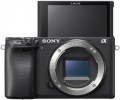 | 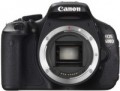 |
|---|---|---|
| Sony A6400 body | Canon EOS 600D body | |
| Compare prices 19 | from $124.00 | |
| User reviews | ||
| TOP sellers | ||
Wide dynamic range. 4K video recording. S-Log and HLG support. High rate of fire in burst mode. Tracking autofocus on faces and eyes. Touch screen. Maximum bitrate up to 100 Mbps when shooting 4K. There is no headphone output. No matrix stabilization. The touch screen only works in spot focus mode. | ||
| Camera type | "mirrorless" (MILC) | digital mirror |
| DxOMark rating | 83 | 65 |
Sensor | ||
| Sensor | CMOS (CMOS) | CMOS (CMOS) |
| Sensor size | APS-C (23x15.5 mm) | APS-C (23x15.5 mm) |
| Total MP | 25 | 18.7 |
| Effective MP number | 24 | 18 |
| Maximum image size | 6000x4000 px | 5184x3456 px |
| Light sensitivity (ISO) | 100-25600 | 100-6400 |
| Sensor cleaning |  |  |
| RAW format recording | | |
Lens | ||
| Mount (bayonet) | Sony E | Canon EF-S, Canon EF |
| Manual focus | | |
| Image stabilization | in absent | in absent |
Photo shooting | ||
| Number of scene programs | 7 | |
| Frames per series (JPEG) | 6 шт | |
| Frames per series (RAW) | 9 шт | |
| HDR | | |
| White balance measuring | | |
| Exposure compensation | ± 5 EV, in 1/2 or 1/3 EV steps | ± 5 EV, in 1/2 or 1/3 EV steps |
| Auto bracketing | | |
| Exposure modes | auto shutter priority aperture priority manual mode | auto shutter priority aperture priority manual mode |
| Metering system | point centre-weighted sensor (estimated) | point centre-weighted sensor (estimated) |
Video recording | ||
| Full HD (1080) | 1920x1080 px 120 fps | 1920x1080 px 30 fps |
| Ultra HD (4K) | 3840x2160 px 30 fps | |
| File recording formats | MP4, AVCHD, XAVC S | H.264 |
| Manual video focus | | |
| Maximum video length | memory limit | |
| Connection ports | micro HDMI v 1.4 microphone Jack | mini HDMI v 1.4 headphone Jack |
Focus | ||
| Autofocus modes | one shot tracking in face by smile | one shot tracking |
| Focus points | 425 шт | 9 шт |
| Touch focus | | |
Viewfinder and shutter | ||
| Viewfinder | electronic | optical (mirror) |
| Viewfinder crop | 0.7 x | 0.85 x |
| Frame coverage | 100 % | 95 % |
| Shutter speed | 30 - 1/4000 с | 30 - 1/4000 с |
| Continuous shooting | 11 fps | 3.7 fps |
| Shutter type | electronic/mechanical | mechanical |
Screen | ||
| Screen size | 3 '' | 3 '' |
| Screen resolution | 921 thousand pixels | 1040 thousand pixels |
| Touch screen | | |
| Rotary display | | |
Memory and communications | ||
| Memory cards types | SD, SDHC, SDXC | SD, SDHC, SDXC |
| Communications | Wi-Fi Bluetooth NFC smartphone control | |
Flash | ||
| Built-in flash | | |
| Guide number | 13 | |
| Application range | 6 m | |
| External flash connect | | |
Power source | ||
| Power source | battery | battery |
| Battery model | NP-FW50 | LP-E8, DLZ302C, BG-E8, MK-600D |
| Battery capacity | 1080 mAh | |
| Shots per charge | 410 шт | 440 шт |
General | ||
| Case/case model | EH-19L | |
| Charger model | BC-QM1 | LC-E8 |
| Underwater box model | WP-S5, WP-S10 | |
| Console/synchronizer model | RM-VPR1, RMT-DSLR2 | ST-E2 |
| Material | aluminium / plastic | aluminium / plastic |
| Dimensions (WxHxD) | 120x67x60 mm | 133.1x99.5x79.7 mm |
| Weight | 403 g | 570 g |
| Color | ||
| Added to E-Catalog | january 2019 | february 2011 |





Compare Sony A6400 and Canon EOS 600D
Price comparison
You may be interested in
My comparisons
Sony A6400 often compared


Canon EOS 600D often compared


Glossary
Camera type
— Digital compact. This term refers to the simplest variety of modern digital cameras — those that are often called "soap dishes" in everyday life. As the name implies, these models are small in size, so most of them can be carried even in your pocket. Other specific features include a small sensor (see "Sensor Size"), a fixed lens, and a high degree of automation — digital compacts with full manual shooting options are the exception rather than the rule. In general, this type of camera is designed mainly for amateur shooting — in most cases, the image quality is quite sufficient for domestic purposes, but such devices are usually unsuitable for professional photography.
— “Mirrorless” cameras MILC (Mirrorless Interchangeable Lens Camera — literally “mirrorless cameras with interchangeable lenses”) are compact cameras that are a kind of hybrid between compact digital cameras and “DSLRs”. They are not equipped with a system of mirrors, the viewfinder (if any) is made electronic or optical (see below), which allows you to minimize the weight and dimensions of the camera. On the other hand, such devices use matrices of the same class as in SLR cameras, which ensures high quality shooting with a minimum of noise. As the name suggests, MILC cameras also typically work with interchangeable lenses.
— Digital SLR cameras. The most technically advanced class of digital cameras. It got its name from the system of mirrors installed in the camer...a body; thanks to these mirrors, light enters the viewfinder directly through the lens (and not through the auxiliary window, as on compact cameras). As a result, the photographer sees what will be shot in real time, with high-quality colour reproduction and high brightness. It is also important that the "SLR" matrix is closed from light most of the time — the light hits it only at the time of shooting, due to which it practically does not heat up and the noise in the resulting image is minimized. The lenses of such cameras are made interchangeable, and many settings, unlike conventional digital cameras, can be set manually.
— For a mobile phone. Cameras designed to be installed on a smartphone as an external accessory and not designed for stand-alone use. Outwardly, such a device resembles a lens with a mount on the phone case; however, inside this “lens” there is a full-fledged matrix, an image processor and a Wi-Fi or Bluetooth wireless module for connecting to a smartphone. The smartphone itself, when used, simultaneously plays the role of a screen and a control device, in addition, footage can be immediately transferred to it. Technically, a similar camera can be connected to another gadget — for example, a tablet: it's not a fact that it can be fixed on the case, but the connection itself is quite possible.
— “Mirrorless” cameras MILC (Mirrorless Interchangeable Lens Camera — literally “mirrorless cameras with interchangeable lenses”) are compact cameras that are a kind of hybrid between compact digital cameras and “DSLRs”. They are not equipped with a system of mirrors, the viewfinder (if any) is made electronic or optical (see below), which allows you to minimize the weight and dimensions of the camera. On the other hand, such devices use matrices of the same class as in SLR cameras, which ensures high quality shooting with a minimum of noise. As the name suggests, MILC cameras also typically work with interchangeable lenses.
— Digital SLR cameras. The most technically advanced class of digital cameras. It got its name from the system of mirrors installed in the camer...a body; thanks to these mirrors, light enters the viewfinder directly through the lens (and not through the auxiliary window, as on compact cameras). As a result, the photographer sees what will be shot in real time, with high-quality colour reproduction and high brightness. It is also important that the "SLR" matrix is closed from light most of the time — the light hits it only at the time of shooting, due to which it practically does not heat up and the noise in the resulting image is minimized. The lenses of such cameras are made interchangeable, and many settings, unlike conventional digital cameras, can be set manually.
— For a mobile phone. Cameras designed to be installed on a smartphone as an external accessory and not designed for stand-alone use. Outwardly, such a device resembles a lens with a mount on the phone case; however, inside this “lens” there is a full-fledged matrix, an image processor and a Wi-Fi or Bluetooth wireless module for connecting to a smartphone. The smartphone itself, when used, simultaneously plays the role of a screen and a control device, in addition, footage can be immediately transferred to it. Technically, a similar camera can be connected to another gadget — for example, a tablet: it's not a fact that it can be fixed on the case, but the connection itself is quite possible.
DxOMark rating
The result shown by the camera in the DxOMark ranking.
DxOMark is one of the most popular and respected resources for expert camera testing. According to the test results, the camera receives a certain number of points; The more points, the higher the final score.
DxOMark is one of the most popular and respected resources for expert camera testing. According to the test results, the camera receives a certain number of points; The more points, the higher the final score.
Total MP
The total number of individual light sensitive dots (pixels) provided in the camera's sensor. Denoted in megapixels - millions of pixels.
The total number of MPs, as a rule, is greater than the number of megapixels from which the frame is directly built (for more details, see "Effective number of MPs"). This is due to the presence of service areas on the matrix. In general, this parameter is more of a reference than practically significant: a larger total number of MPs with the same size and effective resolution means a slightly smaller size of each pixel, and, accordingly, an increased likelihood of noise (especially at high ISO values).
The total number of MPs, as a rule, is greater than the number of megapixels from which the frame is directly built (for more details, see "Effective number of MPs"). This is due to the presence of service areas on the matrix. In general, this parameter is more of a reference than practically significant: a larger total number of MPs with the same size and effective resolution means a slightly smaller size of each pixel, and, accordingly, an increased likelihood of noise (especially at high ISO values).
Effective MP number
The number of pixels (megapixels) of the matrix directly involved in the construction of the image, in fact — the number of points from which the captured image is built. Some manufacturers, in addition to this parameter, also indicate the total number of MPs, taking into account the service areas of the matrix. However, it is the effective number of MPs that is considered the main indicator — it is this that directly affects the maximum resolution of the resulting image (see “Maximum image size”).
A megapixel is 1 million pixels. Numerous megapixels ensures high resolution of the captured photos, but is not a guarantee of high-quality images — much also depends on the size of the sensor, its light sensitivity (see the relevant glossary items), as well as hardware and software image processing tools used in the camera. Note that for small matrices, high resolution can sometimes be more of an evil than a blessing — such sensors are very prone to the appearance of noise in the image.
A megapixel is 1 million pixels. Numerous megapixels ensures high resolution of the captured photos, but is not a guarantee of high-quality images — much also depends on the size of the sensor, its light sensitivity (see the relevant glossary items), as well as hardware and software image processing tools used in the camera. Note that for small matrices, high resolution can sometimes be more of an evil than a blessing — such sensors are very prone to the appearance of noise in the image.
Maximum image size
The maximum size of photos taken by the camera in normal (non-panoramic) mode. In fact, this paragraph indicates the highest resolution of photography — in pixels vertically and horizontally, for example, 3000x4000. This indicator directly depends on the resolution of the matrix: the number of dots in the image cannot exceed the effective number of megapixels (see above). For example, for the same 3000x4000, the matrix must have an effective resolution of at least 3000*4000 = 12 million dots, that is, 12 MP.
Theoretically, the larger the size of the photo, the more detailed the image, the more small details can be conveyed on it. At the same time, the overall image quality (including the visibility of fine details) depends not only on resolution, but also on a number of other technical and software factors; see "Effective MP number" for more details.
Theoretically, the larger the size of the photo, the more detailed the image, the more small details can be conveyed on it. At the same time, the overall image quality (including the visibility of fine details) depends not only on resolution, but also on a number of other technical and software factors; see "Effective MP number" for more details.
Light sensitivity (ISO)
The sensitivity range of a digital camera matrix. In digital photography, light sensitivity is expressed in the same ISO units as in film photography; however, unlike film, the light sensitivity of the sensor in a digital camera can be changed, which gives you more options for adjusting shooting parameters. High maximum light sensitivity is important if you have to use a lens with a low aperture (see Aperture), as well as when shooting dimly lit scenes and fast-moving objects; in the latter case, high ISO allows you to use low shutter speeds, which minimizes image blur. However, note that with an increase in the value of the applied ISO, the level of noise in the resulting images also increases.
Sensor cleaning
The presence in the camera of a special mechanism for cleaning the matrix from dust and other contaminants.
This function is found only in models with interchangeable lenses — "reflex cameras" and MILC (see "Camera type"). When replacing the lens in such cameras, the sensor turns out to be open, and the probability of its contamination is quite high; and extraneous particles on the matrix, at best, lead to the appearance of extraneous artifacts, at worst, to damage to the sensor. To avoid this, cleaning systems are provided. They usually work on the principle of ultrasound: high-frequency vibration "resets" debris from the surface of the sensor.
Note that no cleaning system is perfect — in particular, such systems are “too tough” for condensate, salt deposits and other similar contaminants. So the matrix may still need manual cleaning (ideally, in a service centre). Nevertheless, this function allows you to effectively deal with at least dust, which greatly simplifies the life of the user.
This function is found only in models with interchangeable lenses — "reflex cameras" and MILC (see "Camera type"). When replacing the lens in such cameras, the sensor turns out to be open, and the probability of its contamination is quite high; and extraneous particles on the matrix, at best, lead to the appearance of extraneous artifacts, at worst, to damage to the sensor. To avoid this, cleaning systems are provided. They usually work on the principle of ultrasound: high-frequency vibration "resets" debris from the surface of the sensor.
Note that no cleaning system is perfect — in particular, such systems are “too tough” for condensate, salt deposits and other similar contaminants. So the matrix may still need manual cleaning (ideally, in a service centre). Nevertheless, this function allows you to effectively deal with at least dust, which greatly simplifies the life of the user.
Mount (bayonet)
The type of bayonet mount — mount for interchangeable lenses — provided in a SLR or MILC camera (see "Camera type"). Bayonets come in different sizes, and interchangeable lens specifications usually indicate which mount it is designed for. Most often, mounts of different types are not compatible with each other, but there are exceptions (sometimes directly, sometimes using adapters).
Also note that one brand can use different mounts for different classes of cameras — and vice versa, one mount can be used by several manufacturers. So, Canon releases cameras with mounts EF-M, EF-S, EF and Canon RF. Leica has Leica M, Leica SL, Leica TL. Nikon has in its arsenal Nikon 1, Nikon F, Nikon Z. Pentax — Pentax 645, Pentax K, Pentax Q. Samsung offers NX and NX-M mounts. Sony cameras have Sony A and Sony E, Fuji has Fujifilm G and Fujifilm X. And as an example of a mount used by different brands, one can cit...e Micro 4/3, which is widespread in Olympus and Panasonic cameras.
Also note that one brand can use different mounts for different classes of cameras — and vice versa, one mount can be used by several manufacturers. So, Canon releases cameras with mounts EF-M, EF-S, EF and Canon RF. Leica has Leica M, Leica SL, Leica TL. Nikon has in its arsenal Nikon 1, Nikon F, Nikon Z. Pentax — Pentax 645, Pentax K, Pentax Q. Samsung offers NX and NX-M mounts. Sony cameras have Sony A and Sony E, Fuji has Fujifilm G and Fujifilm X. And as an example of a mount used by different brands, one can cit...e Micro 4/3, which is widespread in Olympus and Panasonic cameras.
Number of scene programs
The number of scene programs provided in the camera design.
Scene programs are preset settings for some of the most common shooting scenes - for example, Portrait, Landscape, Sports, Sunset, etc. In addition to these presets, this list may include special effects and creative tools (such as color swap or fisheye), as well as exposure modes (see below). The presence of scene programs is especially useful for beginners and non-professional photographers, as it eliminates the need to tinker with each setting separately - just select the most suitable program, and all the necessary settings will be set automatically. The more scene programs the camera design provides, the wider its automatic adjustment capabilities.
Scene programs are preset settings for some of the most common shooting scenes - for example, Portrait, Landscape, Sports, Sunset, etc. In addition to these presets, this list may include special effects and creative tools (such as color swap or fisheye), as well as exposure modes (see below). The presence of scene programs is especially useful for beginners and non-professional photographers, as it eliminates the need to tinker with each setting separately - just select the most suitable program, and all the necessary settings will be set automatically. The more scene programs the camera design provides, the wider its automatic adjustment capabilities.