
Comparison Palit GeForce RTX 5070 Infinity 3 vs Gainward GeForce RTX 5070 Python III
Add to comparison | 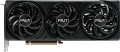 |  |
|---|---|---|
| Palit GeForce RTX 5070 Infinity 3 | Gainward GeForce RTX 5070 Python III | |
| Compare prices 1 | from $838.20 | |
| User reviews | ||
| TOP sellers | ||
| Interface | PCIe v5.0 16x | PCIe v5.0 16x |
GPU | ||
| Model GPU | GeForce RTX 5070 | GeForce RTX 5070 |
| Architecture | Blackwell | Blackwell |
| Memory size | 12 GB | 12 GB |
| Memory type | GDDR7 | GDDR7 |
| Memory bus | 192 bit | 192 bit |
| Maximum frequency (Boost Clock) | 2512 MHz | 2512 MHz |
| Memory speed | 28000 Mbps | 28000 Mbps |
| Lithography | 4 nm | 4 nm |
| Max. resolution | 7680x4320 px | 7680x4320 px |
Connections | ||
| HDMI | 1 | 1 |
| HDMI version | v2.1b | v2.1b |
| DisplayPort | 3 | 3 |
| DisplayPort version | v.2.1b | v.2.1b |
Software | ||
| DirectX | 12 Ultimate | 12 Ultimate |
| OpenGL | 4.6 | 4.6 |
| Stream processors | 6144 | 6144 |
| Tensor cores | 192 | 192 |
| RT nuclear | 48 | 48 |
| Texture units | 192 | 192 |
| Passmark G3D Mark test | 28165 points | 28165 points |
General | ||
| Monitors connection | 4 | 4 |
| Cooling | active (fan) | active (fan) |
| Fans | 3 pcs | 3 pcs |
| Power consumption | 250 W | |
| Additional power | 16 pin | 16 pin |
| Minimum PSU recommendation | 650 W | 750 W |
| Length | 292 mm | 292 mm |
| Height | 117 mm | 117 mm |
| Occupies slots | 2 | 2 |
| Added to E-Catalog | april 2025 | march 2025 |



Compare Palit GeForce RTX 5070 Infinity 3 and Gainward GeForce RTX 5070 Python III
You may be interested in
My comparisons
Palit GeForce RTX 5070 Infinity 3 often compared


Gainward GeForce RTX 5070 Python III often compared


Glossary
Power consumption
Maximum power consumed by the graphics card during operation. This parameter is important for calculating the total power consumed by the entire system and selecting a power supply that provides the appropriate power.
Minimum PSU recommendation
The smallest power supply recommended for a computer with this graphics card.
This parameter, usually, is much higher than the power consumption of the graphics card itself. This is natural — after all, the PSU must provide electricity to the entire system, not just the video adapter. At the same time, the higher the power of the graphics card, the inevitably higher the power consumption of the PC as a whole. Moreover, this is due not only to the “voracity” of the graphics adapter itself, but also to the consumption of other PC components: a high-end graphics card, usually, is combined with an equally powerful (and energy-intensive) system.
With this in mind, manufacturers indicate the minimum recommended power supply. Of course, such recommendations are not mandatory; however, when using a PSU with a power lower than the recommended one, the probability of malfunctions increases significantly — to the point that even a very limited system may simply “not start”.
This parameter, usually, is much higher than the power consumption of the graphics card itself. This is natural — after all, the PSU must provide electricity to the entire system, not just the video adapter. At the same time, the higher the power of the graphics card, the inevitably higher the power consumption of the PC as a whole. Moreover, this is due not only to the “voracity” of the graphics adapter itself, but also to the consumption of other PC components: a high-end graphics card, usually, is combined with an equally powerful (and energy-intensive) system.
With this in mind, manufacturers indicate the minimum recommended power supply. Of course, such recommendations are not mandatory; however, when using a PSU with a power lower than the recommended one, the probability of malfunctions increases significantly — to the point that even a very limited system may simply “not start”.