
Comparison Kicx KAP-5.1 vs Kicx KAP 49
Add to comparison | 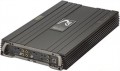 | 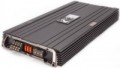 |
|---|---|---|
| Kicx KAP-5.1 | Kicx KAP 49 | |
from $215.44 up to $422.56 | from $337.00 | |
| TOP sellers | ||
| Class | A/B | A/B |
| Number of channels | 5 | 4 |
Specs | ||
| Channel power (@2-ohms) | 65 W | 250 W |
| Channel power (@4-ohms) | 50 W | 150 W |
| Bridged connection (at 4 ohms) | 2 x 90 W | 2 x 500 W |
| Max. power | 780 W | 2000 W |
| Frequency range | 20 – 20000 Hz | 20 – 20000 Hz |
| Signal-to-noise ratio | 100 dB | 100 dB |
| Functions | high voltage input Bass Boost function subsonic low pass filter (LPF) high pass filter (HPF) | high voltage input Bass Boost function subsonic low pass filter (LPF) high pass filter (HPF) |
General | ||
| Remote control |  |  |
| Fuse rating | 30 А | 40 А |
| Dimensions | 500x250x55 mm | 500x250x55 mm |
| Added to E-Catalog | february 2014 | february 2014 |


Compare Kicx KAP-5.1 and KAP 49
You may be interested in
My comparisons
Kicx KAP-5.1 often compared


Kicx KAP 49 often compared


Glossary
Number of channels
The number of audio channels that the amplifier can handle. The smallest number is 1 channel(the so-called monoblocks); in the case of car amplifiers, these models are mainly used to connect subwoofers. At the same time, it is considered that the use of a monoblock is fully justified only at low-resistance loads (up to 4 Ohms), for higher resistances, you can consider connecting via a bridge circuit to a multi-channel amplifier (if the design allows it; see "Bridge connection").
Multi-channel models usually have an even number of channels — two or four(up to 8, but such options are rather the exception). However, there are devices with an odd number — most often this means that one of the channels is designed to connect a subwoofer.
Multi-channel models usually have an even number of channels — two or four(up to 8, but such options are rather the exception). However, there are devices with an odd number — most often this means that one of the channels is designed to connect a subwoofer.
Channel power (@2-ohms)
Rated power output by the amplifier per channel when a load (speakers) is connected to it with a nominal impedance of 2 ohms. For details, see "Nom. channel power (at 1 Ohm)”.
Channel power (@4-ohms)
Rated power output by the amplifier per channel when a load (speakers) with a nominal impedance of 4 ohms is connected to it. For details, see "Nom. channel power (at 1 Ohm)”.
Bridged connection (at 4 ohms)
Rated power delivered by the amplifier to a load connected in a bridge circuit. For more information about the rated power, see "Nom. channel power (at 1 Ohm)”.
With a bridged connection, the speaker is connected not to one channel, but to two at the same time — the “positive” connector of one channel and the “negative” connector of the other are used. If the amplifier has a similar format of operation, then such a pair of channels operates in antiphase, due to which the power is summed up. This allows you to connect speakers to the amplifier, the power of which is twice the nominal power of the device: for example, at 150 watts per channel, 300 watts of acoustics can be bridged. If there are 4 or more channels, it becomes possible to use several speakers according to the "bridge" scheme. This is usually directly indicated in the specifications — for example, the entry "2x300 W" in the "Bridge connection" item means the ability to work with two speakers, each with 300 W.
The requirements for load resistance when connecting with a bridge are the same as for conventional; see "Maximum Resistance" for details.
With a bridged connection, the speaker is connected not to one channel, but to two at the same time — the “positive” connector of one channel and the “negative” connector of the other are used. If the amplifier has a similar format of operation, then such a pair of channels operates in antiphase, due to which the power is summed up. This allows you to connect speakers to the amplifier, the power of which is twice the nominal power of the device: for example, at 150 watts per channel, 300 watts of acoustics can be bridged. If there are 4 or more channels, it becomes possible to use several speakers according to the "bridge" scheme. This is usually directly indicated in the specifications — for example, the entry "2x300 W" in the "Bridge connection" item means the ability to work with two speakers, each with 300 W.
The requirements for load resistance when connecting with a bridge are the same as for conventional; see "Maximum Resistance" for details.
Max. power
The highest output power provided by the amplifier. It is worth noting that this indicator is not standardized, and different manufacturers may mean different values \u200b\u200bfor it — for example, the highest power of short-term, in a fraction of a second, peaks (power surges), the highest power that the amplifier can transfer for several seconds, or even the power at which the device will fail. Therefore, it makes no sense to compare different models with each other in terms of maximum power. But when choosing acoustics for an amplifier (or vice versa), this parameter can be very useful: it is desirable that the maximum power of the speaker be at least twice as high as that of the amplifier. This will reduce the risk that a power surge will damage the speakers.
Remote control
Possibility of connection to the amplifier of the remote control. Note that the functionality of remotes for amplifiers is significantly different from other types of electronics. First, the connection is most often carried out by wire. Secondly, the remote itself provides a minimum of adjustments — most often it controls only the Bass Boost function (see "Functions"), allowing you to quickly adjust the bass level depending on the track being played. However, remote control is still significantly more convenient than changing settings from the panel on the amplifier case.
Fuse rating
The rating of the fuse installed in the amplifier is the current strength, at which the fuse operates, opening the circuit and de-energizing the device in order to avoid unpleasant consequences (see "Protection — Short circuit protection"). In some models, several fuses can be installed — in this case, this is usually directly indicated in the characteristics, and the current required to operate the protection corresponds to the sum of the ratings. For example, the rating marked "4x25 A" corresponds to four fuses that operate at a current strength of more than 100 A.
This parameter determines, first of all, the features of the power connection: it is desirable that the fuse in the corresponding section of the on-board network of the car be of a higher rating than in the amplifier, otherwise it may burn out at a current that is quite normal for the device. In addition, the fuse rating is related to the power rating of the amplifier and can be useful if you have doubts about the reliability of the data specified by the manufacturer. There are special formulas that allow you to calculate the maximum possible rated power depending on the fuse rating and device class (see above).
This parameter determines, first of all, the features of the power connection: it is desirable that the fuse in the corresponding section of the on-board network of the car be of a higher rating than in the amplifier, otherwise it may burn out at a current that is quite normal for the device. In addition, the fuse rating is related to the power rating of the amplifier and can be useful if you have doubts about the reliability of the data specified by the manufacturer. There are special formulas that allow you to calculate the maximum possible rated power depending on the fuse rating and device class (see above).