
Comparison Pantum P2207 vs Pantum P2507
Add to comparison | 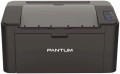 | 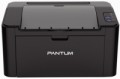 |
|---|---|---|
| Pantum P2207 | Pantum P2507 | |
from $73.76 up to $79.46 | from $103.00 | |
| User reviews | ||
| TOP sellers | ||
| Print formats | A4 | A4 |
| Print type | laser | laser |
| Output type | monochrome | monochrome |
Print | ||
| Max. resolution | 1200x1200 dpi | 1200x600 dpi |
| First page print time | 8 с | 8 с |
| Mono print | 20 ppm | 22 ppm |
Printing supplies | ||
| Monthly resource | 15 K pages | 15 K pages |
| Mono cartridge resource | 1600 page | 1600 page |
| Cartridges | 1 | 1 |
| Cartridge model | PC-210, PC-211EV | PC-210, PC-211EV |
Features | ||
| Data transfer | PC connection (USB-B) | PC connection (USB-B) |
| Screen | no display | no display |
Hardware | ||
| Grammage (min) | 60 g/m² | 60 g/m² |
| Grammage (max) | 163 g/m² | 163 g/m² |
| RAM | 64 MB | 128 MB |
| Clock Speed | 600 MHz | 600 MHz |
General | ||
| Feed tray | 150 sheets | 150 sheets |
| Output tray | 100 sheets | 100 sheets |
| Noise level | 64 dB | 54 dB |
| Dimensions (WxDxH) | 337x220x180 mm | 337x220x180 mm |
| Weight | 5.1 kg | 5.1 kg |
| Color | ||
| Added to E-Catalog | february 2015 | february 2015 |


Compare Pantum P2207 and P2507
You may be interested in
Pantum P2207 often compared


Pantum P2507 often compared
Glossary
Max. resolution
The maximum resolution of the image to be printed. It is usually indicated by two numbers denoting the number of dpi (DPI) horizontally and vertical: 600x600, 1200x600, 1200x1200, 2400x600, 2400x1200, 4800x600, 4800x1200, 4800x2400, 5760x1440, 9600x600, 9600x2400. The detail of the image depends on this parameter - the higher the resolution, the more fine details the printer is able to convey and the better their image will be. High print resolution is important, first of all, when working with graphic material; low resolution is sufficient for high-quality text display. So
Mono print
The black and white print speed provided by the printer. It should be noted that this parameter is often indicated for low quality when the device is running at maximum performance; at a higher quality (even at standard), the actual speed can be noticeably lower, so you should choose with a certain margin. Also note that high speed significantly affects the price, power consumption and noise level. Therefore, it does not always make sense to chase maximum performance — for simple applications (for example, at home or in a small office), a relatively slow and inexpensive device may be the best choice.
As for specific values, speeds up to 20 ppm are considered relatively low, 20 – 30 ppm — average, 31 – 40 ppm — decent, and the fastest models are capable of delivering more than 40 pages per minute.
As for specific values, speeds up to 20 ppm are considered relatively low, 20 – 30 ppm — average, 31 – 40 ppm — decent, and the fastest models are capable of delivering more than 40 pages per minute.
RAM
The amount of internal memory installed in the printer.
The main purpose of such memory is to store tasks sent for printing. This gives various additional features: printing when the computer is turned off, continuing to work after troubleshooting, pausing the process and resuming at will, etc. The more memory, the wider these printer capabilities (in particular, large volumes allow you to store more tasks ).
Note that we are talking about the built-in memory; if the printer also has a hard drive (see below), its capacity is specified separately.
The main purpose of such memory is to store tasks sent for printing. This gives various additional features: printing when the computer is turned off, continuing to work after troubleshooting, pausing the process and resuming at will, etc. The more memory, the wider these printer capabilities (in particular, large volumes allow you to store more tasks ).
Note that we are talking about the built-in memory; if the printer also has a hard drive (see below), its capacity is specified separately.
Noise level
Approximate noise level generated by the printer during normal operation. The decibels in which the noise level is expressed is a non-linear value, so it is easiest to evaluate this indicator using comparative tables. The quietest printers give out about 35 dB — this is the volume of a conversation in a whisper, such noise will not stand out even in a quiet library reading room. A volume of 40 dB approximately corresponds to a conversation at an average volume, according to sanitary standards, this is the upper limit of permissible constant noise in residential premises during the day. For offices, the border is slightly higher — 55 – 60 dB, this is the volume of a conversation in raised tones. And the most powerful and heavy models give out up to 70 dB — this is comparable to a noisy city street; if such a printer is planned to be used frequently, it is advisable to install it in a separate room.
In general, lower noise levels make the device more comfortable to use, but may affect performance and/or price.
In general, lower noise levels make the device more comfortable to use, but may affect performance and/or price.