
Comparison Trolo Comfort 230 vs Trolo Quantum
Add to comparison | 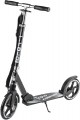 | 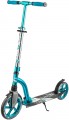 |
|---|---|---|
| Trolo Comfort 230 | Trolo Quantum | |
| Outdated Product | Outdated Product | |
| TOP sellers | ||
| Product type | scooter | scooter |
| Max. load | 100 kg | 120 kg |
| Age, from | 5 years | 5 years |
Design | ||
| Number of wheels | 2 wheels | 2 wheels |
| Handlebar type | T-bar | T-bar |
| Deck material | aluminium | aluminium |
| Clamp | 3 bolts | |
| Front wheel size | 23 cm | 23 cm |
| Rear wheel(s) size | 23 cm | 20 cm |
| Wheels | polyurethane | polyurethane |
| Bearings | ABEC 7 | ABEC 7 |
| Rear brake | foot | foot |
Features | ||
| Features | foldable handlebar height adjustment suspension stand | foldable handlebar height adjustment suspension stand |
General | ||
| Max. height | 103 cm | 104 cm |
| Deck size | 35x14 cm | |
| Footspace | 34 cm | |
| Size | 41x103 cm | 91x40x104 cm |
| Weight | 5.5 kg | 5.4 kg |
| Added to E-Catalog | august 2017 | february 2017 |


Compare Trolo Comfort 230 and Quantum
You may be interested in
Trolo Comfort 230 often compared


Trolo Quantum often compared


Glossary
Max. load
The maximum weight of the rider that the design of the scooter can withstand without breakdowns and accidents. This point is partly determined by the age group, and mainly by the materials used in the frame (both points below). Note that manufacturers can indicate the maximum load for perfect conditions — when the scooter rides on a perfectly flat surface or even stands still. Therefore, it is worth choosing a model for this parameter with a certain margin; this is especially important for varieties designed for increased loads, in particular scooters and stunt models (see "product type"). Even more so, you should not exceed the weight indicated in the characteristics — even if the scooter does not break down immediately, this can happen at any time after, which is fraught with accidents and injuries.
Clamp
— 2 bolts. 2-bolt clamp — such clamps are typical for entry-class scooters. A 2-bolt clamp usually connects steering elements in city scooters. M8 threaded fasteners are most often used as bolts. The 2-bolt connection is ill-suited to resist loose fasteners.
— 3 bolts. Clamp for 3 bolts — this clamp allows you to more or less securely fix the steering elements. Scooters with a 3-bolt clamp are usually considered stunt scooters but belong to the entry-level class. The 3-bolt fastening allows the clamp to prevent loosening in the connection.
— 4 bolts. 4 bolt clamp — this category of clamps is typical for good stunt scooters. Such a connection allows you to securely fix the steering elements. The presence of 4 fixation points allows the connection to resist loosening well, and the bolts in such clamps are slightly subject to self-loosening.
— 5 bolts. The 5-bolt clamp is a quality clamping solution found on advanced stunt scooters. The presence of 5 fixation points allows you to securely fix the steering wheel in the desired position. The 5-bolt clamp will not allow play to appear in the connection. Such clamps can maintain the degree of tightening of fasteners even under high-vibration loads.
Rear wheel(s) size
The diameter of the rear wheel(s) of the scooter. See "Front wheel diameter" for details on the value of this parameter.
Max. height
The maximum height to which the height-adjustable handlebar can be set (or just the height of the handlebar in the working position, if height adjustment is not provided).
The height of the handlebars should be such that the rider can stand on the deck straight, without bending his back, and hold on to the handles with slightly bent arms. At the same time, there is no unambiguous relationship between this parameter and the height of the rider. So the perfect option to determine the optimal height is to try it yourself, and then choose a scooter based on the result.
The height of the handlebars should be such that the rider can stand on the deck straight, without bending his back, and hold on to the handles with slightly bent arms. At the same time, there is no unambiguous relationship between this parameter and the height of the rider. So the perfect option to determine the optimal height is to try it yourself, and then choose a scooter based on the result.
Deck size
Scooter deck size. This item can indicate both the length and width or only one size — most often this is the length.
In general, this parameter is secondary: manufacturers choose the size of the deck depending on the type, age category, general specialization and other features of the scooter. Legroom, usually, is guaranteed to be enough on the deck. We only note that shorter decks are more agile, and longer ones are stable on the course.
In general, this parameter is secondary: manufacturers choose the size of the deck depending on the type, age category, general specialization and other features of the scooter. Legroom, usually, is guaranteed to be enough on the deck. We only note that shorter decks are more agile, and longer ones are stable on the course.
Footspace
This term refers to the useful area of the deck on which you can put your foot. It is size without taking into account the folding mechanism, wheel fastening and other elements that are not intended for the leg.
Weight
The total weight of the scooter; for electric models it is the total operating weight is indicated, with batteries installed.
This option has two meanings. Thus, lighter scooters accelerate and manoeuvre better and require less effort from the user. In turn, more massive models maintain speed longer and are more stable on the course. In addition, note that less weight, other things being equal, means either less strength or more cost.
The lightest modern scooters weigh less than 2 kg — these are mostly relatively inexpensive classic models and kickboards (see "Type"). Sports models already have a weight of 2.5 kg, and often more. The most massive among non-self-propelled models are scooters — from 5 kg. And electric scooters inevitably turn out to be heavy due to motors and batteries, their mass can reach 10 kg or even more.
This option has two meanings. Thus, lighter scooters accelerate and manoeuvre better and require less effort from the user. In turn, more massive models maintain speed longer and are more stable on the course. In addition, note that less weight, other things being equal, means either less strength or more cost.
The lightest modern scooters weigh less than 2 kg — these are mostly relatively inexpensive classic models and kickboards (see "Type"). Sports models already have a weight of 2.5 kg, and often more. The most massive among non-self-propelled models are scooters — from 5 kg. And electric scooters inevitably turn out to be heavy due to motors and batteries, their mass can reach 10 kg or even more.