
Comparison Camry CR 2841 vs Camry CR 2821
Add to comparison | 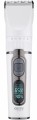 | 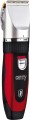 |
|---|---|---|
| Camry CR 2841 | Camry CR 2821 | |
| Outdated Product | from $26.80 | |
| TOP sellers | ||
| Main function | clipper | clipper |
In box | ||
| Functions of attachments/heads | clipper blade | clipper blade |
| Fixed combs (straight) | 7 pcs | 4 pcs |
| Smooth transition combs (for ears) | 1 pair (2 pcs) | |
Specs | ||
| Haircut length | 0.8 – 18 mm | 0.8 – 12 mm |
| Blade length adjustment |  |  |
| Number of revolutions of the motor | 7000 rpm | |
| Number of speeds | 5 pcs | |
| Blades material/coating | titanium ceramics | titanium ceramics |
| Features | thinning function wet cleaning waterproof body | |
Power source | ||
| Power supply | built-in battery | battery and mains |
| Battery type | Li-Ion | |
| Battery capacity | 2000 mAh | |
| Operating time | 210 min | |
| Charge level indicator | | |
| Charging port on the body | branded | |
General | ||
| Additionally included | charging stand | |
| Display | | |
| Material | plastic | |
| Color | ||
| Added to E-Catalog | august 2024 | december 2016 |


Compare Camry CR 2841 and CR 2821
You may be interested in
Glossary
Fixed combs (straight)
Clippers and trimmers are often equipped with fixed-height removable combs. The more combs in the kit, the smoother transitions the device can make. The standard set usually includes 3-5 combs, more advanced models may have 7-10 combs of a fixed height in a set.
Smooth transition combs (for ears)
Asymmetrical clipper guards have a "sloped" profile, making it easier to create a soft length gradient where the haircut line often "breaks." They are commonly used around the ears and temples, as in these areas, a regular straight comb often leaves a noticeable line, and without a guard, it's easier to catch too much or get too close to the skin. But essentially, it's not just "about the ears": this angled comb works great on the nape as well when you need to quickly blur the step between two lengths and create a more natural transition, especially if you're cutting at home and don't want to spend a lot of time refining the boundary with a lever or bare blade. Unlike classic fixed-length guards, here the length changes gradually across the width of the guard, making it easier to control the result and reducing the risk of cutting off too much. Example of use: if a sharp line remains on the nape after using 6 mm and 12 mm, glide the gradient comb over the seam area with short upward movements, and then make one light pass with a regular guard for final leveling; similarly, you can carefully treat the area above and behind the ear so that the transition looks "barbershop-quality," not like a stripe.
Haircut length
The cutting height is influenced by the type of cutting element and the inclusion of detachable combs. Toothed blades can trim hair as short as 1 mm. By coupling a toothed blade with a detachable comb, the cutting height can range from 2-3 to 20, and even 30 mm – the precise height hinges on the provided comb attachments. There are defined minimum and maximum cutting heights. The minimum pertains to the blade's inherent capabilities, devoid of attachments. The maximum cutting height is determined by the detachable comb type.
Blade length adjustment
Adjusting the length of the blade allows you to change the cutting length of the cutting unit. Accordingly, this parameter affects both the trimming length and a more accurate haircut using attachments.
Number of revolutions of the motor
The speed of rotation of the motor of the clipper. The speed of movement of the blades directly depends on this parameter, and the quality of the haircut, in turn, depends on it: the faster the blades move, the faster and more accurately the clipper cuts.
Number of speeds
The device's range of adjustable speeds is noteworthy. While most clippers typically operate at a single standard speed, there are models with dual speeds, often referred to as turbo. More advanced variations have been developed by certain manufacturers, featuring 3, 4, or even more speeds. Clippers equipped with variable speeds are designed to effectively manage denser hair by increasing the motor's revolutions.
Features
— Self- sharpening blades. Blades made using a special technology, thanks to which they sharpen themselves, due to friction against each other in the process. Thus, the blades remain sharp at all times, and their maintenance is limited to the replacement of worn blades.
— Function of thinning. Thinning in hairdressing is called cutting the ends of the hair at different levels — as a result, after the haircut, the hairstyle looks more natural and magnificent. In machines, special thinning nozzles are usually used for this.
— Wet cleaning. The clipper's capacity for wet cleaning of its attachments, allowing them to be rinsed under flowing water, is a notable feature. It's important to clarify that this pertains exclusively to the attachments – not all models with wet cleaning have waterproof casings (see below). Nevertheless, even without a waterproof casing, it might still be feasible to clean the attachments without detaching them from the device. In general, wet cleaning is frequently more efficient, quicker, and precise compared to dry cleaning.
— Waterproof body.In this context, a sealed enclosure is indicated, enabling the machine to withstand water exposure without adverse effects. The extent of protection can vary; certain models tolerate brief water immersion, while others can operate even when submerged. These specifics should be detai...led in the accompanying instructions. Nevertheless, for clippers used in environments with elevated humidity (like bathrooms or wet areas), having such a water-resistant enclosure is greatly preferred, and sometimes obligatory.
— Built-in vacuum cleaner. The clipper is equipped with a vacuum cleaner, which greatly facilitates cleaning after cutting. The suction hole located under the blades sucks most of the cut hair into a separate reservoir. Of course, there will not be a 100% return, but there will be much less hair scattered on the floor. However, when cutting a beard, a vacuum cleaner will do just fine.
— Laser pointer. The presence in the electric razor of a laser in the form of a straight line. With its help, you can easily, and most importantly, evenly and symmetrically trim the desired areas.
— Function of thinning. Thinning in hairdressing is called cutting the ends of the hair at different levels — as a result, after the haircut, the hairstyle looks more natural and magnificent. In machines, special thinning nozzles are usually used for this.
— Wet cleaning. The clipper's capacity for wet cleaning of its attachments, allowing them to be rinsed under flowing water, is a notable feature. It's important to clarify that this pertains exclusively to the attachments – not all models with wet cleaning have waterproof casings (see below). Nevertheless, even without a waterproof casing, it might still be feasible to clean the attachments without detaching them from the device. In general, wet cleaning is frequently more efficient, quicker, and precise compared to dry cleaning.
— Waterproof body.In this context, a sealed enclosure is indicated, enabling the machine to withstand water exposure without adverse effects. The extent of protection can vary; certain models tolerate brief water immersion, while others can operate even when submerged. These specifics should be detai...led in the accompanying instructions. Nevertheless, for clippers used in environments with elevated humidity (like bathrooms or wet areas), having such a water-resistant enclosure is greatly preferred, and sometimes obligatory.
— Built-in vacuum cleaner. The clipper is equipped with a vacuum cleaner, which greatly facilitates cleaning after cutting. The suction hole located under the blades sucks most of the cut hair into a separate reservoir. Of course, there will not be a 100% return, but there will be much less hair scattered on the floor. However, when cutting a beard, a vacuum cleaner will do just fine.
— Laser pointer. The presence in the electric razor of a laser in the form of a straight line. With its help, you can easily, and most importantly, evenly and symmetrically trim the desired areas.
Power supply
— Mains. The clipper is powered by a 230 V electrical network. The benefit of this power source is the unrestricted operational duration (no need for periodic battery recharging). However, drawbacks include the necessity of an available electrical outlet and the limitation imposed by a power cord, which can impede movement and cause operational inconvenience.
— Battery. The clipper is powered by its own built-in battery. On the one hand, this gives maximum freedom of movement (since there is no power cord) and battery life — such devices can be used even where there is no electrical network. On the other hand, the battery life is limited, it must be constantly recharged — otherwise there is a risk that the charge is exhausted at the most inopportune moment (for example, during the haircut).
— Batteries. The clipper is powered by interchangeable batteries. In terms of its primary pros and cons, this power source resembles battery power (as mentioned earlier). However, in contrast to built-in batteries, replaceable batteries offer less capacity, making them suitable for low-power devices like nose trimmers (see Type) that don't demand prolonged usage. On the positive side, replaceable batteries allow for swift replacement when depleted, whereas a built-in battery would necessitate a lengthier recharging process in such instances.
— Battery. The clipper is powered by its own built-in battery. On the one hand, this gives maximum freedom of movement (since there is no power cord) and battery life — such devices can be used even where there is no electrical network. On the other hand, the battery life is limited, it must be constantly recharged — otherwise there is a risk that the charge is exhausted at the most inopportune moment (for example, during the haircut).
— Batteries. The clipper is powered by interchangeable batteries. In terms of its primary pros and cons, this power source resembles battery power (as mentioned earlier). However, in contrast to built-in batteries, replaceable batteries offer less capacity, making them suitable for low-power devices like nose trimmers (see Type) that don't demand prolonged usage. On the positive side, replaceable batteries allow for swift replacement when depleted, whereas a built-in battery would necessitate a lengthier recharging process in such instances.
Battery type
— Li-Ion. Lithium-ion (Li-Ion) batteries currently dominate the market due to their high energy density, compact size, and light weight. On average, Li-Ion batteries last for approximately 400 charge-discharge cycles. They exhibit minimal self-discharge and lack a prominent "memory effect" (capacity decrease when charging a partially discharged battery). However, these batteries are sensitive to cold temperatures and require precise charging current conditions.
— Li-pol. Lithium-polymer (Li-Pol) batteries maintain stable output voltage even during significant discharge. On average, Li-Pol batteries offer a lifespan of around 800 charge-discharge cycles. These batteries don't exhibit the memory effect and remain stable across a broad temperature range, from -20 to +40 degrees Celsius. Their drawbacks primarily involve vulnerability to deep discharge and overcharging. This highlights the necessity for specialized chargers that employ optimal power delivery methods tailored to the lithium polymer context.
— Ni-Cd. Nickel-cadmium (Ni-Cd) batteries are engineered to handle substantial charge and discharge rates. They can be stored either charged or discharged without issue. These batteries aren't impacted by heat and maintain their capacity in cold conditions. However, the primary drawback is the "memory effect," which emerges when the battery is prematurel...y charged with residual capacity. Despite being outdated, Ni-Cd batteries are occasionally employed in clippers.
— Ni-Mh. Nickel-metal hydride (Ni-MH) batteries excel at managing substantial charge and discharge rates, making them suitable for demanding electric motors and facilitating quick charging. Contemporary Ni-MH batteries offer a prolonged lifespan of up to 1000-1500 charge-discharge cycles, while being environmentally friendly. In comparison to Li-Ion batteries, they appear bulkier and add weight to the device, yet they come at a more affordable cost. This battery type has replaced the previously mentioned nickel-cadmium technology.
— LiCo. Lithium-cobalt (Li-Co) batteries are renowned for their impressive energy storage within a small and lightweight structure. These batteries exhibit minimal self-discharge and lack the "memory effect". They maintain voltage stability almost until complete discharge. However, Li-Co batteries aren't engineered to handle substantial charge and discharge rates.
— Li-pol. Lithium-polymer (Li-Pol) batteries maintain stable output voltage even during significant discharge. On average, Li-Pol batteries offer a lifespan of around 800 charge-discharge cycles. These batteries don't exhibit the memory effect and remain stable across a broad temperature range, from -20 to +40 degrees Celsius. Their drawbacks primarily involve vulnerability to deep discharge and overcharging. This highlights the necessity for specialized chargers that employ optimal power delivery methods tailored to the lithium polymer context.
— Ni-Cd. Nickel-cadmium (Ni-Cd) batteries are engineered to handle substantial charge and discharge rates. They can be stored either charged or discharged without issue. These batteries aren't impacted by heat and maintain their capacity in cold conditions. However, the primary drawback is the "memory effect," which emerges when the battery is prematurel...y charged with residual capacity. Despite being outdated, Ni-Cd batteries are occasionally employed in clippers.
— Ni-Mh. Nickel-metal hydride (Ni-MH) batteries excel at managing substantial charge and discharge rates, making them suitable for demanding electric motors and facilitating quick charging. Contemporary Ni-MH batteries offer a prolonged lifespan of up to 1000-1500 charge-discharge cycles, while being environmentally friendly. In comparison to Li-Ion batteries, they appear bulkier and add weight to the device, yet they come at a more affordable cost. This battery type has replaced the previously mentioned nickel-cadmium technology.
— LiCo. Lithium-cobalt (Li-Co) batteries are renowned for their impressive energy storage within a small and lightweight structure. These batteries exhibit minimal self-discharge and lack the "memory effect". They maintain voltage stability almost until complete discharge. However, Li-Co batteries aren't engineered to handle substantial charge and discharge rates.