
Comparison Powercom TCA-3000 3 kVA / 1500 W vs LVT ASN-600 0.7 kVA / 600 W
Add to comparison | 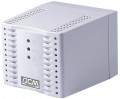 | 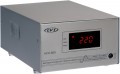 |
|---|---|---|
| Powercom TCA-3000 3 kVA / 1500 W | LVT ASN-600 0.7 kVA / 600 W | |
from $45.07 up to $51.08 | from $36.23 up to $56.40 | |
| User reviews | ||
| TOP sellers | ||
Protection against high voltage impulses and short circuit currents. Compact size and light weight. | ||
| AVR type | relay | relay |
| Input voltage | 230V (1 phase) | 230V (1 phase) |
| Power | 1500 W | 600 W |
| Power | 3 kVA | 0.7 kVA |
Specs | ||
| Input voltage range | 187 – 276 В | 145 – 280 В |
| Output voltage accuracy (±) | 5 % | 6.4 % |
| Response time | 40 ms | |
| Efficiency | 95 % | |
| Voltmeter | in absent | digital |
Sockets | ||
| Grounded sockets | 4 | 1 |
Protection levels | ||
| Protection | overheating high frequency interference short circuit overload over / under voltage | overheating high frequency interference short circuit overload over / under voltage |
General | ||
| Installation | floor | floor |
| Cooling | passive | passive |
| IP protection rating | 20 | 20 |
| Dimensions (HxWxD) | 123x136x102 mm | 80x125x192 mm |
| Weight | 1.6 kg | 2.5 kg |
| Added to E-Catalog | march 2014 | march 2014 |


Compare Powercom TCA-3000 and LVT ASN-600
You may be interested in
My comparisons
Powercom TCA-3000 often compared


LVT ASN-600 often compared


Glossary
Power
The maximum active power load permissible for this model.
Active power is the power consumed by AC devices for useful work or heat generation. Additionally, such devices consume reactive power — used for the function of specific components, primarily capacitors and inductive coils. The apparent power, measured in volt-amperes (kilovolt-amperes), is the sum of active and reactive power; see below for more on that. Here, we note that in simple household situations, active power data in watts is usually sufficient for calculations. This parameter is considered key when choosing voltage stabilizers for washing machines and for dishwashers: for the former, an optimal power range is from 2 to 5 kW, and for the latter, from 1.8 to 2.5 kW.
Regardless, the total active power of the connected load should not exceed the figures specified in the stabilizer's specifications. For full assurance, it's wise to have some reserve, though it shouldn't be too large — increasing permissible power significantly affects the size, weight, and price of the device. It's also worth mentioning that there are formulas to convert active power consumption to apparent power, considering the type of connected electrical appliance; these formulas can be found in specialized sources.
It should be noted that manufacturers don't always specify power in watts, sometimes only providing values in kVA. In such case...s, we apply an approximate conversion. Overall, while the value is approximate, it adequately describes the stabilizer's capabilities and helps match specific needs.
Active power is the power consumed by AC devices for useful work or heat generation. Additionally, such devices consume reactive power — used for the function of specific components, primarily capacitors and inductive coils. The apparent power, measured in volt-amperes (kilovolt-amperes), is the sum of active and reactive power; see below for more on that. Here, we note that in simple household situations, active power data in watts is usually sufficient for calculations. This parameter is considered key when choosing voltage stabilizers for washing machines and for dishwashers: for the former, an optimal power range is from 2 to 5 kW, and for the latter, from 1.8 to 2.5 kW.
Regardless, the total active power of the connected load should not exceed the figures specified in the stabilizer's specifications. For full assurance, it's wise to have some reserve, though it shouldn't be too large — increasing permissible power significantly affects the size, weight, and price of the device. It's also worth mentioning that there are formulas to convert active power consumption to apparent power, considering the type of connected electrical appliance; these formulas can be found in specialized sources.
It should be noted that manufacturers don't always specify power in watts, sometimes only providing values in kVA. In such case...s, we apply an approximate conversion. Overall, while the value is approximate, it adequately describes the stabilizer's capabilities and helps match specific needs.
Power
Maximum total load power allowed for this model
In electrical engineering, total power is referred to as the power that accounts for both active and reactive power; the former is discussed above, and the latter can be described as the influence of windings, inductors, and capacitors on the operation of AC networks. Total power is the main parameter for calculating equipment loads in professional electrical engineering and is denoted in volt-amperes (VA), and for stabilizers, in kilovolt-amperes (kVA). Note that for convenience, different types of powers in electrical engineering are designated with units of different names. That's why the power indicated for a stabilizer in watts usually does not equal its power in VA.
When choosing a stabilizer for some household appliances, data on active power is often sufficient, but if possible, it is better to use total power. In particular, this parameter is key when searching for a stabilizer for a refrigerator or a stabilizer for a boiler: in the first case, the optimal value is considered to be 0.4 – 1 kVA, and in the second — from 0.1 to 0.7 kVA. However, in any case, you should choose a specific model so that its total power is not lower than the total power of the entire connected load — and it's better to have a reserve (in case of unforeseen circumstances or connecting additional equipment). At the same time, it should be noted that powerf...ul models are characterized by large dimensions and weight, and above all — high cost; therefore, it is not always wise to chase maximum figures.
It should be noted that manufacturers do not always specify power in kVA, and there is only a value in watts. In such cases, we apply an approximate recalculation. While approximate, the value sufficiently describes the capabilities of the stabilizer and helps select according to specific needs.
We also note that there are formulas that allow deriving the optimal total power of the stabilizer based on data on active power and load type; these can be found in specialized sources.
In electrical engineering, total power is referred to as the power that accounts for both active and reactive power; the former is discussed above, and the latter can be described as the influence of windings, inductors, and capacitors on the operation of AC networks. Total power is the main parameter for calculating equipment loads in professional electrical engineering and is denoted in volt-amperes (VA), and for stabilizers, in kilovolt-amperes (kVA). Note that for convenience, different types of powers in electrical engineering are designated with units of different names. That's why the power indicated for a stabilizer in watts usually does not equal its power in VA.
When choosing a stabilizer for some household appliances, data on active power is often sufficient, but if possible, it is better to use total power. In particular, this parameter is key when searching for a stabilizer for a refrigerator or a stabilizer for a boiler: in the first case, the optimal value is considered to be 0.4 – 1 kVA, and in the second — from 0.1 to 0.7 kVA. However, in any case, you should choose a specific model so that its total power is not lower than the total power of the entire connected load — and it's better to have a reserve (in case of unforeseen circumstances or connecting additional equipment). At the same time, it should be noted that powerf...ul models are characterized by large dimensions and weight, and above all — high cost; therefore, it is not always wise to chase maximum figures.
It should be noted that manufacturers do not always specify power in kVA, and there is only a value in watts. In such cases, we apply an approximate recalculation. While approximate, the value sufficiently describes the capabilities of the stabilizer and helps select according to specific needs.
We also note that there are formulas that allow deriving the optimal total power of the stabilizer based on data on active power and load type; these can be found in specialized sources.
Input voltage range
The voltage range at the input of the stabilizer, at which it is able to operate in normal mode and supply a constant voltage of 230 or 400 V to the load (depending on the number of phases, see above). The wider this range — the more versatile the device, the more serious power surges it can extinguish without going beyond the standard operating parameters. However, note that this parameter is not the only, and not even far from the main indicator of the quality of work: a lot also depends on the accuracy of the output voltage and the response speed (see both points below).
Also note that some models may have several modes of operation (for example, with 230 V, 230 V or 240 V output). In this case, the characteristics indicate the "general" input voltage range, from the smallest minimum to the largest maximum; the actual ranges for each particular mode will vary.
In addition, there are stabilizers that can operate outside the nominal input voltage range: with a slight deviation beyond its limits, the device provides relatively safe output indicators (also with some deviations from the nominal 230 or 400 V), but if the drop or rise becomes critical, it works appropriate protection (see below).
Also note that some models may have several modes of operation (for example, with 230 V, 230 V or 240 V output). In this case, the characteristics indicate the "general" input voltage range, from the smallest minimum to the largest maximum; the actual ranges for each particular mode will vary.
In addition, there are stabilizers that can operate outside the nominal input voltage range: with a slight deviation beyond its limits, the device provides relatively safe output indicators (also with some deviations from the nominal 230 or 400 V), but if the drop or rise becomes critical, it works appropriate protection (see below).
Output voltage accuracy (±)
The largest deviation from the nominal output voltage (230 V or 400 V, depending on the number of phases), which the regulator allows when operating in the normal input voltage range (see above). The smaller this deviation, the more efficiently the device works, the more accurately it adapts to “changes in the situation” and the less voltage fluctuations the connected load is exposed to.
When choosing for this parameter, it is worth considering first of all how demanding the connected devices are for voltage stability. On the one hand, high stability is good for any device, on the other hand, it usually means a high price. Accordingly, it usually does not make sense to buy an advanced stabilizer for an unpretentious load like light bulbs and heaters, but for sensitive devices like audio systems or computers, it can be very useful.
When choosing for this parameter, it is worth considering first of all how demanding the connected devices are for voltage stability. On the one hand, high stability is good for any device, on the other hand, it usually means a high price. Accordingly, it usually does not make sense to buy an advanced stabilizer for an unpretentious load like light bulbs and heaters, but for sensitive devices like audio systems or computers, it can be very useful.
Response time
The rate at which the regulator responds to changes in input voltage. It is determined by the time that passes from the moment of a power surge until the moment when the device fully adjusts to the new parameters and the output current corresponds to the standard 230 or 400 V (depending on the number of phases, see above). Accordingly, the shorter the response time, the better the stabilizer works, the lower the likelihood that a power surge will significantly affect the connected equipment. On the other hand, not all types of electrical appliances are sensitive to speed — for some, smooth adjustment or voltage accuracy is more important (see above); and the high speed itself can significantly affect the price of the device. Therefore, when choosing by this parameter, it makes sense to consider which devices are planned to be connected through the stabilizer.
Efficiency
The efficiency of the stabilizer is the ratio, expressed as a percentage, between the amount of electricity at the output of the device to the amount of energy at the input. In other words, efficiency describes how much of the energy received from the network the device transfers to the connected load without loss. And losses during operation will be inevitable — firstly, not a single transformer is perfect, and secondly, the control circuits of the stabilizer also require a certain amount of energy to work. At the same time, all these costs are quite small, and even in relatively simple modern models, the efficiency can reach 97-98%.
Voltmeter
The type of voltmeter provided in the design of the stabilizer, or rather — the type of scale used by this device. This voltmeter itself allows monitoring of voltage — usually both at the input and output — which facilitates control over the stabilizer's operation. For this purpose, two separate scales are most often provided, but there are also "single" voltmeters with a switch to choose between input and output voltage. As for the type of scales, the following options are available:
— Analog. Analog voltmeters are equipped with a traditional type of scale — with divisions marked on it and a needle. They are simpler and cheaper than digital ones, but less accurate — even in the most precise devices, the error in readings can be 5-10 V just due to the peculiarities of reading information from such a scale. In some inexpensive models, analog voltmeters serve more as general indicators rather than precise instruments. At the same time, for most everyday tasks, such accuracy is quite sufficient.
— Digital. In such voltmeters, the role of the scale is played by a digital display, where voltage values can be displayed with an accuracy of up to a volt — this is the main advantage of this option over analog. The drawbacks include the complexity and relatively high cost of digital indicators. Moreover, such high accuracy may be critical in the professional field, but in everyday life, it is not...always necessary. Accordingly, in inexpensive low-power stabilizers, a digital voltmeter is often more of a marketing ploy than a real necessity.
— Analog. Analog voltmeters are equipped with a traditional type of scale — with divisions marked on it and a needle. They are simpler and cheaper than digital ones, but less accurate — even in the most precise devices, the error in readings can be 5-10 V just due to the peculiarities of reading information from such a scale. In some inexpensive models, analog voltmeters serve more as general indicators rather than precise instruments. At the same time, for most everyday tasks, such accuracy is quite sufficient.
— Digital. In such voltmeters, the role of the scale is played by a digital display, where voltage values can be displayed with an accuracy of up to a volt — this is the main advantage of this option over analog. The drawbacks include the complexity and relatively high cost of digital indicators. Moreover, such high accuracy may be critical in the professional field, but in everyday life, it is not...always necessary. Accordingly, in inexpensive low-power stabilizers, a digital voltmeter is often more of a marketing ploy than a real necessity.
Grounded sockets
The number of sockets for 230 V with grounding provided in the design of the stabilizer.
Some electrical appliances, such as refrigerators and washing/dishwashers, must be grounded when connected. This point should not be ignored — there is a risk of a serious electric shock. Accordingly, the number of sockets with grounding corresponds to the maximum number of such devices that can be simultaneously connected to the stabilizer without the use of splitters. At the same time, ungrounded devices can also be connected to such sockets.
Some electrical appliances, such as refrigerators and washing/dishwashers, must be grounded when connected. This point should not be ignored — there is a risk of a serious electric shock. Accordingly, the number of sockets with grounding corresponds to the maximum number of such devices that can be simultaneously connected to the stabilizer without the use of splitters. At the same time, ungrounded devices can also be connected to such sockets.