
Comparison Bambi M 5025EBLR vs Bambi M4969EBLR
Add to comparison |  | 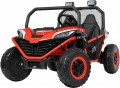 |
|---|---|---|
| Bambi M 5025EBLR | Bambi M4969EBLR | |
| Outdated Product | Outdated Product | |
| TOP sellers | ||
Bluetooth connection. Rear wheel shock absorption. | ||
| Age group, from | 3 years | 3 years |
| Design | buggy | buggy |
Specs | ||
| Max. baby's weight | 59 kg | 60 kg |
| Number of seats | 2 | 2 |
| Max. speed | 8 km/h | 6 km/h |
| Number of gears | 2 pcs | 2 pcs |
| Reverse |  | |
| Depreciation | rear wheels | rear wheels |
| Features | remote control soft starter seat belts headlights (light effects) horn (signal) sound effects mini-Jack 3.5 mm USB input Bluetooth | remote control soft starter seat belts headlights (light effects) horn (signal) sound effects mini-Jack 3.5 mm USB input Bluetooth |
Battery and motor | ||
| Number of batteries | 1 pc | 1 pc |
| Battery capacity | 7 Ah | 7 Ah |
| Voltage | 24 В | 24 В |
| Power | 360 W | 320 W |
| Battery indicator | | |
| Charging time | 12 h | |
General | ||
| Openable doors | |  |
| Wheel material | EVA | rubber |
| Dimensions (LxWxH) | 118x74x71 cm | 123x78x80 cm |
| Weight | 26 kg | 34 kg |
| Added to E-Catalog | april 2024 | march 2023 |


Compare Bambi M 5025EBLR and M4969EBLR
You may be interested in
My comparisons
Glossary
Max. baby's weight
The maximum weight of a child for which the electric car is designed. For double models (see "Number of seats"), this paragraph indicates the total maximum load — that is, the maximum total weight of both riders.
It is worth choosing according to this indicator with a certain margin — this will give a guarantee in case of emergency situations (like hitting a wheel in a pit). And if an electric car is purchased “for growth”, with the expectation of using it for several years after purchase, it is advisable to take a larger stock.
It is worth choosing according to this indicator with a certain margin — this will give a guarantee in case of emergency situations (like hitting a wheel in a pit). And if an electric car is purchased “for growth”, with the expectation of using it for several years after purchase, it is advisable to take a larger stock.
Max. speed
The maximum speed that the car can develop under normal conditions is on a flat road with good coverage.
This indicator is directly related to the age category: the older the child, the more speed he needs. So, models for babies under 3 years old usually go no faster than 4 – 5 km/h — this ensures safety and allows the parent to keep up with the machine without any problems; and some teenage ATVs(age category from 7 to 8 years old) are capable of accelerating to 30 km/h or even more.
There are cars with speed limiters to make driving safer; see "Options" for details.
This indicator is directly related to the age category: the older the child, the more speed he needs. So, models for babies under 3 years old usually go no faster than 4 – 5 km/h — this ensures safety and allows the parent to keep up with the machine without any problems; and some teenage ATVs(age category from 7 to 8 years old) are capable of accelerating to 30 km/h or even more.
There are cars with speed limiters to make driving safer; see "Options" for details.
Power
The power of the electric motor installed in the electric vehicle; if there are several engines, their total power is usually indicated.
The more powerful the engine, the faster and/or passable the machine will be, the steeper climbs it will be able to take and the easier it will be to cope with more weight, all other things being equal. At the same time, a powerful motor has a high power consumption and requires more capacious and powerful batteries, and this parameter significantly affects the cost. In general, we can say that for an ordinary user, power is rather a secondary parameter: when choosing an electric car, it is more convenient to look at the directly claimed speed, carrying capacity and other practical characteristics.
The more powerful the engine, the faster and/or passable the machine will be, the steeper climbs it will be able to take and the easier it will be to cope with more weight, all other things being equal. At the same time, a powerful motor has a high power consumption and requires more capacious and powerful batteries, and this parameter significantly affects the cost. In general, we can say that for an ordinary user, power is rather a secondary parameter: when choosing an electric car, it is more convenient to look at the directly claimed speed, carrying capacity and other practical characteristics.
Charging time
The time required to charge a completely discharged battery to 100% capacity (of course, we are talking about a regular battery supplied with the machine). This indicator will allow you to estimate how much time it will take to “refuel” an electric car. It will also come in handy in the absence of a charge indicator (see above) — by keeping a good battery on charge for the specified time, you are guaranteed to receive a 100% “full” battery.
Openable doors
The ability to open the doors of an electric car. This feature provides an additional resemblance to real cars, and also somewhat simplifies boarding and disembarking: climbing into the car through an open door is easier than climbing over the side.
Wheel material
The material from which the wheels of an electric vehicle are made significantly affects their characteristics and application features. In modern models there are such options:
- Plastic. Wheels made entirely of plastic. The key advantage of this material is its low cost. On the other hand, all-plastic wheels are hard, which is why even on relatively smooth asphalt machine will experience noticeable vibrations and make a lot of noise. In addition, the strength of this material is not very high. All this means that plastic wheels are not suitable for either high speed or heavy-duty electric vehicles. That is why they are used exclusively in models for the smallest.
— Plastic with rubber. In this case, we usually mean an all-plastic wheel, complemented by a narrow strip of rubber around the circumference - where the wheel directly contacts the ground. This ensures a softer ride than in wheels made of pure plastic (see above), but this is where the differences are limited; this option is also used exclusively in cars for the younger age group.
- Rubber. Wheels with solid rubber tires (inflatable wheels are listed separately in our catalog, see below). The base of such a wheel can be plastic or metal, depending on the age and weight category of the electric vehicle. In any case, rubber provides a softer ride than plastic (and even plastic with...rubber), dampens vibrations better and handles bumps. Therefore, such wheels are found both in cars for children and in models for older children, including ATVs for fairly fast and extreme driving.
— Polyurethane. Wheels with solid polyurethane tires; The base of the wheel is usually made of plastic. Polyurethane is somewhat softer than pure plastic (see above), but harder than rubber, therefore it is poorly suited for fast driving and driving over uneven surfaces, and is used mainly in cars of the younger age category.
- Inflatable. Wheels with inflatable rubber tires - similar to those used on real cars. Such wheels need additional monitoring - control the inflation and pump up as necessary; In addition, inflatable tires are sensitive to punctures and cuts. On the other hand, this option is the most advanced: inflatable wheels perfectly smooth out bumps, provide good grip and can easily carry heavy loads, making them suitable even for cars of the older age group - including children's ATVs and SUVs. And the need to watch the wheels allows the child to feel like a real driver, attentive and responsible.
— EVA foam rubber. Wheels made of foam rubber with a microporous structure. The EVA material is characterized by high levels of elasticity and elasticity, excellent shock-absorbing and wear-resistant qualities. At the same time, foam rubber wheels are lightweight and provide the stroller with a soft ride. They cannot be punctured or cut, but EVA wheels become stiff in cold winter weather.
- Plastic. Wheels made entirely of plastic. The key advantage of this material is its low cost. On the other hand, all-plastic wheels are hard, which is why even on relatively smooth asphalt machine will experience noticeable vibrations and make a lot of noise. In addition, the strength of this material is not very high. All this means that plastic wheels are not suitable for either high speed or heavy-duty electric vehicles. That is why they are used exclusively in models for the smallest.
— Plastic with rubber. In this case, we usually mean an all-plastic wheel, complemented by a narrow strip of rubber around the circumference - where the wheel directly contacts the ground. This ensures a softer ride than in wheels made of pure plastic (see above), but this is where the differences are limited; this option is also used exclusively in cars for the younger age group.
- Rubber. Wheels with solid rubber tires (inflatable wheels are listed separately in our catalog, see below). The base of such a wheel can be plastic or metal, depending on the age and weight category of the electric vehicle. In any case, rubber provides a softer ride than plastic (and even plastic with...rubber), dampens vibrations better and handles bumps. Therefore, such wheels are found both in cars for children and in models for older children, including ATVs for fairly fast and extreme driving.
— Polyurethane. Wheels with solid polyurethane tires; The base of the wheel is usually made of plastic. Polyurethane is somewhat softer than pure plastic (see above), but harder than rubber, therefore it is poorly suited for fast driving and driving over uneven surfaces, and is used mainly in cars of the younger age category.
- Inflatable. Wheels with inflatable rubber tires - similar to those used on real cars. Such wheels need additional monitoring - control the inflation and pump up as necessary; In addition, inflatable tires are sensitive to punctures and cuts. On the other hand, this option is the most advanced: inflatable wheels perfectly smooth out bumps, provide good grip and can easily carry heavy loads, making them suitable even for cars of the older age group - including children's ATVs and SUVs. And the need to watch the wheels allows the child to feel like a real driver, attentive and responsible.
— EVA foam rubber. Wheels made of foam rubber with a microporous structure. The EVA material is characterized by high levels of elasticity and elasticity, excellent shock-absorbing and wear-resistant qualities. At the same time, foam rubber wheels are lightweight and provide the stroller with a soft ride. They cannot be punctured or cut, but EVA wheels become stiff in cold winter weather.