
Comparison Doogee S200 X 512 GB vs Doogee S200 256 GB
Add to comparison |  | 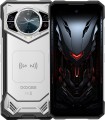 |
|---|---|---|
| Doogee S200 X 512 GB | Doogee S200 256 GB | |
| Compare prices 1 | Compare prices 4 | |
| TOP sellers | ||
| Operating system | Android 14 | Android 14 |
Display | ||
| Main display | 6.72 " 2400x1080 (20:9) 392 ppi IPS 120 Hz | 6.72 " 2400x1080 (20:9) 392 ppi IPS 120 Hz |
| Display-to-body ratio | 73 % | 73 % |
| Additional (external) display |  | |
Hardware | ||
| Processor (graphics) | Dimensity 7050 (Mali-G68) | Dimensity 7050 (Mali-G68) |
| CPU frequency | 2.6 GHz | 2.6 GHz |
| CPU cores | 8 | 8 |
| Processor rating AnTuTu | 27 | 27 |
| RAM | 12 GB | 12 GB |
| RAM type | LPDDR5 | LPDDR5 |
| Memory storage | 512 GB | 256 GB |
| Memory card slot | microSD | microSD |
| Max. memory card storage | 2048 GB | 2048 GB |
Test results | ||
| AnTuTu Benchmark Test | 555 000 points | |
Main camera | ||
| Lenses | 3 modules | 3 modules |
| Main lens | 100 MP | 100 MP |
| Additional lens | night vision, 20 MP, Sony IMX350 | night vision, 20 MP |
| Macro lens | | |
| Full HD (1080p) | 30 fps | 30 fps |
| 4K video recording | 30 fps | 30 fps |
| Flash | | |
Front camera | ||
| Form factor | teardrop | teardrop |
| Main selfie lens | 20 MP | 20 MP |
| Full HD (1080p) | 30 fps | 30 fps |
Connections and communication | ||
| Cellular technology | 5G CDMA | 5G CDMA |
| SIM card type | nano-SIM | nano-SIM |
| SIM slots | SIM + SIM/microSD | SIM + SIM/microSD |
| Connectivity technology | Wi-Fi 6 (802.11ax) Bluetooth v5.0 NFC | Wi-Fi 6 (802.11ax) Bluetooth v5.0 NFC |
| Inputs & outputs | USB-C | USB-C |
Features and navigation | ||
| Features | side fingerprint scanner gyroscope light sensor | side fingerprint scanner gyroscope light sensor |
| Navigation | aGPS GPS module GLONASS Galileo digital compass | aGPS GPS module GLONASS Galileo digital compass |
Power supply | ||
| Battery capacity | 10100 mAh | 10100 mAh |
| Battery type | Li-ion (graphite) | Li-ion (graphite) |
| Battery life (PCMark) | 18.22 h | |
| Fast charging technology | Power Delivery | Power Delivery |
| Charger power | 33 W | 33 W |
General | ||
| Waterproof | IP68/IP69K | IP68/IP69K |
| Shockproof | MIL-STD-810 | MIL-STD-810 |
| Bezel/back cover material | metal/plastic | metal/plastic |
| What's in the box? | screen protector charger | screen protector charger |
| Dimensions (HxWxD) | 179.5x82.5x16 mm | 179.5x82.5x16 mm |
| Weight | 364 g | |
| Added to E-Catalog | november 2024 | august 2024 |

Compare Doogee S200 X and S200
When comparing the Doogee S200 X and Doogee S200, several key points can be highlighted. Both smartphones feature the same Dimensity 7050 processor and 12 GB of RAM, ensuring excellent performance. However, the S200 X offers 512 GB of internal storage, while the S200 has 256 GB, making it more suitable for users needing more storage space. Both devices have the same 6.72-inch display with a resolution of 2400x1080 and support for 120 Hz. In terms of the camera, both phones are equipped with a 100 MP main camera and a 20 MP front camera, but the S200 X also includes an additional AMOLED screen on the back, adding functionality. Both devices have powerful 10100 mAh batteries and support for 33W fast charging, as well as protection standards IP68/IP69K and MIL-STD-810, making them reliable for use in challenging conditions. Overall, the S200 X is a more advanced version with more storage and an additional screen, while the S200 offers excellent value for less demanding users.
Price comparison
You may be interested in
My comparisons
Doogee S200 often compared


Glossary
Memory storage
The volume of storage installed in the phone.
This volume directly determines how much data can be stored on the phone without using removable memory cards. This indicator is especially important for models that don't have memory card slots. However, even if memory cards are supported, built-in storage is still preferable: at least it works faster, and it usually has fewer restrictions on its use (in particular, most smartphones allow you to install applications only on storage).
As for specific volumes, the actual minimum for a modern smartphone is 32 GB; less “capacious” devices are becoming increasingly rare these days. 64 GB is considered a comfortable minimum, 128 GB is considered average indicator, 256 GB - above average. Some high-end devices are equipped with 512 GB and even 1 TB< /a>.
We also note that the actual amount of memory available to the user will inevitably be somewhat less than the total, since part of the drive is occupied by operating system files.
This volume directly determines how much data can be stored on the phone without using removable memory cards. This indicator is especially important for models that don't have memory card slots. However, even if memory cards are supported, built-in storage is still preferable: at least it works faster, and it usually has fewer restrictions on its use (in particular, most smartphones allow you to install applications only on storage).
As for specific volumes, the actual minimum for a modern smartphone is 32 GB; less “capacious” devices are becoming increasingly rare these days. 64 GB is considered a comfortable minimum, 128 GB is considered average indicator, 256 GB - above average. Some high-end devices are equipped with 512 GB and even 1 TB< /a>.
We also note that the actual amount of memory available to the user will inevitably be somewhat less than the total, since part of the drive is occupied by operating system files.
Test results
The test results are specified either by a younger model in a line or a particular model, made for a better understanding performance of phone models if you compare phones against these parameters. For example, the 128 GB model has test results, and the 256 GB model has no information on the network, and in both models you will see the same value that will give an understanding of the overall performance of the device. But if the editorial office has information for each model individually, then each model will have its test results filled out, and the model with bigger RAM will have bigger values.
AnTuTu Benchmark Test
The result shown by a device when undergoing a performance test (benchmark) in AnTuTu Benchmark.
AnTuTu Benchmark is a comprehensive test designed specifically for mobile devices, primarily smartphones and tablets. It evaluates the efficiency of the processor, memory, graphics, and input/output systems, providing a clear impression of the system's capabilities. The higher the performance, the more points are awarded. Smartphones that score over 1.5M points are considered high-performance according to the AnTuTu ranking.
Like any benchmark, this test does not provide absolute precision: the same device can show different results, usually with deviations within 5-7%. These deviations depend on various factors unrelated to the system itself, such as the device's load from third-party programs and the ambient temperature during testing. Therefore, significant differences between two models can only be noted when the gap in their scores exceeds this margin of error.
AnTuTu Benchmark is a comprehensive test designed specifically for mobile devices, primarily smartphones and tablets. It evaluates the efficiency of the processor, memory, graphics, and input/output systems, providing a clear impression of the system's capabilities. The higher the performance, the more points are awarded. Smartphones that score over 1.5M points are considered high-performance according to the AnTuTu ranking.
Like any benchmark, this test does not provide absolute precision: the same device can show different results, usually with deviations within 5-7%. These deviations depend on various factors unrelated to the system itself, such as the device's load from third-party programs and the ambient temperature during testing. Therefore, significant differences between two models can only be noted when the gap in their scores exceeds this margin of error.
Additional lens
Specs of the additional lens installed in the device.
An additional lens is the one that is not covered by any of the three categories described above (main, tele-, ultra-wide), but is used directly for taking photos and videos (that is, it is not an auxiliary one — see below). In this case, the specific purpose of such a lens may be different. In some models, modules for a specific purpose are installed — for example, "portrait" optics with a longer focal length than the main module (however, less than that of a telephoto lens). In other devices, you can find additional modules of standard specialization — for example, the second telephoto lens, which differs in specs from the main one; data on such modules is also given here.
The meaning of particular specifications is described in detail above, in the paragraphs regarding the main lens, telephoto lens and ultra-wide optics. Here we note some nuances that directly relate to additional modules or are worth re-mentioning:
An additional lens is the one that is not covered by any of the three categories described above (main, tele-, ultra-wide), but is used directly for taking photos and videos (that is, it is not an auxiliary one — see below). In this case, the specific purpose of such a lens may be different. In some models, modules for a specific purpose are installed — for example, "portrait" optics with a longer focal length than the main module (however, less than that of a telephoto lens). In other devices, you can find additional modules of standard specialization — for example, the second telephoto lens, which differs in specs from the main one; data on such modules is also given here.
The meaning of particular specifications is described in detail above, in the paragraphs regarding the main lens, telephoto lens and ultra-wide optics. Here we note some nuances that directly relate to additional modules or are worth re-mentioning:
- Resolution (in megapixels, MP). In itself, high resolution only increases the detail and does not necessarily improve the quality of the picture. However, numerous MPs is often a sign of an advanced camera, where various additional solutions are used to improve quality.
- Aperture. Written as a fraction, such as f/1.9; the larger the number in the designation, the lower the aperture ratio and the worse the light transmission of the lens. These optics are more expensive, but...offer better image quality and more overall performance.
- Focal length. Specified in millimetres. Directly affects the viewing angle and specialization of the lens: short focal lengths are typical for "wide-angle" and lenses for general use, significant — for "portrait" and telephoto lenses.
- Sensor size. Specified in fractions of an inch, such as 1/2.8". A larger sensor is more expensive and takes up more space, but provides better image quality.
- OIS. An abbreviation for "optical image stabilization". See below for more details on such systems, but here we note that they are typical mainly for advanced cameras: optical stabilization is more complicated and expensive than digital, but more effective.
Battery life (PCMark)
Because manufacturers claim a very conditional battery life (in an unknown mode, with unstated brightness indicators and phone settings) in the specs of their gadgets, which is more marketing and is not confirmed in reality, we decided to display a more accurate picture. The operating time indicated in this paragraph is the result of the PCMark Work 2.0 Battery Life benchmark, which evaluates energy efficiency in five work formats: web surfing, video viewing/editing, photo editing, working with text documents and working with data (extracting them from different file formats, building charts). These are the main tasks that a smartphone is supposed to perform in everyday life. And thanks to this testing format, the results very accurately correspond to the actual battery life of the gadget with active use during the day.