
Comparison Kemei KM-TX1 vs VGR V-332
Add to comparison | 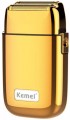 | 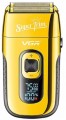 |
|---|---|---|
| Kemei KM-TX1 | VGR V-332 | |
| Compare prices 2 | from $49.99 | |
| TOP sellers | ||
| Type | shaver | shaver |
| Shaving | dry | dry |
| Nozzles | built-in trimmer | |
Specs | ||
| Shaving heads / foil | 2 pcs | 2 pcs |
| Motor revolutions | 8000 rpm | 7500 rpm |
| Features | movable head / foil | movable head / foil |
| In box | case | |
Power source | ||
| Power supply | battery | battery |
| Battery type | Li-Ion | |
| Battery capacity | 1200 mAh | |
| Operating time | 120 min | 120 min |
| Charging time | 2 h | 2 h |
| Charge level indicator |  |  |
| Charging port on the body | USB-C | USB-C |
General | ||
| Display | | |
| Weight | 490 g | |
| Color | ||
| Added to E-Catalog | august 2024 | april 2024 |



Compare Kemei KM-TX1 and VGR V-332
Price comparison
You may be interested in
My comparisons
VGR V-332 often compared


Glossary
Nozzles
— Built-in trimmer. Device for trimming the contours of facial hair. A trimmer is similar to a clipper, but smaller and better suited for fine work. Located directly on the body of the device.
— Blade for hair cutting. Removable version of the trimmer (read more about the trimmer above), made in the form of a replaceable nozzle and is installed instead of the main nozzle with shaving heads. Thanks to this, the trimmer can be made wider than the built-in trimmer, and overall more efficient.
— Nozzle for ears and nose. The cylindrical nozzle of small diameter allows you to penetrate the inlet and ear and remove unwanted vegetation from there. It is installed mainly on top of the main nozzle.
— Universal comb. Such a nozzle can be useful for regular care of the stubble or beard, when you need to trim, shorten, and not just shave. Length adjustment allows you to select the desired value for a particular area or depending on the image and type of "hairstyle".
— Blade for hair cutting. Removable version of the trimmer (read more about the trimmer above), made in the form of a replaceable nozzle and is installed instead of the main nozzle with shaving heads. Thanks to this, the trimmer can be made wider than the built-in trimmer, and overall more efficient.
— Nozzle for ears and nose. The cylindrical nozzle of small diameter allows you to penetrate the inlet and ear and remove unwanted vegetation from there. It is installed mainly on top of the main nozzle.
— Universal comb. Such a nozzle can be useful for regular care of the stubble or beard, when you need to trim, shorten, and not just shave. Length adjustment allows you to select the desired value for a particular area or depending on the image and type of "hairstyle".
Motor revolutions
The speed of rotation of the electric motor of the shaver. A higher rotational speed (ceteris paribus) usually means a higher speed of movement of the blades, which has a positive effect on the closeness of the shave.
In box
— Additional Blade. A replacement cutting module that is installed instead of a dull one to restore a clean cut without irritation and maintain the device's trademark "versatility." Having a spare allows for flexible maintenance planning — you won't depend on the availability of consumables in the store, can keep a separate blade for contours/edging or travel, and maintain hygiene by dividing the application area. The practical effect — fewer pauses, consistent results every week, and predictable expenses, making this configuration more advantageous and convenient compared to options "with only one blade."
— Case. Cases include all sorts of hard constructions for storing the razor. This category also includes pouch-type cases made of dense fabric. Besides securely storing the device, they also elevate the model to a higher class. More budget-friendly electric razors come with a much more primitive fabric case.
— Charging Stand. A special stand on which the razor can be placed to charge the batteries. There are no fundamental technical differences between such charging and charging via a network cable; the main difference is that the stand can also be used for storing the razor. Therefore, razors with a charging stand are well-suited for home use.
— Wireless Charging. A special stand that charges the razor witho...ut a precise plug connection — simply placing the electric razor on it will automatically begin charging the battery unit. This spares the user from fiddling with connecting wires and reduces wear on connectors. On the other hand, such a feature significantly impacts the cost of the razor and increases the duration of the charging process itself, as the charging platforms are made low-power for safety reasons.
— Self-Cleaning Station. This is a special stand where the razor is installed for automated maintenance. As the name suggests, this maintenance primarily includes cleaning — the shaving block is cleared of hairs and dust — as well as recharging the battery. Additionally, self-cleaning systems may include lubrication and disinfection of the shaving block, though this feature is somewhat rarer and requires the use of consumables (oil and disinfectant).
— Case. Cases include all sorts of hard constructions for storing the razor. This category also includes pouch-type cases made of dense fabric. Besides securely storing the device, they also elevate the model to a higher class. More budget-friendly electric razors come with a much more primitive fabric case.
— Charging Stand. A special stand on which the razor can be placed to charge the batteries. There are no fundamental technical differences between such charging and charging via a network cable; the main difference is that the stand can also be used for storing the razor. Therefore, razors with a charging stand are well-suited for home use.
— Wireless Charging. A special stand that charges the razor witho...ut a precise plug connection — simply placing the electric razor on it will automatically begin charging the battery unit. This spares the user from fiddling with connecting wires and reduces wear on connectors. On the other hand, such a feature significantly impacts the cost of the razor and increases the duration of the charging process itself, as the charging platforms are made low-power for safety reasons.
— Self-Cleaning Station. This is a special stand where the razor is installed for automated maintenance. As the name suggests, this maintenance primarily includes cleaning — the shaving block is cleared of hairs and dust — as well as recharging the battery. Additionally, self-cleaning systems may include lubrication and disinfection of the shaving block, though this feature is somewhat rarer and requires the use of consumables (oil and disinfectant).
Battery type
— Li-Ion. Currently, the prevailing battery type is Lithium-ion (Li-Ion), known for its high energy density, compact size, and light weight. Li-Ion batteries offer approximately 400 charge-discharge cycles on average. These batteries exhibit minimal self-discharge and lack a significant "memory effect" (capacity reduction due to charging a partially drained battery). However, they are sensitive to cold temperatures and require high-quality charging currents.
— Li-pol. Lithium-polymer (Li-Pol) batteries maintain stable output voltage even during significant discharge. These batteries offer an average lifespan of about 800 charge-discharge cycles. Unlike some battery types, Li-Pol batteries don't exhibit a memory effect, and they operate reliably within a wide temperature range of -20 to +40°C. However, they are sensitive to deep discharge and overcharging. To address this, specialized chargers employing suitable power supply algorithms for the lithium polymer context are recommended for maintenance.
— Ni-Mh. Nickel-metal hydride (Ni-MH) batteries excel in managing substantial charge and discharge currents, making them suitable for power-demanding electric motors and rapid charging. These batteries now boast impressive longevity, enduring around 1000 to 1500 charge-discharge cycles, while maintaining an eco-friendly nature. In comparison to Li-Ion, Ni-MH batteries appear bulkier and add weight to the device, yet they offer a more economical option.
— Li-pol. Lithium-polymer (Li-Pol) batteries maintain stable output voltage even during significant discharge. These batteries offer an average lifespan of about 800 charge-discharge cycles. Unlike some battery types, Li-Pol batteries don't exhibit a memory effect, and they operate reliably within a wide temperature range of -20 to +40°C. However, they are sensitive to deep discharge and overcharging. To address this, specialized chargers employing suitable power supply algorithms for the lithium polymer context are recommended for maintenance.
— Ni-Mh. Nickel-metal hydride (Ni-MH) batteries excel in managing substantial charge and discharge currents, making them suitable for power-demanding electric motors and rapid charging. These batteries now boast impressive longevity, enduring around 1000 to 1500 charge-discharge cycles, while maintaining an eco-friendly nature. In comparison to Li-Ion, Ni-MH batteries appear bulkier and add weight to the device, yet they offer a more economical option.
Battery capacity
While higher battery capacity theoretically extends a device's operation on a single charge, practical considerations are more complex. Ampere-hours are a specific unit, comparable only among batteries with the same voltage. For differing voltages, capacity must be converted to watt-hours for accurate comparison. Furthermore, actual tool battery life depends on consumption and performance, not just battery properties. Comparing battery capacity is meaningful only when models share the same voltage and capabilities. Operating time is a more informative parameter for comparison.
Charge level indicator
The presence in the design of the electric shaver charge level indicator.
It's important to highlight that in this context, an indicator refers specifically to a visual representation of the charge level. This could manifest as a battery icon or a percentage displayed on the display. Such an indicator significantly simplifies battery monitoring, minimizing the possibility of being unexpectedly left with a depleted battery.
It's important to highlight that in this context, an indicator refers specifically to a visual representation of the charge level. This could manifest as a battery icon or a percentage displayed on the display. Such an indicator significantly simplifies battery monitoring, minimizing the possibility of being unexpectedly left with a depleted battery.
Display
The presence on the body of the shaver own display, which can display various service information. The display can be equipped with its own backlight. Its presence makes the use of the shaver more convenient, but significantly affects the price of the device.