
Comparison multicookers & Air fryers
Save List
Add to comparison | 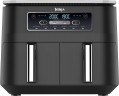 |
|---|---|
| Ninja Foodi Dual Zone Air Fryer AF300 | |
from $324.99 | |
| TOP sellers | |
Two independent cooking zones. 6 versatile modes: air fryer mode, frying mode, roasting, baking mode, drying mode and warming up mode. | |
| Type | air fryer-multi-oven |
| Power | 2400 W |
| Number of programs | 6 |
| Modes | frying grill baking dehydration reheating |
Specs | |
| cooking t | 40 – 240 °С |
| Basket capacity | 2 kg |
| Volume | 7.6 L |
| Features | 2 separate compartments anti-odour filter heat indicator non-stick coating |
General | |
| Control | push-button |
| Cable length | 0.8 m |
| Material | plastic |
| Dimensions (HxWxD) | 315x380x265 mm |
| Weight | 8.2 kg |
| Color | |
| Added to E-Catalog | february 2023 |


You may be interested in
My comparisons
Glossary
Type
— Deep fryer. Kitchen appliances designed primarily for frying products in a deep layer of heated oil (fat). They are used to cook French fries, various products in batter (vegetables, mushrooms, fish, etc.), chips and other similar dishes. Some models also provide special features, sometimes quite far from the original preparation — for example, baking muffins or cooking fondue(see "Functions/features").
— Multi-oven. Devices that operate in a way that resembles a combination of a multi-cooker and an air grill. The working chamber of a multi-oven is equipped with a heater and a fan, which makes it possible to cook food by blowing hot air over it. In addition to frying and baking, multi-ovens can provide for many other cooking methods: boiling in the usual way and steaming, making yogurt, kneading dough, etc., depending on the model.
— Multi-oven. Compact electric ovens with the Air Fry function. The working chamber in such kitchen appliances is located behind the door in the front panel of the body. Inside it, there are often baking trays for cooking at different levels, including using convection. Multi-ovens have modes for frying, baking, grilling, frying, drying, heating, etc. - depending on the specific model.
— Air grill. Dry roasting...devices for cooking food using directed flows of heated air. Structurally, they are made in the form of a large glass pan with a lid, in which a heating element and a fan for blowing are located. Depending on the selected operating mode, air grills can be used for frying products, stewing, boiling, baking, steaming, drying fruits, vegetables and herbs.
— Multi-oven. Devices that operate in a way that resembles a combination of a multi-cooker and an air grill. The working chamber of a multi-oven is equipped with a heater and a fan, which makes it possible to cook food by blowing hot air over it. In addition to frying and baking, multi-ovens can provide for many other cooking methods: boiling in the usual way and steaming, making yogurt, kneading dough, etc., depending on the model.
— Multi-oven. Compact electric ovens with the Air Fry function. The working chamber in such kitchen appliances is located behind the door in the front panel of the body. Inside it, there are often baking trays for cooking at different levels, including using convection. Multi-ovens have modes for frying, baking, grilling, frying, drying, heating, etc. - depending on the specific model.
— Air grill. Dry roasting...devices for cooking food using directed flows of heated air. Structurally, they are made in the form of a large glass pan with a lid, in which a heating element and a fan for blowing are located. Depending on the selected operating mode, air grills can be used for frying products, stewing, boiling, baking, steaming, drying fruits, vegetables and herbs.
Power
The power consumed by the device during operation. Usually indicated by the maximum energy consumption, at the most intensive mode of operation.
Large capacity requires more power. However, devices with similar characteristics may differ in this parameter. It is worth noting that, other things being equal, lower power does not mean more economical energy consumption: cooking in such a device takes more time and as a result, the amount of energy spent is almost the same. At the same time, lower power means less load on the electrical grid, which can be important in houses with poor wiring.
Large capacity requires more power. However, devices with similar characteristics may differ in this parameter. It is worth noting that, other things being equal, lower power does not mean more economical energy consumption: cooking in such a device takes more time and as a result, the amount of energy spent is almost the same. At the same time, lower power means less load on the electrical grid, which can be important in houses with poor wiring.
Number of programs
The total number of cooking programs provided in the device.
The more this number — the more extensive the possibilities, the wider the choice of the user. However, note that a specific set of modes may be different, this point in each case should be clarified separately. See "Programmes" for details on specific modes.
The more this number — the more extensive the possibilities, the wider the choice of the user. However, note that a specific set of modes may be different, this point in each case should be clarified separately. See "Programmes" for details on specific modes.
Modes
— Frying. The frying mode provides work at a high temperature. And for deep-frying, the multi-oven can be equipped with special baskets.
— Grill. Specialized mode for cooking juicy steaks, golden crispy breadcrumbs, grilled fish, grilled vegetables, etc. Multi-ovens with this function are usually equipped with a special grill kit — a removable bottom with typical ribs and holes, small skewers for cooking meat or vegetable kebabs.
— Baking. The possibilities of this mode are in many ways similar to a conventional oven. Baking usually means the cooking of not only flour products, but also muffins, various casseroles, etc.
— Drying. The drying mode is used to remove moisture from various food items by subjecting them to prolonged, low-temperature heating and hot air circulation. This mode is commonly employed for dehydrating vegetables and fruits for long-term storage, preparing dried meat or fish for outdoor activities such as hiking, and other similar purposes.
— Defrosting. Special mode for gentle defrosting of frozen food. It maintains a low intensity of the multi-oven, so that the contents effectively “melt”, but at the same time do not bake.
— Reheating. Reheating refers to the process of warming up pre-cooked dishes...rather than cooking raw food. In the reheating mode, the temperature is maintained at a relatively low level to gently warm the food without overcooking it. Some models may offer an initial burst of intense heat followed by a lower temperature to efficiently heat the dish and then keep it warm.
— Heating. The preheat function is used to heat the cooking container before placing the ingredients inside. This mode quickly heats the bowl of the multifurnace to a high temperature, such as 200 °C, within a short period, typically 3-4 minutes. This ensures that the container is adequately heated and ready for cooking.
— Grill. Specialized mode for cooking juicy steaks, golden crispy breadcrumbs, grilled fish, grilled vegetables, etc. Multi-ovens with this function are usually equipped with a special grill kit — a removable bottom with typical ribs and holes, small skewers for cooking meat or vegetable kebabs.
— Baking. The possibilities of this mode are in many ways similar to a conventional oven. Baking usually means the cooking of not only flour products, but also muffins, various casseroles, etc.
— Drying. The drying mode is used to remove moisture from various food items by subjecting them to prolonged, low-temperature heating and hot air circulation. This mode is commonly employed for dehydrating vegetables and fruits for long-term storage, preparing dried meat or fish for outdoor activities such as hiking, and other similar purposes.
— Defrosting. Special mode for gentle defrosting of frozen food. It maintains a low intensity of the multi-oven, so that the contents effectively “melt”, but at the same time do not bake.
— Reheating. Reheating refers to the process of warming up pre-cooked dishes...rather than cooking raw food. In the reheating mode, the temperature is maintained at a relatively low level to gently warm the food without overcooking it. Some models may offer an initial burst of intense heat followed by a lower temperature to efficiently heat the dish and then keep it warm.
— Heating. The preheat function is used to heat the cooking container before placing the ingredients inside. This mode quickly heats the bowl of the multifurnace to a high temperature, such as 200 °C, within a short period, typically 3-4 minutes. This ensures that the container is adequately heated and ready for cooking.
cooking t
The cooking temperature provided by the device. Most models are adjustable, so this item indicates the operating temperature range.
Deep frying is carried out at temperatures from 130 to 190 °С200 °С. But high operating temperatures (over 200°) are less common.
Deep frying is carried out at temperatures from 130 to 190 °С200 °С. But high operating temperatures (over 200°) are less common.
Basket capacity
The capacity of the deep fryer basket or multi-oven bowl, or air fryer flask (see "Type") in kilograms is the maximum amount of food that can be loaded into the device at one time.
For deep fryers used in everyday life, a capacity of up to 0.6 – 0.8 kg is considered quite sufficient; it is rarely useful to fry numerous foods at a time at home. But models that can hold from a kilogram or more are designed mainly for industrial use — in cafes, canteens, etc. In turn, multi-ovens with a capacity of up to 0.8 kg can be called small, up to 1.5 kg — medium, more than 1.5 kg — large. Air fryers have approximately the same capacity.
For deep fryers used in everyday life, a capacity of up to 0.6 – 0.8 kg is considered quite sufficient; it is rarely useful to fry numerous foods at a time at home. But models that can hold from a kilogram or more are designed mainly for industrial use — in cafes, canteens, etc. In turn, multi-ovens with a capacity of up to 0.8 kg can be called small, up to 1.5 kg — medium, more than 1.5 kg — large. Air fryers have approximately the same capacity.
Volume
The volume of the multi-cooker bowl, deep fryer basket, air fryer container, or the cooking chamber of a multi-oven.
This parameter is measured in liters and is directly related to the capacity of the basket (see above) — larger volumes are required for a greater quantity of food. For deep fryers (see "Type"), this parameter is usually specified not by the total volume but by the amount of oil needed for standard operation, providing an estimate of how much oil is required for the appliance. In models with separate compartments (see below), the volume may be indicated for each section individually.
This parameter is measured in liters and is directly related to the capacity of the basket (see above) — larger volumes are required for a greater quantity of food. For deep fryers (see "Type"), this parameter is usually specified not by the total volume but by the amount of oil needed for standard operation, providing an estimate of how much oil is required for the appliance. In models with separate compartments (see below), the volume may be indicated for each section individually.
Features
— 2 separate compartments. Features two independent chambers, each operating independently in terms of temperature, time, and mode. This design is especially convenient when you need to cook different dishes at the same time— like roasting vegetables in one compartment and frying chicken in the other, without mixing smells or having to settle for a single mode. Compared to single compartment models, the dual module offers greater flexibility and saves time, as you don't have to wait for the first cycle to finish. Practically, it is useful for a family dinner where everyone wants their own dish, or for quick snacks where some ingredients cook faster than others. Available in vertical and horizontal formats. The former is notable for its compact size, while the latter often allows for combining the chambers into one larger space but also takes up considerable space on the kitchen counter.
— Temperature maintenance. This function keeps the cooked dish warm so it doesn't cool down. Handy in situations where there's a long interval between cooking and serving, and you prefer to consume food warm.
— Removable bowl. The ability to remove the fryer’s bowl significantly eases maintenance and cleaning: for example, it's more convenient to drain oil from a separate bowl than to tilt the entire devic...e, and washing is noticeably simpler.
— Viewing window. A transparent window in the device's lid allows observing the cooking process without opening the lid. This feature is particularly important for deep fryers: opening the lid may cause splashes of hot oil to fly out, so it's safer to watch the process through the window. However, ovens may also feature a window (see "Type").
— Odor filter. A filter that cleans the air coming out of the device and prevents strong smells from forming while cooking. It's important to note that such filters usually have a limited lifespan and need to be cleaned or replaced after a certain period.
— Heating indicator. An indicator that signals when the device has heated to the working temperature. Note that in many models, this indicator works during the heating process, alerting you that the appliance is on and might have already heated to high temperatures.
— Non-stick coating. A special coating that prevents food from burning and sticking to the walls of the bowl, making the bowl easier to clean. Be aware that many types of non-stick coatings are quite delicate, requiring careful handling and not allowing cleaning with metal items or abrasive agents; on the other hand, such cleaning is usually unnecessary.
— Fondue preparation. Fondue is a dish consumed in a specific manner: small pieces of bread, vegetables, mushrooms, etc., are dipped into melted cheese using long forks. The ability to cook such a dish is exclusively found in fryers (see "Type"): for this, the lid is removed, and the heater operates in a "slow simmer" mode, maintaining the desired cheese consistency. There are also other types of fondue, namely meat fondue (with broth and thin slices of meat) and chocolate fondue (with chocolate and pieces of fruit); it's advisable to specify the possibility of preparing these separately.
— Delayed start timer. A system that allows delaying the start of cooking for a certain time. With a delayed start timer, you can load food in advance and set the start time at your discretion—like half an hour before returning from work to have a freshly cooked, hot dish ready when you get home.
— Self-cleaning. The device's support for a self-cleaning mode. This cleaning method is significantly easier than washing a heavy bowl with dried-on dirt in the kitchen sink: usually, it is enough to pour a little water with detergent into the bowl and turn on the appropriate mode, then pour out the water and wipe the bowl. Note that mechanically controlled grills may lack a separate button to activate the self-cleaning mode—instead, the necessary parameters (temperature and time) are specified in the instructions.
— Child lock. This refers to the ability to lock the control panel so that a curious little child cannot turn on the device or change the set operating settings. However, removing the lock is not a problem for an adult.
— Temperature maintenance. This function keeps the cooked dish warm so it doesn't cool down. Handy in situations where there's a long interval between cooking and serving, and you prefer to consume food warm.
— Removable bowl. The ability to remove the fryer’s bowl significantly eases maintenance and cleaning: for example, it's more convenient to drain oil from a separate bowl than to tilt the entire devic...e, and washing is noticeably simpler.
— Viewing window. A transparent window in the device's lid allows observing the cooking process without opening the lid. This feature is particularly important for deep fryers: opening the lid may cause splashes of hot oil to fly out, so it's safer to watch the process through the window. However, ovens may also feature a window (see "Type").
— Odor filter. A filter that cleans the air coming out of the device and prevents strong smells from forming while cooking. It's important to note that such filters usually have a limited lifespan and need to be cleaned or replaced after a certain period.
— Heating indicator. An indicator that signals when the device has heated to the working temperature. Note that in many models, this indicator works during the heating process, alerting you that the appliance is on and might have already heated to high temperatures.
— Non-stick coating. A special coating that prevents food from burning and sticking to the walls of the bowl, making the bowl easier to clean. Be aware that many types of non-stick coatings are quite delicate, requiring careful handling and not allowing cleaning with metal items or abrasive agents; on the other hand, such cleaning is usually unnecessary.
— Fondue preparation. Fondue is a dish consumed in a specific manner: small pieces of bread, vegetables, mushrooms, etc., are dipped into melted cheese using long forks. The ability to cook such a dish is exclusively found in fryers (see "Type"): for this, the lid is removed, and the heater operates in a "slow simmer" mode, maintaining the desired cheese consistency. There are also other types of fondue, namely meat fondue (with broth and thin slices of meat) and chocolate fondue (with chocolate and pieces of fruit); it's advisable to specify the possibility of preparing these separately.
— Delayed start timer. A system that allows delaying the start of cooking for a certain time. With a delayed start timer, you can load food in advance and set the start time at your discretion—like half an hour before returning from work to have a freshly cooked, hot dish ready when you get home.
— Self-cleaning. The device's support for a self-cleaning mode. This cleaning method is significantly easier than washing a heavy bowl with dried-on dirt in the kitchen sink: usually, it is enough to pour a little water with detergent into the bowl and turn on the appropriate mode, then pour out the water and wipe the bowl. Note that mechanically controlled grills may lack a separate button to activate the self-cleaning mode—instead, the necessary parameters (temperature and time) are specified in the instructions.
— Child lock. This refers to the ability to lock the control panel so that a curious little child cannot turn on the device or change the set operating settings. However, removing the lock is not a problem for an adult.
Control
— Rotary switch. Control carried out by mechanical elements directly connected to the corresponding components of the device. The traditional, most popular option provides two rotary knobs: a thermostat and an off timer with a clock mechanism (see “Functions”). The main advantages of this type of control are simplicity and low cost. At the same time, the capabilities of the “mechanics”, although modest, are quite sufficient to control all key functions. Among the clear disadvantages compared to electronic control, it is worth noting less accuracy.
- Push-button. Push-button control is based on electronic circuits. Such systems are more accurate than mechanical ones; more capabilities and modes are provided. On the other hand, such control is more complex and more expensive than mechanical control.
- Touch. A type of electronic control with touch switches. Compared to push-button models, it provides a high level of comfort in operation, and looks more modern and aesthetically pleasing. Touch control is found mainly in top models of juicers.
— Rotary switch with sensor. Another type of electronic control, where the main control is a rotary switch, which is complemented by touch buttons. The switch itself simplifies the selection of modes, temperature, timer time, and the sens...ors are secondary. However, the control panel itself looks stylish and is not inferior in design to models with touch controls only.
- Push-button. Push-button control is based on electronic circuits. Such systems are more accurate than mechanical ones; more capabilities and modes are provided. On the other hand, such control is more complex and more expensive than mechanical control.
- Touch. A type of electronic control with touch switches. Compared to push-button models, it provides a high level of comfort in operation, and looks more modern and aesthetically pleasing. Touch control is found mainly in top models of juicers.
— Rotary switch with sensor. Another type of electronic control, where the main control is a rotary switch, which is complemented by touch buttons. The switch itself simplifies the selection of modes, temperature, timer time, and the sens...ors are secondary. However, the control panel itself looks stylish and is not inferior in design to models with touch controls only.