
Comparison hair Dryers & Styling Tools
Save List
Add to comparison | 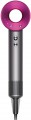 |
|---|---|
| Dyson Supersonic HD07 | |
| Compare prices 3 | |
| User reviews | |
| TOP sellers | |
The most popular version of the hair dryer with intelligent temperature control that measures airflow over 40 times a second to protect your hair. Comes with 5 attachments: concentrator, diffuser, Gentle Air attachment, wide-tooth comb, and Flyaway attachment. The standard Supersonic HD07 hair dryer comes with a complete set of attachments for straight and curly hair, but the faux leather case is not included. | |
| Device | Hair Dryer |
| Motor type | brushless |
Specs | |
| Power | 1600 W |
| Power/temperature regulator | separate |
| Power modes | 3 |
| Temperature modes | 3 |
| Cold air |  |
| Air flow | 13.3 l/s |
| Noise level | 77 dB |
| Functions | ionization intelligent temperature control automatic switch-off |
| Nozzles and accessories | concentrator diffuser comb attachment smoothing attachment gentle drying attachment |
General | |
| Removable grille | |
| Cable length | 2.8 m |
| Dimensions | 24.5x9.7x7.8 cm |
| Weight | 680 g |
| Color | |
| Added to E-Catalog | september 2021 |



Price comparison
You may be interested in
Glossary
Device
— Hair dryer. Classic hand-held hair dryers are devices that produce an intense air flow (with or without heating). Can be used for both hair drying and styling.
— Hairdryer (wall). Stationary hair dryers are wall-mounted devices that consist of the hair dryer and a wall stand. This design offers convenience, particularly in settings like beauty salons or public pool changing rooms. The stand allows users to keep the hair dryer easily accessible and frees up space on countertops or other surfaces. Additionally, the stand can accommodate extra features, such as an electric shaver socket, providing added functionality and practicality.
— Hairdryer-brush. Small appliances with nozzles in the form of round combs-brushes, supplemented with holes for air supply. They have a relatively small power and are used mainly for certain types of styling.
— Styler. Classic stylers, commonly known as straighteners, use heated tongs to straighten hair. However, these stylers are versatile and not limited to straightening alone. They can be equipped with various types of nozzles to achieve specific styling effects, such as hair crimping. Additionally, there are specialized stylers designed for unique purposes, like creating braided hairstyles.
— Multi-styler. Multi-stylers are versatile hairdressing tools used for styl...ing hair and creating a variety of hairstyles. They are composed of a heating base and interchangeable nozzles, each designed for specific hairstyling techniques. The device set may include curling irons of different sizes and shapes, straightening plates, curling nozzles, brushes for adding volume to the roots, and more. Essentially, multi-stylers are an upgraded version of stylers, offering an expanded range of complete nozzles for versatile hairstyling options.
— Curling iron. Hair curlers typically feature a round (cylindrical or conical) heating element onto which the hair is wound during use. Some models come with a clip to secure the hair tightly to the heater, while others may not have this feature. The diameter of the heating elements can vary, offering the flexibility to achieve various styling effects. Additionally, specific curling irons are also available, such as those equipped with a double heater and a clamp for enhanced styling capabilities.
— Automatic curling iron. Automated hair curlers function similarly to regular curling irons but come with a key difference: they automatically wind a strand of hair onto the heating element using a built-in motor and give a signal when the heating is complete. This feature makes them extremely user-friendly, as users don't need to manually wrap their hair around the curling iron or time the heating process. However, these devices tend to be expensive and relatively heavy, making them less convenient for self-use. Moreover, the automation is limited to standard programs and may not be suitable for creating complex or unique hairstyles.
— Brush. Outwardly, such devices most often look like combs, brushes, complemented by built-in heaters. Due to this, when combing, such devices are more effective than conventional brushes without heating, especially with thick “naughty” hair.
—Electric curlers. Curlers are small cylinders used for curling hair. They can be heated for more long-lasting styling. Electric rollers, as the name suggests, use an electric element for heating, typically built into the container where the curlers are stored. It takes approximately 10-20 minutes for them to reach the desired temperature, and the curlers themselves are made of heat-absorbing material that retains warmth for an extended period.
In addition to individual hair styling tools, there are also sets available that include two or three items, such as a "hairdryer + curling iron” combination. These sets consist of separate devices that can be used independently of each other. Purchasing such a kit is often more convenient and cost-effective compared to buying the tools separately. However, it also means relying on the manufacturer's selection of items, whereas individual tools can be chosen according to personal preference and needs.
— Hairdryer (wall). Stationary hair dryers are wall-mounted devices that consist of the hair dryer and a wall stand. This design offers convenience, particularly in settings like beauty salons or public pool changing rooms. The stand allows users to keep the hair dryer easily accessible and frees up space on countertops or other surfaces. Additionally, the stand can accommodate extra features, such as an electric shaver socket, providing added functionality and practicality.
— Hairdryer-brush. Small appliances with nozzles in the form of round combs-brushes, supplemented with holes for air supply. They have a relatively small power and are used mainly for certain types of styling.
— Styler. Classic stylers, commonly known as straighteners, use heated tongs to straighten hair. However, these stylers are versatile and not limited to straightening alone. They can be equipped with various types of nozzles to achieve specific styling effects, such as hair crimping. Additionally, there are specialized stylers designed for unique purposes, like creating braided hairstyles.
— Multi-styler. Multi-stylers are versatile hairdressing tools used for styl...ing hair and creating a variety of hairstyles. They are composed of a heating base and interchangeable nozzles, each designed for specific hairstyling techniques. The device set may include curling irons of different sizes and shapes, straightening plates, curling nozzles, brushes for adding volume to the roots, and more. Essentially, multi-stylers are an upgraded version of stylers, offering an expanded range of complete nozzles for versatile hairstyling options.
— Curling iron. Hair curlers typically feature a round (cylindrical or conical) heating element onto which the hair is wound during use. Some models come with a clip to secure the hair tightly to the heater, while others may not have this feature. The diameter of the heating elements can vary, offering the flexibility to achieve various styling effects. Additionally, specific curling irons are also available, such as those equipped with a double heater and a clamp for enhanced styling capabilities.
— Automatic curling iron. Automated hair curlers function similarly to regular curling irons but come with a key difference: they automatically wind a strand of hair onto the heating element using a built-in motor and give a signal when the heating is complete. This feature makes them extremely user-friendly, as users don't need to manually wrap their hair around the curling iron or time the heating process. However, these devices tend to be expensive and relatively heavy, making them less convenient for self-use. Moreover, the automation is limited to standard programs and may not be suitable for creating complex or unique hairstyles.
— Brush. Outwardly, such devices most often look like combs, brushes, complemented by built-in heaters. Due to this, when combing, such devices are more effective than conventional brushes without heating, especially with thick “naughty” hair.
—Electric curlers. Curlers are small cylinders used for curling hair. They can be heated for more long-lasting styling. Electric rollers, as the name suggests, use an electric element for heating, typically built into the container where the curlers are stored. It takes approximately 10-20 minutes for them to reach the desired temperature, and the curlers themselves are made of heat-absorbing material that retains warmth for an extended period.
In addition to individual hair styling tools, there are also sets available that include two or three items, such as a "hairdryer + curling iron” combination. These sets consist of separate devices that can be used independently of each other. Purchasing such a kit is often more convenient and cost-effective compared to buying the tools separately. However, it also means relying on the manufacturer's selection of items, whereas individual tools can be chosen according to personal preference and needs.
Motor type
The type of electric motor installed in the hair dryer.
This parameter is specified if the device does not use a traditional collector (brush) direct current (DC) electric motor, but more advanced motor. The options here might be:
— AC motor. Hair dryers equipped with alternating current (AC) motors use the same type of power found in regular electrical outlets. These AC motors offer several key advantages over their DC counterparts, including enhanced reliability, durability, and excellent resistance to high loads. They can operate at full power for extended periods without overheating, often lasting for at least 5 years even under continuous use. Additionally, AC motors provide more even heating and facilitate quick adjustments to temperature settings. As a result, hair dryers with AC motors are essential tools in professional settings such as hairdressers and beauty salons. However, the main drawback of AC motors is their relatively higher cost, making them less practical for occasional home use.
— Brushless motor. A brushless electric motor, which eliminates the need for a traditional commutator and brush contacts, employs a built-in electronic circuit to control the current in the motor windings. Despite being more expensive than conventional brushed motors, they offer several advantages. These motors allow for more precise and wider range adjustments of engine speed an...d airflow, resulting in higher efficiency and better overall performance for the same power consumption. Moreover, the absence of moving brush components enhances their durability, leading to significantly longer service lives compared to both AC and traditional brushed motors. However, due to their higher cost, brushless models are not widely used even in the professional industry.
This parameter is specified if the device does not use a traditional collector (brush) direct current (DC) electric motor, but more advanced motor. The options here might be:
— AC motor. Hair dryers equipped with alternating current (AC) motors use the same type of power found in regular electrical outlets. These AC motors offer several key advantages over their DC counterparts, including enhanced reliability, durability, and excellent resistance to high loads. They can operate at full power for extended periods without overheating, often lasting for at least 5 years even under continuous use. Additionally, AC motors provide more even heating and facilitate quick adjustments to temperature settings. As a result, hair dryers with AC motors are essential tools in professional settings such as hairdressers and beauty salons. However, the main drawback of AC motors is their relatively higher cost, making them less practical for occasional home use.
— Brushless motor. A brushless electric motor, which eliminates the need for a traditional commutator and brush contacts, employs a built-in electronic circuit to control the current in the motor windings. Despite being more expensive than conventional brushed motors, they offer several advantages. These motors allow for more precise and wider range adjustments of engine speed an...d airflow, resulting in higher efficiency and better overall performance for the same power consumption. Moreover, the absence of moving brush components enhances their durability, leading to significantly longer service lives compared to both AC and traditional brushed motors. However, due to their higher cost, brushless models are not widely used even in the professional industry.
Power
The rated power of the device, in fact, is the power consumed by it when operating at maximum intensity.
The power of a hair dryer, particularly for hair dryers, is a crucial factor that determines the maximum intensity of the airflow and heating capabilities. When selecting a hair dryer based on this parameter, it's essential to consider the intended usage of the device. Models with a power below 1000 W may not be sufficient for proper hair drying, especially for long hair, and are more suitable for styling purposes. Some of these models, particularly inexpensive ones, can provide high heat with low airflow, requiring careful use. For versatile and effective use, both at home and in professional settings, it's recommended to choose a hair dryer with at least 1800 W, preferably 2000 W and higher. Higher power allows for intense airflow, effective hair drying even at lower temperatures, and provides a wide range of temperature and speed settings. Models with intermediate power levels, ranging from 1000 to 1800 W, are more suitable for travel and on-the-go use.
For curling irons, electric curlers, and similar devices, the heating intensity and speed depend directly on the power. The manufacturer carefully selects the heater's power to achieve specific performance characteristics, such as temperature and heating intensity. When choosing such devices, it's essential to focus on practical indicators and compare different mode...ls based on power, especially if specific characteristics are not clearly stated, as seen in some inexpensive curling irons with basic functionality. In these cases, users should consider the weaker and more delicate their hair, the lower the temperature and less intense the heating should be. If unsure, it's safer to opt for a less powerful device, as it may take more time to curl hair, but it significantly reduces the risk of damaging the hair.
The power of a hair dryer, particularly for hair dryers, is a crucial factor that determines the maximum intensity of the airflow and heating capabilities. When selecting a hair dryer based on this parameter, it's essential to consider the intended usage of the device. Models with a power below 1000 W may not be sufficient for proper hair drying, especially for long hair, and are more suitable for styling purposes. Some of these models, particularly inexpensive ones, can provide high heat with low airflow, requiring careful use. For versatile and effective use, both at home and in professional settings, it's recommended to choose a hair dryer with at least 1800 W, preferably 2000 W and higher. Higher power allows for intense airflow, effective hair drying even at lower temperatures, and provides a wide range of temperature and speed settings. Models with intermediate power levels, ranging from 1000 to 1800 W, are more suitable for travel and on-the-go use.
For curling irons, electric curlers, and similar devices, the heating intensity and speed depend directly on the power. The manufacturer carefully selects the heater's power to achieve specific performance characteristics, such as temperature and heating intensity. When choosing such devices, it's essential to focus on practical indicators and compare different mode...ls based on power, especially if specific characteristics are not clearly stated, as seen in some inexpensive curling irons with basic functionality. In these cases, users should consider the weaker and more delicate their hair, the lower the temperature and less intense the heating should be. If unsure, it's safer to opt for a less powerful device, as it may take more time to curl hair, but it significantly reduces the risk of damaging the hair.
Power/temperature regulator
— Combined. In models with combined power and airflow temperature adjustment, the settings change with a single button press. Hair dryers usually have several fixed intensity and air temperature settings.
— Separate. Separate controls for heating power and temperature mode offer more flexibility when using hair drying and styling appliances. With separate adjustment, the strength and temperature settings of the airflow can be changed individually, allowing you to achieve optimal power and airflow temperature to prevent hair overdrying.
— Separate. Separate controls for heating power and temperature mode offer more flexibility when using hair drying and styling appliances. With separate adjustment, the strength and temperature settings of the airflow can be changed individually, allowing you to achieve optimal power and airflow temperature to prevent hair overdrying.
Power modes
The number of power modes provided in the design of the tool.
This parameter is relevant primarily for hair dryers of various types (see "Device") — in models of another type, the main point is the temperature modes, see below for them. And in hair dryers, the number of power modes is, most often, the number of speeds at which the “blower” can operate.
The abundance of speeds allows you to choose the best option depending on the current task (quick dry, delicately style), hair type, etc. At the same time, the abundance of adjustments complicates the design and affects the price. Therefore, for domestic use, 2 – 3 modes are usually quite enough, and sometimes one is enough.
Note that in single-speed hair dryers, the number of modes may not be indicated at all.
This parameter is relevant primarily for hair dryers of various types (see "Device") — in models of another type, the main point is the temperature modes, see below for them. And in hair dryers, the number of power modes is, most often, the number of speeds at which the “blower” can operate.
The abundance of speeds allows you to choose the best option depending on the current task (quick dry, delicately style), hair type, etc. At the same time, the abundance of adjustments complicates the design and affects the price. Therefore, for domestic use, 2 – 3 modes are usually quite enough, and sometimes one is enough.
Note that in single-speed hair dryers, the number of modes may not be indicated at all.
Temperature modes
The number of heating modes provided in the tool.
The presence of several temperature modes makes it possible to choose the best option for a particular situation. For example, for quick curling of "naughty" hair, when speed is more important than delicacy, you can set a strong heat, and if there are no problems over time, you can use a lower temperature. But the specific amount directly depends on the type of device (see "Device").
So, in hair dryers of one kind or another, there are usually few temperature modes — up to 3 in household models, and up to 8 – 9 (occasionally more) in professional ones. But curling irons and stylers, even relatively simple ones, can have several dozen levels of adjustment — their operating range is quite wide (for example, 130 – 200 °C), and the temperature in this range is often adjusted in steps of several degrees.
Also note that in hair dryers , temperature control and power control are carried out separately, and these parameters can have a different number of settings (for example, 2 power levels and 6 temperature levels). In curling irons, stylers, etc. the temperature only changes at the same time as the power, so the number of power modes may not be indicated at all — it corresponds to the number of temperature settings by definition.
The presence of several temperature modes makes it possible to choose the best option for a particular situation. For example, for quick curling of "naughty" hair, when speed is more important than delicacy, you can set a strong heat, and if there are no problems over time, you can use a lower temperature. But the specific amount directly depends on the type of device (see "Device").
So, in hair dryers of one kind or another, there are usually few temperature modes — up to 3 in household models, and up to 8 – 9 (occasionally more) in professional ones. But curling irons and stylers, even relatively simple ones, can have several dozen levels of adjustment — their operating range is quite wide (for example, 130 – 200 °C), and the temperature in this range is often adjusted in steps of several degrees.
Also note that in hair dryers , temperature control and power control are carried out separately, and these parameters can have a different number of settings (for example, 2 power levels and 6 temperature levels). In curling irons, stylers, etc. the temperature only changes at the same time as the power, so the number of power modes may not be indicated at all — it corresponds to the number of temperature settings by definition.
Cold air
The ability to operate a hair dryer without using a heating element — when the airflow is at the same temperature as the surrounding air. Cold mode will be useful for drying weakened hair that is particularly sensitive to overheating. In addition, it can be useful during styling — in particular, cold air is used to "set" the finished hairstyle.
Air flow
The volume of air the device delivers per second. The higher the value, the more intensively the hair dryer blows air, and the faster it helps dry hair, especially thick or long hair. Compact travel models may have an airflow of about 8 – 12 L/s, regular household hair dryers often have values around 15 – 25 l/s, and powerful professional models — 30 l/s and above.
This parameter should not be confused with temperature: a strong airflow can dry faster even without excessive heating. For example, a hair dryer with high airflow is convenient for quick drying after a shower, styling with brushing, and working with dense hair.
This parameter should not be confused with temperature: a strong airflow can dry faster even without excessive heating. For example, a hair dryer with high airflow is convenient for quick drying after a shower, styling with brushing, and working with dense hair.
Noise level
The noise level in hairdryers indicates how loud the device operates during hair drying and is measured in decibels (dB). This parameter is important for comfortable use, especially with frequent use or in the morning hours. Standard models emit noise at the level of 80 dB. Accordingly, values below 80 can be considered acceptable for more pleasant use. Quiet hairdryers with a noise level of 70 dB and below are particularly relevant for families with children, sensitive users, or salons where noise level matters.