
Comparison AENO HD1 vs Laifen Swift
Add to comparison |  | 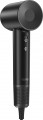 |
|---|---|---|
| AENO HD1 | Laifen Swift | |
| Compare prices 1 | Compare prices 6 | |
| TOP sellers | ||
| Device | Hair Dryer | Hair Dryer |
| Motor type | brushless | brushless |
Specs | ||
| Power | 1500 W | 1400 W |
| Power/temperature regulator | separate | separate |
| Power modes | 3 | 2 |
| Temperature modes | 3 | 2 |
| Temperature control | 50, 80 °C | |
| Cold air |  | |
| Combined mode |  | |
| Air flow speed | 27.7 м/с | |
| Air flow | 22 l/s | |
| Noise level | 59 dB | |
| Functions | ionization intelligent temperature control | ionization |
| Nozzles and accessories | concentrator diffuser cover/case | concentrator |
General | ||
| Cord twist 360° | | |
| Removable grille | | |
| Cable length | 1.8 m | 1.8 m |
| Dimensions | 27.7x7x8.9 cm | |
| Weight | 550 g | 407 g |
| Color | ||
| Added to E-Catalog | april 2024 | september 2023 |



Compare AENO HD1 and Laifen Swift
Price comparison
You may be interested in
AENO HD1 often compared

Laifen Swift often compared


Glossary
Power
The rated power of the device, in fact, is the power consumed by it when operating at maximum intensity.
The power of a hair dryer, particularly for hair dryers, is a crucial factor that determines the maximum intensity of the airflow and heating capabilities. When selecting a hair dryer based on this parameter, it's essential to consider the intended usage of the device. Models with a power below 1000 W may not be sufficient for proper hair drying, especially for long hair, and are more suitable for styling purposes. Some of these models, particularly inexpensive ones, can provide high heat with low airflow, requiring careful use. For versatile and effective use, both at home and in professional settings, it's recommended to choose a hair dryer with at least 1800 W, preferably 2000 W and higher. Higher power allows for intense airflow, effective hair drying even at lower temperatures, and provides a wide range of temperature and speed settings. Models with intermediate power levels, ranging from 1000 to 1800 W, are more suitable for travel and on-the-go use.
For curling irons, electric curlers, and similar devices, the heating intensity and speed depend directly on the power. The manufacturer carefully selects the heater's power to achieve specific performance characteristics, such as temperature and heating intensity. When choosing such devices, it's essential to focus on practical indicators and compare different mode...ls based on power, especially if specific characteristics are not clearly stated, as seen in some inexpensive curling irons with basic functionality. In these cases, users should consider the weaker and more delicate their hair, the lower the temperature and less intense the heating should be. If unsure, it's safer to opt for a less powerful device, as it may take more time to curl hair, but it significantly reduces the risk of damaging the hair.
The power of a hair dryer, particularly for hair dryers, is a crucial factor that determines the maximum intensity of the airflow and heating capabilities. When selecting a hair dryer based on this parameter, it's essential to consider the intended usage of the device. Models with a power below 1000 W may not be sufficient for proper hair drying, especially for long hair, and are more suitable for styling purposes. Some of these models, particularly inexpensive ones, can provide high heat with low airflow, requiring careful use. For versatile and effective use, both at home and in professional settings, it's recommended to choose a hair dryer with at least 1800 W, preferably 2000 W and higher. Higher power allows for intense airflow, effective hair drying even at lower temperatures, and provides a wide range of temperature and speed settings. Models with intermediate power levels, ranging from 1000 to 1800 W, are more suitable for travel and on-the-go use.
For curling irons, electric curlers, and similar devices, the heating intensity and speed depend directly on the power. The manufacturer carefully selects the heater's power to achieve specific performance characteristics, such as temperature and heating intensity. When choosing such devices, it's essential to focus on practical indicators and compare different mode...ls based on power, especially if specific characteristics are not clearly stated, as seen in some inexpensive curling irons with basic functionality. In these cases, users should consider the weaker and more delicate their hair, the lower the temperature and less intense the heating should be. If unsure, it's safer to opt for a less powerful device, as it may take more time to curl hair, but it significantly reduces the risk of damaging the hair.
Power modes
The number of power modes provided in the design of the tool.
This parameter is relevant primarily for hair dryers of various types (see "Device") — in models of another type, the main point is the temperature modes, see below for them. And in hair dryers, the number of power modes is, most often, the number of speeds at which the “blower” can operate.
The abundance of speeds allows you to choose the best option depending on the current task (quick dry, delicately style), hair type, etc. At the same time, the abundance of adjustments complicates the design and affects the price. Therefore, for domestic use, 2 – 3 modes are usually quite enough, and sometimes one is enough.
Note that in single-speed hair dryers, the number of modes may not be indicated at all.
This parameter is relevant primarily for hair dryers of various types (see "Device") — in models of another type, the main point is the temperature modes, see below for them. And in hair dryers, the number of power modes is, most often, the number of speeds at which the “blower” can operate.
The abundance of speeds allows you to choose the best option depending on the current task (quick dry, delicately style), hair type, etc. At the same time, the abundance of adjustments complicates the design and affects the price. Therefore, for domestic use, 2 – 3 modes are usually quite enough, and sometimes one is enough.
Note that in single-speed hair dryers, the number of modes may not be indicated at all.
Temperature modes
The number of heating modes provided in the tool.
The presence of several temperature modes makes it possible to choose the best option for a particular situation. For example, for quick curling of "naughty" hair, when speed is more important than delicacy, you can set a strong heat, and if there are no problems over time, you can use a lower temperature. But the specific amount directly depends on the type of device (see "Device").
So, in hair dryers of one kind or another, there are usually few temperature modes — up to 3 in household models, and up to 8 – 9 (occasionally more) in professional ones. But curling irons and stylers, even relatively simple ones, can have several dozen levels of adjustment — their operating range is quite wide (for example, 130 – 200 °C), and the temperature in this range is often adjusted in steps of several degrees.
Also note that in hair dryers , temperature control and power control are carried out separately, and these parameters can have a different number of settings (for example, 2 power levels and 6 temperature levels). In curling irons, stylers, etc. the temperature only changes at the same time as the power, so the number of power modes may not be indicated at all — it corresponds to the number of temperature settings by definition.
The presence of several temperature modes makes it possible to choose the best option for a particular situation. For example, for quick curling of "naughty" hair, when speed is more important than delicacy, you can set a strong heat, and if there are no problems over time, you can use a lower temperature. But the specific amount directly depends on the type of device (see "Device").
So, in hair dryers of one kind or another, there are usually few temperature modes — up to 3 in household models, and up to 8 – 9 (occasionally more) in professional ones. But curling irons and stylers, even relatively simple ones, can have several dozen levels of adjustment — their operating range is quite wide (for example, 130 – 200 °C), and the temperature in this range is often adjusted in steps of several degrees.
Also note that in hair dryers , temperature control and power control are carried out separately, and these parameters can have a different number of settings (for example, 2 power levels and 6 temperature levels). In curling irons, stylers, etc. the temperature only changes at the same time as the power, so the number of power modes may not be indicated at all — it corresponds to the number of temperature settings by definition.
Temperature control
The specific working temperature settings that can be set on the device. A greater number of modes or a wider adjustment range offers more options and allows for a more precise adjustment of the device to a specific situation; on the other hand, expanded capabilities inevitably affect the price. When choosing a specific model, it's important to remember that the optimal temperature for a particular situation depends on a number of factors – hair characteristics, specific task, cosmetics being used, etc. Recommendations on this matter can be found in specialized sources; use them to determine the temperature you need and choose a curling iron, brush, or styler with the appropriate temperature settings based on that.
Note that if this point specifies a whole range of settings (for example, "120 – 220 °C"), it does not necessarily mean smooth adjustment is available; this detail needs to be clarified separately.
Note that if this point specifies a whole range of settings (for example, "120 – 220 °C"), it does not necessarily mean smooth adjustment is available; this detail needs to be clarified separately.
Combined mode
Blow-drying mode where warm and cool air alternate in one cycle, creating a gentler temperature flow while maintaining drying efficiency. It's notable for helping to remove moisture faster than just using cool air, while also reducing the risk of overheating hair and the scalp compared to constant hot air.
Unlike the separate "Cold Shot" button, which only provides short-term cold fixation, the combined mode is designed for prolonged use and comfortable styling, especially on fine or colored hair.
In practice, it is often chosen for everyday drying after a shower, gentle styling using a brush, and also when needing to dry the roots without over-drying the length and tips.
Unlike the separate "Cold Shot" button, which only provides short-term cold fixation, the combined mode is designed for prolonged use and comfortable styling, especially on fine or colored hair.
In practice, it is often chosen for everyday drying after a shower, gentle styling using a brush, and also when needing to dry the roots without over-drying the length and tips.
Air flow speed
The airflow speed indicates how fast the air exits the hair dryer's nozzle and how strong the stream feels. The higher the airflow speed, the quicker the hair dryer blows moisture off the hair's surface and the more convenient it is to work with thick, long, or dense strands.
In simple household models, the values may be around 20 – 30 m/s, which is sufficient for regular drying of short or not very thick hair. More efficient hair dryers often provide about 30 – 40 m/s — this flow is better at handling thick and long hair. Powerful professional models can reach speeds of 40 – 50 m/s and above, which is convenient for quick drying, brushing, and salon styling.
In simple household models, the values may be around 20 – 30 m/s, which is sufficient for regular drying of short or not very thick hair. More efficient hair dryers often provide about 30 – 40 m/s — this flow is better at handling thick and long hair. Powerful professional models can reach speeds of 40 – 50 m/s and above, which is convenient for quick drying, brushing, and salon styling.
Air flow
The volume of air the device delivers per second. The higher the value, the more intensively the hair dryer blows air, and the faster it helps dry hair, especially thick or long hair. Compact travel models may have an airflow of about 8 – 12 L/s, regular household hair dryers often have values around 15 – 25 l/s, and powerful professional models — 30 l/s and above.
This parameter should not be confused with temperature: a strong airflow can dry faster even without excessive heating. For example, a hair dryer with high airflow is convenient for quick drying after a shower, styling with brushing, and working with dense hair.
This parameter should not be confused with temperature: a strong airflow can dry faster even without excessive heating. For example, a hair dryer with high airflow is convenient for quick drying after a shower, styling with brushing, and working with dense hair.
Noise level
The noise level in hairdryers indicates how loud the device operates during hair drying and is measured in decibels (dB). This parameter is important for comfortable use, especially with frequent use or in the morning hours. Standard models emit noise at the level of 80 dB. Accordingly, values below 80 can be considered acceptable for more pleasant use. Quiet hairdryers with a noise level of 70 dB and below are particularly relevant for families with children, sensitive users, or salons where noise level matters.
Functions
— Turbo mode. A mode designed to dry wet hair as quickly as possible. At the same time, the speed of air movement through the hair dryer increases significantly, and the temperature remains the same. This allows you to quickly dry your hair without exposing it to high temperatures. Working in turbo mode usually involves an increased load on the device, so before using such a hair dryer, you should separately clarify in the instructions for what maximum time you can turn on turbo mode.
— Auto-rotation of the nozzle. The function of automatic rotation of a brush or other round nozzle (see "Nozzles"). Thus, the user gets rid of the need to turn the entire device when styling hair, which may not be very convenient. Note that with long hair this function should be used very carefully, as there is a risk of entangling them instead of styling.
— Intelligent Temperature Control. A function for controlling the temperature that affects the hair to prevent damage. These sensors help ensure more accurate and safe device use by automatically adjusting the heat and maintaining an optimal temperature during styling.
— Temperature memory. Devices with this feature are capable of "remembering" the temperature setting used before being turned off and automatically activating it upon the next power-on. Temperature memory is par...ticularly convenient in cases where the device is consistently used at the same temperature but requires significant breaks during operation. In such situations, this capability significantly saves the time and effort of the user, as there is no need to adjust the heating settings every time after turning it on.
— Cold air. The ability of the hair dryer to work without the use of a heating element — when the air flow has the same temperature as the surrounding air. This mode will be useful for drying weakened hair, especially sensitive to overheating. In addition, it can be useful during styling — in particular, cold air “fixes” the finished hairstyle.
— Ionization. An ionizer is a device for saturating the air with negatively charged oxygen ions. Optimizes styling, giving hair new positive properties — for example, increased smoothness. Also, the hair is not electrified thanks to the ionizer.
— Steam humidifier. Some hair styling devices may be equipped with a container for liquid and a device that delivers hot steam to the hair. In this case, both ordinary water and a special styling liquid can be used. It is believed that the use of steam greatly facilitates the styling process, as the hair becomes more manageable. On the other hand, the high temperature of the steam can adversely affect the health of the hair, especially if the hair is weak or steam styling is used frequently.
— Alert timer. Devices with a built-in timer that makes audio signal after a set time. This function is relevant in stylers and curling irons, which allows the same time to curl curls. As a result, the hairstyle will have the same curls — there will be no imbalance in the curls when one turned out more and the other less.
— Automatic switch-off. A mechanism that ensures that the device turns off either after a specified period of time, or when a predetermined (or manufacturer-defined) temperature is reached. Prevents excessive heating of nozzles/plates, as well as overheating of the device in general.
— Key lock. The presence of a protective function of blocking the buttons allows you to avoid accidental pressing in the process of working with the device.
— Auto-rotation of the nozzle. The function of automatic rotation of a brush or other round nozzle (see "Nozzles"). Thus, the user gets rid of the need to turn the entire device when styling hair, which may not be very convenient. Note that with long hair this function should be used very carefully, as there is a risk of entangling them instead of styling.
— Intelligent Temperature Control. A function for controlling the temperature that affects the hair to prevent damage. These sensors help ensure more accurate and safe device use by automatically adjusting the heat and maintaining an optimal temperature during styling.
— Temperature memory. Devices with this feature are capable of "remembering" the temperature setting used before being turned off and automatically activating it upon the next power-on. Temperature memory is par...ticularly convenient in cases where the device is consistently used at the same temperature but requires significant breaks during operation. In such situations, this capability significantly saves the time and effort of the user, as there is no need to adjust the heating settings every time after turning it on.
— Cold air. The ability of the hair dryer to work without the use of a heating element — when the air flow has the same temperature as the surrounding air. This mode will be useful for drying weakened hair, especially sensitive to overheating. In addition, it can be useful during styling — in particular, cold air “fixes” the finished hairstyle.
— Ionization. An ionizer is a device for saturating the air with negatively charged oxygen ions. Optimizes styling, giving hair new positive properties — for example, increased smoothness. Also, the hair is not electrified thanks to the ionizer.
— Steam humidifier. Some hair styling devices may be equipped with a container for liquid and a device that delivers hot steam to the hair. In this case, both ordinary water and a special styling liquid can be used. It is believed that the use of steam greatly facilitates the styling process, as the hair becomes more manageable. On the other hand, the high temperature of the steam can adversely affect the health of the hair, especially if the hair is weak or steam styling is used frequently.
— Alert timer. Devices with a built-in timer that makes audio signal after a set time. This function is relevant in stylers and curling irons, which allows the same time to curl curls. As a result, the hairstyle will have the same curls — there will be no imbalance in the curls when one turned out more and the other less.
— Automatic switch-off. A mechanism that ensures that the device turns off either after a specified period of time, or when a predetermined (or manufacturer-defined) temperature is reached. Prevents excessive heating of nozzles/plates, as well as overheating of the device in general.
— Key lock. The presence of a protective function of blocking the buttons allows you to avoid accidental pressing in the process of working with the device.