
Comparison Smeg LSIA147S vs Smeg LST147
Add to comparison |  | 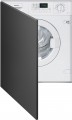 |
|---|---|---|
| Smeg LSIA147S | Smeg LST147 | |
| Outdated Product | from $1,170.84 up to $1,565.80 | |
| TOP sellers | ||
Specs | ||
| Capacity | 7 kg | 7 kg |
| Max. spin speed | 1400 rpm | 1400 rpm |
| Dryer |  |  |
| Drying capacity | 4 kg | |
| Tank material | plastic | stainless steel |
Features | ||
| Number of programmes | 15 | 15 |
| Additional programs | quick wash delicate sportswear self-cleaning | quick wash |
Safety features | ||
| Leak protection | | |
| Anti-foam control | | |
| Unbalance control | | |
| Child lock | | |
Efficiency | ||
| Water consumption per cycle | 44 L | 47 L |
| Energy class | A+ | |
| Energy class (new) | E | |
| Spin class | B | B |
| Noise level (spin) | 72 dB | 56 dB |
More specs | ||
| Controls | rotary knob + buttons | rotary knob + buttons |
| Display | | |
| Loading hatch diameter | 30 cm | 30 cm |
| Dimensions (HxWxD) | 82x59.6x56 cm | 82x60x58 cm |
| Cut-out height | 820 mm | 820 mm |
| Cut-out width | 600 mm | 600 mm |
| Cut-out depth | 584 mm | 584 mm |
| Added to E-Catalog | may 2021 | december 2010 |


Compare Smeg LSIA147S and LST147
You may be interested in
My comparisons
Smeg LST147 often compared


Glossary
Dryer
A special washing machine mode designed to dry clothes after washing. The drying process involves an internal heating element which produces heat, and a fan that converts it into warm air. This warm air is then circulated around the fabric to dry it. It is important to note that different types of fabrics have their own specific levels of dryness.
Drying capacity
The maximum amount of laundry that can be loaded into the washing machine for drying mode.
For more information about this mode, see "Dryer". The maximum load capacity is usually 1.5 to 2 times lower than for washing because of the differences in the process. It is important to note that the weight of the dry laundry is what is specified in the characteristics. Drying a full load of laundry at once may not be possible and may require drying in two stages. However, drying so many things at once is not frequently necessary and typically only a portion of the laundry needs to be dried in this manner.
For more information about this mode, see "Dryer". The maximum load capacity is usually 1.5 to 2 times lower than for washing because of the differences in the process. It is important to note that the weight of the dry laundry is what is specified in the characteristics. Drying a full load of laundry at once may not be possible and may require drying in two stages. However, drying so many things at once is not frequently necessary and typically only a portion of the laundry needs to be dried in this manner.
Tank material
Most often, plastic or stainless steel is used to make washing machine tanks. Stainless steel tanks are more durable than plastic ones, but their lifespan often exceeds that of both the washing machine and its owners. Plastic tanks are cheaper but less durable. In most cases, plastic tanks are still reliable enough to be used.
Additional programs
It is worth noting that the programs "cotton," "synthetics," "wool," "rinse," "drain," and "spin" are mandatory for almost any washing machine. Therefore, only specific modes are listed here: custom program, quick wash, delicate wash, hygiene (baby clothes), sportswear, dark clothes, denim, outerwear, down items, and self-cleaning, etc. Here is a description of these and some other popular modes:
— Custom Program. A program where all parameters can be manually adjusted: set temperature, duration, spin speed, additional treatment features, etc., at your discretion. This significantly expands the possibilities of working with the machine and allows optimizing modes for special cases when the existing list of programs is insufficient. In simpler models, a "custom program" is created based on one of the standard modes, which the user modifies; subsequently, to run such a program, it is enough to select it on the control panel without resetting the settings. More advanced machines allow saving several unique programs in memory.
— Quick Wash. An accelerated wash program is primarily useful for lightly soiled items that do not require tho...rough treatment (e.g., everyday clothes after a hot day). Besides saving time, this program also significantly saves water and electricity. And of course, it can be a real lifesaver if laundry time is limited but unavoidable. Often, there is more than one quick wash mode—e.g., 15 and 30 minutes—allowing the choice of an optimal balance between speed/economy and thoroughness.
— Delicate Wash. A mode intended for sensitive materials—fine silk, cambric, lace fabrics, some types of nylon and polyester, etc. Typically, washing in this mode involves an increased amount of water, and the allowable load does not exceed 2 kg; all this reduces the friction of clothes among themselves, and large volumes of water allow for effective rinsing without "extra movements." Spin is usually carried out at reduced speeds (or is skipped altogether). Some models may have other delicate wash features worth clarifying separately. However, in any case, if you plan to wash items requiring extra gentle handling, this program is indispensable.
— Hygiene (Baby Clothes). A mode involving enhanced thorough treatment; it is designed to maximally remove dirt, pathogenic bacteria, etc., from treated items. Such effective treatment is especially important for clothes meant for young children; hence, this program is often called "baby clothes." There are two main features of this mode: first, by default, washing is done at a higher temperature, ensuring effective removal of dirt and destruction of microbes. Second, the rinse after washing is carried out with particular thoroughness, so even in the most inaccessible folds, no detergent traces remain. Some washing machines have other details worth clarifying separately.
— Sportswear. A special program for processing sportswear between workouts. This clothing is usually soaked with sweat, but it does not have much other dirt; it is relatively resilient to mechanical loads but does not always tolerate high temperatures; and workouts may occur daily, so spending a lot of time on washing can be unacceptable luxury—as the items also need to dry. This mode considers these factors; "sports" washing usually involves a small load and low temperature, and reduced spin speeds may also be assumed. However, again, it does not hurt to specify the specific features of this program separately.
— Dark Clothes. A key feature of dark fabrics is that even minimal detergent residues are highly noticeable on them. Therefore, a mandatory feature of the program for dark clothes is thorough rinsing. Additionally, this mode often involves overall gentle handling—to ensure items retain their original color for longer and do not form creases.
— Denim (Jeans and Shirts). Despite its overall strength and reliability, denim fabric is quite sensitive to intensive washing. Therefore, washing machines for such items may have a special gentle program with reduced temperature and drum rotation speed. This mode is also suitable for thin shirts, so in some models, it is named accordingly, such as "shirts/jeans."
— Shirts. A special program for the delicate washing of shirts and other business-style clothing. The key feature of this mode can be described as low load capacity with low spin speeds and short spin times to avoid creasing the fabric.
— Down Jackets (Down Items). Natural down easily absorbs water and is reluctant to "return" it. Therefore, one of the features of this program is usually long pauses in drum rotation, allowing the water accumulated in the item to effectively drain.
— Outerwear. A special program for washing mid-season and winter jackets, focusing on treating upper wardrobe fillers gently. The mode involves using low temperature, low drum rotation speeds, and gentle spinning. This program also helps outerwear fabrics retain their waterproof properties.
— Bedding. A program adapted for the gentle washing of sheets, duvet covers, and pillowcases. To achieve the best results, washing the same type of bedding is recommended. The program is typically aimed at working with a small load (2-4 kg).
— Blankets. A mode for caring for blankets and various types of bedspreads. Usually, this program is designed for washing bulky bedding in the manner of down blankets. One of its features is usually long pauses in drum rotation, allowing the water accumulated in the item to effectively drain. The program is also suitable for washing lined clothing and down items.
— Refresh (No Wash). A special mode for treating items that do not require full washing but need cleaning. A characteristic example of such items is clothing that has lain "idle" for a long time, collecting dust and unpleasant odors, or items worn once for a short period. In refresh mode, the machine uses other textile treatment methods besides water. One popular option is a strong stream of hot steam: it removes or breaks down substances responsible for unpleasant odors, "blows out" the dust that may have gathered in the fabrics, and makes it easier to remove creases on "stubborn" fabrics that smooth out poorly in dry form. Another refreshing option is treatment with active oxygen; this method is less effective at removing dust but excellent at eliminating unpleasant odors. In any case, detergents are not used in refreshing, the clothing is not wet, and at most, slightly moistened; often, the items can be used almost immediately after being removed from the drum.
— Night Wash. A program with a reduced noise level, designed for the washing machine's night operation and similar conditions. In this mode, the machine operates as quietly as possible: with smooth drum movements, low spin speeds, and muted technical beeps. Other washing parameters are usually set manually.
— Self-Cleaning. A service program for cleaning the machine's "insides" from various contaminants that may accumulate during operation. In such a mode, items are not loaded, and the drum is intensively washed with hot water, which effectively cleans it and destroys harmful bacteria. However, it is worth noting that in many models, this program is hardly different from regular washing at high temperatures (around 90°C). So even in the absence of a special self-cleaning mode, similar results can be achieved by running a high-temperature wash with an empty drum without spinning.
— Custom Program. A program where all parameters can be manually adjusted: set temperature, duration, spin speed, additional treatment features, etc., at your discretion. This significantly expands the possibilities of working with the machine and allows optimizing modes for special cases when the existing list of programs is insufficient. In simpler models, a "custom program" is created based on one of the standard modes, which the user modifies; subsequently, to run such a program, it is enough to select it on the control panel without resetting the settings. More advanced machines allow saving several unique programs in memory.
— Quick Wash. An accelerated wash program is primarily useful for lightly soiled items that do not require tho...rough treatment (e.g., everyday clothes after a hot day). Besides saving time, this program also significantly saves water and electricity. And of course, it can be a real lifesaver if laundry time is limited but unavoidable. Often, there is more than one quick wash mode—e.g., 15 and 30 minutes—allowing the choice of an optimal balance between speed/economy and thoroughness.
— Delicate Wash. A mode intended for sensitive materials—fine silk, cambric, lace fabrics, some types of nylon and polyester, etc. Typically, washing in this mode involves an increased amount of water, and the allowable load does not exceed 2 kg; all this reduces the friction of clothes among themselves, and large volumes of water allow for effective rinsing without "extra movements." Spin is usually carried out at reduced speeds (or is skipped altogether). Some models may have other delicate wash features worth clarifying separately. However, in any case, if you plan to wash items requiring extra gentle handling, this program is indispensable.
— Hygiene (Baby Clothes). A mode involving enhanced thorough treatment; it is designed to maximally remove dirt, pathogenic bacteria, etc., from treated items. Such effective treatment is especially important for clothes meant for young children; hence, this program is often called "baby clothes." There are two main features of this mode: first, by default, washing is done at a higher temperature, ensuring effective removal of dirt and destruction of microbes. Second, the rinse after washing is carried out with particular thoroughness, so even in the most inaccessible folds, no detergent traces remain. Some washing machines have other details worth clarifying separately.
— Sportswear. A special program for processing sportswear between workouts. This clothing is usually soaked with sweat, but it does not have much other dirt; it is relatively resilient to mechanical loads but does not always tolerate high temperatures; and workouts may occur daily, so spending a lot of time on washing can be unacceptable luxury—as the items also need to dry. This mode considers these factors; "sports" washing usually involves a small load and low temperature, and reduced spin speeds may also be assumed. However, again, it does not hurt to specify the specific features of this program separately.
— Dark Clothes. A key feature of dark fabrics is that even minimal detergent residues are highly noticeable on them. Therefore, a mandatory feature of the program for dark clothes is thorough rinsing. Additionally, this mode often involves overall gentle handling—to ensure items retain their original color for longer and do not form creases.
— Denim (Jeans and Shirts). Despite its overall strength and reliability, denim fabric is quite sensitive to intensive washing. Therefore, washing machines for such items may have a special gentle program with reduced temperature and drum rotation speed. This mode is also suitable for thin shirts, so in some models, it is named accordingly, such as "shirts/jeans."
— Shirts. A special program for the delicate washing of shirts and other business-style clothing. The key feature of this mode can be described as low load capacity with low spin speeds and short spin times to avoid creasing the fabric.
— Down Jackets (Down Items). Natural down easily absorbs water and is reluctant to "return" it. Therefore, one of the features of this program is usually long pauses in drum rotation, allowing the water accumulated in the item to effectively drain.
— Outerwear. A special program for washing mid-season and winter jackets, focusing on treating upper wardrobe fillers gently. The mode involves using low temperature, low drum rotation speeds, and gentle spinning. This program also helps outerwear fabrics retain their waterproof properties.
— Bedding. A program adapted for the gentle washing of sheets, duvet covers, and pillowcases. To achieve the best results, washing the same type of bedding is recommended. The program is typically aimed at working with a small load (2-4 kg).
— Blankets. A mode for caring for blankets and various types of bedspreads. Usually, this program is designed for washing bulky bedding in the manner of down blankets. One of its features is usually long pauses in drum rotation, allowing the water accumulated in the item to effectively drain. The program is also suitable for washing lined clothing and down items.
— Refresh (No Wash). A special mode for treating items that do not require full washing but need cleaning. A characteristic example of such items is clothing that has lain "idle" for a long time, collecting dust and unpleasant odors, or items worn once for a short period. In refresh mode, the machine uses other textile treatment methods besides water. One popular option is a strong stream of hot steam: it removes or breaks down substances responsible for unpleasant odors, "blows out" the dust that may have gathered in the fabrics, and makes it easier to remove creases on "stubborn" fabrics that smooth out poorly in dry form. Another refreshing option is treatment with active oxygen; this method is less effective at removing dust but excellent at eliminating unpleasant odors. In any case, detergents are not used in refreshing, the clothing is not wet, and at most, slightly moistened; often, the items can be used almost immediately after being removed from the drum.
— Night Wash. A program with a reduced noise level, designed for the washing machine's night operation and similar conditions. In this mode, the machine operates as quietly as possible: with smooth drum movements, low spin speeds, and muted technical beeps. Other washing parameters are usually set manually.
— Self-Cleaning. A service program for cleaning the machine's "insides" from various contaminants that may accumulate during operation. In such a mode, items are not loaded, and the drum is intensively washed with hot water, which effectively cleans it and destroys harmful bacteria. However, it is worth noting that in many models, this program is hardly different from regular washing at high temperatures (around 90°C). So even in the absence of a special self-cleaning mode, similar results can be achieved by running a high-temperature wash with an empty drum without spinning.
Water consumption per cycle
This indicator is important primarily for those who have personal water metres installed at home. The less water consumed per cycle, the less you will have to pay for water consumption.
Energy class
Specs of energy efficiency. A, B, C - very economical to economical; D - intermediate value; E, F, G - from high to very high power consumption.
Energy class (new)
This parameter indicates the energy efficiency of the washing machine and is denoted by Latin letters from A to G, where A represents the most energy-efficient model. To accommodate even more energy-efficient models, higher ratings such as A+, A++, and A+++ were introduced. However, in 2021, manufacturers reverted to the original scale of G to A to avoid having to add more pluses to the rating. Modern models will have the new labeling system while older models will retain their original ratings.
Noise level (spin)
The noise level of the washing machine during operation is an important factor to consider, especially in situations where excessive noise can be disruptive or undesirable. The lower the noise level is preferred, as it provide a more comfortable user experience. This is particularly relevant for small apartments or households with young children, or if washing is planned during nighttime hours.
The noise level of a washing machine may vary depending on the mode of operation, with some models being louder when spinning at maximum speed. Additionally, the noise level may be influenced by the installation conditions and the proximity of other objects or furniture. Even a quiet machine may produce additional noise due to vibrations if it is installed unevenly or in contact with other objects.
The noise level of a washing machine may vary depending on the mode of operation, with some models being louder when spinning at maximum speed. Additionally, the noise level may be influenced by the installation conditions and the proximity of other objects or furniture. Even a quiet machine may produce additional noise due to vibrations if it is installed unevenly or in contact with other objects.