
Comparison TrendVision Drive 900 vs TrendVision Drive 700
Add to comparison | 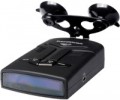 | 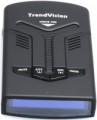 |
|---|---|---|
| TrendVision Drive 900 | TrendVision Drive 700 | |
| Outdated Product | Outdated Product | |
| User reviews | ||
| TOP sellers | ||
Bands | ||
| Bands | K Ka X | K Ka X |
| Laser wavelength | 800 – 1100 nm | 800 – 1100 nm |
Pulse signals | ||
| Pulse signals support | POP Ultra-K (K-Pulse) | |
Radar type detection | ||
| Radar type detection | Strelka Robot LISD Krechet Kris Arena Vizir | Strelka Robot LISD Krechet Kris Arena Vizir |
Features | ||
| Functions | VG-2 protection false alerts filter Auto mode Highway mode City mode display brightness adjustment mute voice alert | VG-2 protection false alerts filter Auto mode Highway mode City mode display brightness adjustment mute voice alert |
Receiver | ||
| Receiver type | superheterodyne | superheterodyne |
| Signal processing | digital | digital |
| GPS |  | |
General | ||
| Current consumption | 230 mA | 230 mA |
| Dimensions | 67x109x26 mm | 67x109x26 mm |
| Weight | 113 g | 113 g |
| Added to E-Catalog | april 2020 | april 2017 |


Compare TrendVision Drive 900 and Drive 700
You may be interested in
My comparisons
TrendVision Drive 900 often compared

TrendVision Drive 700 often compared


Glossary
Pulse signals support
The types of pulse signals that a radar detector can detect. Modern police radars, usually, do not use a constant exposure mode, but short (fraction of a second) pulses, and even if the detector supports the appropriate range, it does not mean that it will be able to detect a pulsed signal in this range.
Here are the main types of such signals that are relevant for modern radar detectors:
— Instant On. Name for the general mode of operation used in most modern police radars. A radar operating in this mode emits radio waves only directly when measuring speed, for a very short period (less than a second).
— P.O.P. Mode of operation used primarily in K- and Ka-band radars (see above). Provides a single pulse of extremely short length — about 0.07 s.
— Ultra-K (K-Pulse). The standard pulse mode of operation of the radar in the K band. Unlike POP, it provides measurement using several pulses and a longer total measurement duration — up to 0.4 s. Thus, the requirements for detectors under Ultra-K are somewhat softer than under POP, however, for correct recognition, support for this mode must still be claimed directly.
— Ultra Ka. The standard pulse mode of the radar in the Ka band. In terms of its main features, it is completely similar to the Ultra-K described above, differing only in operatin...g frequencies.
— Ultra Ku. The standard pulse mode of the radar in the Ku band. In terms of its main features, it is completely similar to the Ultra-K described above, differing only in operating frequencies. It occurs very rarely, due to the gradual exit of the Ku range itself from use (for more details, see "Ranges of operation").
— UltraX. The standard pulse mode of the radar in the X band. Like the X band itself, this mode is considered obsolete and is provided more “just in case” and as a tribute to tradition than for practical reasons.
Here are the main types of such signals that are relevant for modern radar detectors:
— Instant On. Name for the general mode of operation used in most modern police radars. A radar operating in this mode emits radio waves only directly when measuring speed, for a very short period (less than a second).
— P.O.P. Mode of operation used primarily in K- and Ka-band radars (see above). Provides a single pulse of extremely short length — about 0.07 s.
— Ultra-K (K-Pulse). The standard pulse mode of operation of the radar in the K band. Unlike POP, it provides measurement using several pulses and a longer total measurement duration — up to 0.4 s. Thus, the requirements for detectors under Ultra-K are somewhat softer than under POP, however, for correct recognition, support for this mode must still be claimed directly.
— Ultra Ka. The standard pulse mode of the radar in the Ka band. In terms of its main features, it is completely similar to the Ultra-K described above, differing only in operatin...g frequencies.
— Ultra Ku. The standard pulse mode of the radar in the Ku band. In terms of its main features, it is completely similar to the Ultra-K described above, differing only in operating frequencies. It occurs very rarely, due to the gradual exit of the Ku range itself from use (for more details, see "Ranges of operation").
— UltraX. The standard pulse mode of the radar in the X band. Like the X band itself, this mode is considered obsolete and is provided more “just in case” and as a tribute to tradition than for practical reasons.