
Comparison Stenson TL00160 vs Electrolux E4VS1 4 AG
Add to comparison | 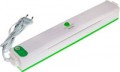 | 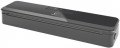 |
|---|---|---|
| Stenson TL00160 | Electrolux E4VS1 4 AG | |
| Expecting restock | Outdated Product | |
| TOP sellers | ||
| Purpose | desktop | desktop |
| Welding slat length | 300 mm | |
| Welding slats | 1 pcs | 1 pcs |
| Seam width | 2 mm | |
| Pumping speed | 4 L/min | |
| Power consumption | 80 W | |
Functions | ||
| Programs and modes | dry (dry goods) | dry (dry goods) canister (vacuuming of containers) |
General | ||
| Control | button controls | |
| Material | plastic | plastic |
| Power supply | mains (230 V) | mains (230 V) |
| Dimensions | 340x50x45 mm | 98x384x57 mm |
| Added to E-Catalog | september 2021 | november 2020 |


Compare Stenson TL00160 and Electrolux E4VS1 4 AG
You may be interested in
My comparisons
Electrolux E4VS1 4 AG often compared


Glossary
Welding slat length
The length of the welding slat for sealing bags provided in the vacuum sealer. In fact, this is the maximum seam length that the device can create; the size of the open side of the package should not exceed this length, otherwise it will not be possible to vacuum and seal the package normally. If bags in rolls are used for packaging, the length of the welding slat corresponds to the maximum width of the roll. And powerful industrial models have large slats on which several packages can be placed at once.
Seam width
The width of the seam created by the vacuum sealer's welding slat.
The wider the seam, the more reliable the package is, the lower the likelihood that the welding line will turn out to be a “weak spot”. On the other hand, a large width requires a powerful heater and significantly affects the price of the device. In general, for domestic use, a value of 2 – 2.5 mm is considered quite sufficient; but in heavy industrial models used for long-term storage, values of 10 mm and even more can occur.
For additional reliability, the seam can be made double (see "Features").
The wider the seam, the more reliable the package is, the lower the likelihood that the welding line will turn out to be a “weak spot”. On the other hand, a large width requires a powerful heater and significantly affects the price of the device. In general, for domestic use, a value of 2 – 2.5 mm is considered quite sufficient; but in heavy industrial models used for long-term storage, values of 10 mm and even more can occur.
For additional reliability, the seam can be made double (see "Features").
Pumping speed
Air pumping speed provided by the vacuum sealer.
The higher the speed, the less time it will take to operate the device. In addition, "faster" models tend to be more powerful and can deliver deeper vacuums. On the other hand, in normal household use, these points are not critical, and when choosing a "home" sealer, you can not pay much attention to the pumping speed — unless you have to regularly pack large volumes of products, or storage time is crucial.
The higher the speed, the less time it will take to operate the device. In addition, "faster" models tend to be more powerful and can deliver deeper vacuums. On the other hand, in normal household use, these points are not critical, and when choosing a "home" sealer, you can not pay much attention to the pumping speed — unless you have to regularly pack large volumes of products, or storage time is crucial.
Power consumption
Rated power consumption of the device. Usually, the characteristics indicate the average power in normal operation; peak values can be much higher, but this mode does not last long.
On the one hand, the efficiency and speed of vacuuming directly depend on the power consumption, on the other hand, the consumption of electricity. And heavy high consumption industrial-grade devices may require a three-phase connection (see "Power supply").
On the one hand, the efficiency and speed of vacuuming directly depend on the power consumption, on the other hand, the consumption of electricity. And heavy high consumption industrial-grade devices may require a three-phase connection (see "Power supply").
Programs and modes
Programs integrated into a vacuum sealer. The functionality of the device depends on their quantity. However, it's important to clearly understand the purpose of your device, as there's no need to overpay for unused modes. According to the general principle of the device's operation (vacuum pumping), all devices have a basic program. It is intended for dry products. This program is ideal for storing cereals, nuts, dried fruits, pasta, tea, coffee, spices, and other loose or solid products. Operating in this mode allows you to extend the storage period without the risk of oxidation, preserving the aroma and crispness of the products without excess moisture in the packaging. More specific modes are described below:
— Moist (moisture-containing products). A program for packing moderately moist products, such as marinated meat, fresh fruits, raw vegetables with juice, or ready-to-cook foods. This mode creates an almost full vacuum, but with slight adjustment to the pumping speed to avoid moisture being drawn into the pump. This is the optimal choice when the product contains a small amount of liquid but is not swimming in it.
— Liquid (liquid products). This program is very similar to the one described above but is intended for packaging very juicy or liquid products, such as soups, sauces, stews. In this mode, the vacuum sealer operates even more carefully: the vacuum is minimal or controlled inte...rmittently to avoid active suction of liquid. It is often accompanied by immediate sealing without achieving a full vacuum.
— Canister (vacuum sealing containers). The ability to use the device for sucking air from containers with special valves. It is practically obligatory for manual sealers (see "Purpose"), but can also be found in other types — typically, a special hose is used, attached to the container.
— Marinate. This mode is designed for accelerated marinating of products under vacuum. Unlike the regular vacuuming mode, the Marinate program often operates in a cyclic mode: the vacuum is created, then briefly released, and the process repeats several times. This simulates the "breathing" of the product and significantly speeds up marinating — a process that usually takes several hours can be reduced to 15–30 minutes. The Marinate mode is especially useful before grilling, roasting, or frying, allowing dishes to quickly gain a rich taste without long waiting times. This mode most often uses a special vacuum container rather than regular bags.
— Liquid (liquid products). This program is very similar to the one described above but is intended for packaging very juicy or liquid products, such as soups, sauces, stews. In this mode, the vacuum sealer operates even more carefully: the vacuum is minimal or controlled inte...rmittently to avoid active suction of liquid. It is often accompanied by immediate sealing without achieving a full vacuum.
— Canister (vacuum sealing containers). The ability to use the device for sucking air from containers with special valves. It is practically obligatory for manual sealers (see "Purpose"), but can also be found in other types — typically, a special hose is used, attached to the container.
— Marinate. This mode is designed for accelerated marinating of products under vacuum. Unlike the regular vacuuming mode, the Marinate program often operates in a cyclic mode: the vacuum is created, then briefly released, and the process repeats several times. This simulates the "breathing" of the product and significantly speeds up marinating — a process that usually takes several hours can be reduced to 15–30 minutes. The Marinate mode is especially useful before grilling, roasting, or frying, allowing dishes to quickly gain a rich taste without long waiting times. This mode most often uses a special vacuum container rather than regular bags.
Control
Control panel device of the vacuum sealer.
— Button-based. A classic control system of the vacuum sealer using physical buttons on the body. This solution is considered reliable and intuitively understandable, especially for users who prefer simplicity and tactile feedback. Each function (vacuuming, sealing, stopping, etc.) has a separate button, which simplifies operation and reduces the likelihood of errors.
— Touch-based. A modern format for controlling the vacuum sealer using a touch-sensitive panel. Instead of physical buttons, flat touch zones with backlight or pictograms are used. This interface makes the device more stylish, easy to clean, and modern in appearance.
— Button-based. A classic control system of the vacuum sealer using physical buttons on the body. This solution is considered reliable and intuitively understandable, especially for users who prefer simplicity and tactile feedback. Each function (vacuuming, sealing, stopping, etc.) has a separate button, which simplifies operation and reduces the likelihood of errors.
— Touch-based. A modern format for controlling the vacuum sealer using a touch-sensitive panel. Instead of physical buttons, flat touch zones with backlight or pictograms are used. This interface makes the device more stylish, easy to clean, and modern in appearance.