
Comparison Hohem iSteady M6 vs Zhiyun Smooth-5
Add to comparison | 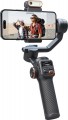 | 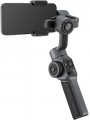 |
|---|---|---|
| Hohem iSteady M6 | Zhiyun Smooth-5 | |
from $167.20 | from $68.46 | |
| TOP sellers | ||
ISteady 7.0 stabilization technology. 4 1/4" connectors for connecting additional accessories. Automatic protection of the stabilizer's electric drives. Integration of an artificial vision sensor and magnetic backlight for tracking an object without an application. | Functional mobile application. Has a USB port for charging your smartphone. In the Combo version, extended equipment includes magnetic LED lighting, a lanyard and a carrying bag. | |
| Type | for smartphone | for smartphone |
| Display |  |  |
| In box | tripod stand bag / case magnetic backlight | |
Gimbal specifications | ||
| Max. load | 0.4 kg | |
| Rotation angle | 360° | 360° |
| Tilt angle | 335° | -140° +209° |
| Bank angle | 335° | -90° +210° |
| Max. phone diagonal | 7 " | |
| Max. phone width | 98 mm | 90 mm |
Battery | ||
| Battery model | 18650 | |
| Capacity | 2600 mAh | 2600 mAh |
| Battery life | 18 h | 12 h |
| Power bank function | | |
Shooting features | ||
| Camera control | joystick | joystick/buttons |
| Functions | camera position fixing axis lock control wheel | camera position fixing axis lock control wheel |
| Shooting modes | Time lapse sports mode autopanorama tracking mode | Time lapse autopanorama tracking mode inversion mode |
General | ||
| Connection | Bluetooth | Bluetooth |
| Folding | | |
| Dimensions (folded) | 299x166x54 mm | 311x168x52 mm |
| Weight | 551 g | 615 g |
| Added to E-Catalog | april 2023 | december 2021 |


Compare Hohem iSteady M6 and Zhiyun Smooth-5
You may be interested in
My comparisons
Hohem iSteady M6 often compared


Zhiyun Smooth-5 often compared


Glossary
Display
The presence of a display in the stabiliser design makes the operation of the device more comfortable and visual. Depending on the specific modification of the stabiliser, the screen can perform many functions. Usually, the display shows basic information about the operating modes used, the date and time, as well as the battery level. The most advanced stabilisers can display the image from the camera, which allows you to use it as a viewfinder with LiveView mode. At the same time, the screen size on professional steadicams can reach 3″ or more, but the vast majority of models are still equipped with a 0.5″ screen.
In box
— Phone mount(like a screen). The ability to use your smartphone as your stabiliser screen. The device's camera is not used in this case: filming is carried out either on the built-in camera of the stabiliser or on the action camera attached to it. Note that the smartphone can be used not only as a viewfinder but also to control the camera; specific features depend on the stabiliser model.
— Focus control mechanism. A device that allows the stabiliser controls to focus the lens on the installed camera. It simplifies the use of manual focus lenses greatly.
— Two-handed handle. The two-handed handle increases agility, stability and precision.
— Quick release plate. This element makes it possible to quickly install and remove the camera from the stabiliser without using third-party tools.
— Tripod. The presence of a small tripod in the stabiliser kit — a tripod, which allows you to use the device in a stationary position, setting it on a flat hard surface. Usually the tripod is detachable.
— Remote control. The presence in the kit of a small remote control. It is convenient when the device is installed at a remote distance, for example, in a car.
— Bag / Case. The pre...sence of a bag or case in the standard package of the stabilizer. Bags often come with handles or a strap for convenient carrying, while cases are somewhat simpler — they don't have handles and are designed to be carried in a travel bag, backpack, etc. A bag or case protects the device from dust and other contaminants and to some extent shields the contents from damage in case of bumps or falls. Additionally, bags or cases can often be used to store extra accessories.
— Focus control mechanism. A device that allows the stabiliser controls to focus the lens on the installed camera. It simplifies the use of manual focus lenses greatly.
— Two-handed handle. The two-handed handle increases agility, stability and precision.
— Quick release plate. This element makes it possible to quickly install and remove the camera from the stabiliser without using third-party tools.
— Tripod. The presence of a small tripod in the stabiliser kit — a tripod, which allows you to use the device in a stationary position, setting it on a flat hard surface. Usually the tripod is detachable.
— Remote control. The presence in the kit of a small remote control. It is convenient when the device is installed at a remote distance, for example, in a car.
— Bag / Case. The pre...sence of a bag or case in the standard package of the stabilizer. Bags often come with handles or a strap for convenient carrying, while cases are somewhat simpler — they don't have handles and are designed to be carried in a travel bag, backpack, etc. A bag or case protects the device from dust and other contaminants and to some extent shields the contents from damage in case of bumps or falls. Additionally, bags or cases can often be used to store extra accessories.
Max. load
The maximum weight that the stabiliser is designed to carry.
This is the maximum weight of the camera with all accessories allowed for this model.
This is the maximum weight of the camera with all accessories allowed for this model.
Tilt angle
The range of forward-backwards tilt angles relative to the vertical position supported by the stabiliser.
It can be written in different ways.
The simplest option is when one angle value is indicated in the characteristics. This may mean that the camera can deviate from the neutral position in both directions by the same angle, which is half the range.
Another option is used when the angles of tilt forward and backward are not the same. In such cases, the horizontal position of the camera on a vertical steadicam is taken as zero, the “-” sign indicates the maximum angle of camera deflection back, lens up, and the “+” sign — forward, lens down.
It can be written in different ways.
The simplest option is when one angle value is indicated in the characteristics. This may mean that the camera can deviate from the neutral position in both directions by the same angle, which is half the range.
Another option is used when the angles of tilt forward and backward are not the same. In such cases, the horizontal position of the camera on a vertical steadicam is taken as zero, the “-” sign indicates the maximum angle of camera deflection back, lens up, and the “+” sign — forward, lens down.
Bank angle
The range of roll angles (to the side) supported by the stabiliser.
Can be recorded in two ways (See "Tilt angle")
Can be recorded in two ways (See "Tilt angle")
Max. phone diagonal
The maximum diagonal of the phone that can be installed on this stabiliser.
This parameter is more relevant for models for various purposes, not only for those that were originally designed for smartphones. Here we note that the maximum diagonal is a rather approximate parameter: models with the same screen size may have different actual dimensions.
This parameter is more relevant for models for various purposes, not only for those that were originally designed for smartphones. Here we note that the maximum diagonal is a rather approximate parameter: models with the same screen size may have different actual dimensions.
Max. phone width
The maximum size of the phone that can be installed in the stabiliser mount.
Battery model
Model of the battery used in the stabiliser. This information is not very important when choosing: if you wish, knowing the battery model, you can find detailed information about it. However, the key characteristics of the battery are usually given in general information about the stabiliser. Nevertheless, model information can be useful if you plan to purchase an additional battery, or if you already have a battery and you need to evaluate its compatibility with the device.
Battery life
The maximum length of time the device will work before it needs its battery to be recharged. It is worth considering that the manufacturer indicates the maximum time, which does not correspond to real indicators due to the conditions and intensity of use.