
Comparison Gosund EP2 vs Gosund SP111 (1-pack)
Add to comparison | 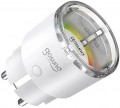 | 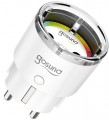 |
|---|---|---|
| Gosund EP2 | Gosund SP111 (1-pack) | |
| Outdated Product | Outdated Product | |
| User reviews | ||
| TOP sellers | ||
Overload protection. | USB ports can also be enabled and disabled remotely. | |
| Device type | socket | socket |
| Number of sockets | 1 | 1 |
| Operating format | Master | Master |
| Kit | 1 | 1 |
| Control | from smartphone | from smartphone |
| Connection (protocol) | Wi-Fi | Wi-Fi |
| Integration into a smart home system | Google Home | Google Home |
| Voice assistant | Amazon Alexa Google Assistant | Amazon Alexa Google Assistant |
Features | ||
| Features | timer scheduled work energy consumption statistics childproof curtains IFTTT (programmable) | timer scheduled work energy consumption statistics childproof curtains IFTTT (programmable) |
General | ||
| Maximum power | 2500 W | 3450 W |
| Maximum load | 10 А | 15 А |
| Operating temperature | -20 °C ~ +45 °C | -20 °C ~ +45 °C |
| Size | 74x43x43 mm | 79x48x46 mm |
| Weight | 93 g | |
| Added to E-Catalog | december 2021 | march 2021 |


Compare Gosund EP2 and SP111 (1-pack)
Smart sockets Gosund EP2 and Gosund SP111 have similar features, such as smartphone control, timer, and scheduling. However, the SP111 stands out with a higher maximum power of 3450W and a load of up to 15A, while the EP2 is limited to 2500W and 10A. Both devices support integration with Google Home and voice assistants such as Amazon Alexa and Google Assistant. The sizes also differ slightly: EP2 is more compact with dimensions of 74x43x43 mm, while SP111 has dimensions of 79x48x46 mm.
You may be interested in
My comparisons
Gosund EP2 often compared

Glossary
Maximum power
The maximum load power that can be connected to the network through a smart socket. If you plan to power several devices through the device, accordingly, you need to take into account their total power.
Permissible power up to 2 kW is considered relatively low, but it is quite enough for most household appliances that do not have high power consumption. For example, such values will be enough for a household lamp, a medium-sized TV, a home air conditioner, a microwave oven, etc. Devices with a maximum power of 2 to 3 kW are suitable for more “gluttonous” equipment like an electric kettle or boiler. And the most “hardy” smart sockets are limited from 3 to 3.5 kW, they will be compatible with any electrical appliances that are generally designed to work from an outlet (recall, power of more than 3.5 kW requires connection directly to the shield, ordinary sockets are no longer designed for it).
Permissible power up to 2 kW is considered relatively low, but it is quite enough for most household appliances that do not have high power consumption. For example, such values will be enough for a household lamp, a medium-sized TV, a home air conditioner, a microwave oven, etc. Devices with a maximum power of 2 to 3 kW are suitable for more “gluttonous” equipment like an electric kettle or boiler. And the most “hardy” smart sockets are limited from 3 to 3.5 kW, they will be compatible with any electrical appliances that are generally designed to work from an outlet (recall, power of more than 3.5 kW requires connection directly to the shield, ordinary sockets are no longer designed for it).
Maximum load
The maximum load current for which the smart socket is designed. This parameter is directly related to the maximum power (see above) — we recall that the power is calculated by multiplying the current by the voltage. Thus, if the maximum power is, for example, 2200 W, then the maximum load will be 2200/220 = 10 A.
The permissible load of less than 10 A for modern smart sockets is considered low, 11 – 15 A is considered average, and the maximum indicator is actually 16 A — ordinary wall sockets do not initially assume a higher load. Equipment that consumes a current of more than 16 A requires a special connection with special control automation; smart sockets are not used for such devices.
The permissible load of less than 10 A for modern smart sockets is considered low, 11 – 15 A is considered average, and the maximum indicator is actually 16 A — ordinary wall sockets do not initially assume a higher load. Equipment that consumes a current of more than 16 A requires a special connection with special control automation; smart sockets are not used for such devices.