
Comparison TRAMSMART S150 vs Remax RPP-325
Add to comparison | 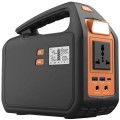 | 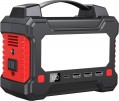 |
|---|---|---|
| TRAMSMART S150 | Remax RPP-325 | |
| Outdated Product | Outdated Product | |
| User reviews | ||
| TOP sellers | ||
| In box | charging station | charging station |
| Rated power | 150 W | 150 W |
| Peak power | 300 W | |
| Output waveform | modified sine wave | modified sine wave |
Outputs | ||
| Sockets (230 V) | 1 | 1 |
| USB-A | 1 pcs 5В/2.4А | 2 pcs 5В/2.4А 12 W |
| USB-A (quick charge) | 1 18 W | 1 5В/3A, 9В/2A, 12В/1.5A 18 W |
| USB-C | 1 pcs 18 W | 1 pcs 3 A 60 W |
Inputs (station charging) | ||
| From solar panels |  |  |
| Via USB-C port | | |
| DC input | 1 pcs (15 H / 3 A) | |
Battery and charging time | ||
| Battery type | Li-Ion | Li-Ion |
| Battery capacity | 155 Wh | 133.2 Wh |
| Charging cycles | 500 | |
| Charging time (socket) ≈ | 300 min | |
| Charging power (solar panel) | 60 W | |
General | ||
| PSU | external | external |
| Display | | |
| Backlight | | |
| Carrying handle | | |
| Operating temperature | -10 °C ~ +40 °C | |
| Dimensions (LxWxH) | 204x91x187 mm | 162x83x165 mm |
| Weight | 1.89 kg | 1.1 kg |
| Added to E-Catalog | august 2023 | january 2023 |


Compare TRAMSMART S150 and Remax RPP-325
Charging stations TRAMSMART S150 and Remax RPP-325 have a similar nominal power of 150 W and use a modified sine wave for output. However, the TRAMSMART S150 offers one 230 V outlet and two USB A ports with a power of 18 W, while the Remax RPP-325 also has one 230 V outlet but three USB A ports with a total power of 60 W, making it more versatile for charging multiple devices. In terms of battery, the TRAMSMART S150 has a capacity of 155 Wh and a charging time from the mains of about 300 minutes, whereas the Remax RPP-325 has a higher capacity of 36 Ah, but the charging time is not specified. Both devices have a display, backlighting, and a carrying handle, but the Remax RPP-325 is lighter (1.1 kg compared to 1.89 kg for the TRAMSMART S150). The choice between them depends on your needs for the number of outputs and the weight of the device.
You may be interested in
My comparisons
Remax RPP-325 often compared


Glossary
Peak power
Some electrical appliances (in particular, units with electric motors - refrigerators, air conditioners, etc.) consume significantly more energy at startup than after reaching the operating mode. For such a load, the peak power of the charging station must be taken into account - its indicator must be higher than the starting power of the load.
USB-A
Full-size USB-A connectors are popular in computer technology, commonly used in charging adapters for 230 V household networks and 12 V car sockets. These outputs have become widespread in charging stations for charging gadgets.
— The total number of such ports can be quite varied (1 USB, 2 connectors, 3 ports, and even 4), as they allow for charging and, in some cases, powering various low-power devices — smartphones, tablets, power banks, lamps, and more.
— Current Strength. The maximum current delivered through the USB-A connector to the charging device. Note that different ports of the charging station may output different currents (for example, 1.5 A and 2.1 A). In such cases, the highest current strength is usually specified.
— Power. The maximum output power in watts (W) that the charging station is capable of delivering through the USB-A connector to a single charging gadget.
— The total number of such ports can be quite varied (1 USB, 2 connectors, 3 ports, and even 4), as they allow for charging and, in some cases, powering various low-power devices — smartphones, tablets, power banks, lamps, and more.
— Current Strength. The maximum current delivered through the USB-A connector to the charging device. Note that different ports of the charging station may output different currents (for example, 1.5 A and 2.1 A). In such cases, the highest current strength is usually specified.
— Power. The maximum output power in watts (W) that the charging station is capable of delivering through the USB-A connector to a single charging gadget.
USB-A (quick charge)
Full-sized USB-A ports with fast charging support. This feature allows you to charge your smartphone, tablet, or other connected devices much more quickly. The charging process occurs at increased power, with current and voltage regulated at each stage to stay within optimal values. However, keep in mind that there are many fast-charging technologies today, and not all of them are compatible with each other.
— Current strength. The current parameters delivered through USB-A fast charging ports. Note that different ports of the charging station may output different voltage and current parameters. This section specifies the current strength values at a certain voltage (for example, 5V / 3A, 9V / 2A, 12V / 1.5A).
— Power. The maximum power in watts (W) that the charging station can deliver through the USB-A fast charging port to a single charging gadget. High output power allows for faster charging. However, the charging device must support the corresponding power; otherwise, the speed will be limited by the gadget's characteristics.
— Current strength. The current parameters delivered through USB-A fast charging ports. Note that different ports of the charging station may output different voltage and current parameters. This section specifies the current strength values at a certain voltage (for example, 5V / 3A, 9V / 2A, 12V / 1.5A).
— Power. The maximum power in watts (W) that the charging station can deliver through the USB-A fast charging port to a single charging gadget. High output power allows for faster charging. However, the charging device must support the corresponding power; otherwise, the speed will be limited by the gadget's characteristics.
USB-C
USB type C ports are smaller compared to classic USB ports and have a convenient reversible design that allows connecting the plug either way. USB type C was initially created to implement various advanced features: increased power, fast charging technologies, etc.
Since the port is relatively new and quite powerful (you can find USB type C with 60W, even 100W and 140W), the total number of such connectors is often limited to one port, or sometimes two).
— Current. The maximum current delivered through the USB type C port to the device being charged. Note that different ports of a charging station may deliver different currents (for example, 1.5A and 2.1A). In such cases, the highest current is usually specified.
— Power. The maximum power in watts (W) that the charging station can deliver to one charging gadget. The high output power of the USB type C port allows for faster charging. However, the device being charged must support the corresponding power; otherwise, the speed of the process will be limited by the gadget's specifications.
Since the port is relatively new and quite powerful (you can find USB type C with 60W, even 100W and 140W), the total number of such connectors is often limited to one port, or sometimes two).
— Current. The maximum current delivered through the USB type C port to the device being charged. Note that different ports of a charging station may deliver different currents (for example, 1.5A and 2.1A). In such cases, the highest current is usually specified.
— Power. The maximum power in watts (W) that the charging station can deliver to one charging gadget. The high output power of the USB type C port allows for faster charging. However, the device being charged must support the corresponding power; otherwise, the speed of the process will be limited by the gadget's specifications.
From solar panels
The ability to charge the device from solar panels ensures the energy independence of a portable power plant. Models with this function can work completely autonomously and do not depend on outlets. Charging from the panels is implemented in the corresponding devices with portable solar panels and charging stations, which are structurally provided with specialized connectors for receiving power from stationary solar panels, and there is also a built-in MPPT charge controller (Maximum Power Point Tracking).
Via USB-C port
The ability to replenish energy reserves in the battery cells of the charging station via the USB type C connector. This port itself is small in size and has a convenient double-sided design, thanks to which the plug can be inserted in either direction. However, in charging stations it does not always work as an input interface.
DC input
DC connector for a distinctive round plug (like those used in many laptops) used to recharge the battery of the device. Note that DC- in plugs may have different sizes, and chargers with such plugs may have different operating voltages. In practice, this leads to the fact that finding a suitable charger for a portable station is not easy, you need to be especially careful when searching.
Battery capacity
Nominal battery capacity, in fact - the amount of energy that is supposed to be stored. The larger it is, the longer the battery life of the charging station will be, all other things being equal. On the other hand, this parameter also affects the dimensions, weight and price of the battery, despite the fact that an energy-intensive battery is not always required. By the indicator of capacity in watt-hours, you can compare batteries with each other.
Charging cycles
The number of charge-discharge cycles that the battery can withstand without significant loss of performance.
In the process of operation, the batteries wear out, which causes their performance to suffer (in the first place, the capacity decreases). Battery life is usually measured in charge-discharge cycles. However, models with the same declared resource are not always equally durable in practice. Different manufacturers may interpret “significant loss of performance” in different ways: for example, one brand indicates the resource up to a 20% decrease in capacity (DOD > 80%), another - up to a 60% decrease (DOD > 40%) Behind the abbreviation DOD worth decoding Depth of Discharge, i.e. discharge depth. Therefore, when choosing, it makes sense to focus not only on pure numbers, but also on other sources - test results, reviews, etc. Also note that battery life can be noticeably reduced if the operating conditions are violated (for example, in case of overheating or hypothermia).
In the process of operation, the batteries wear out, which causes their performance to suffer (in the first place, the capacity decreases). Battery life is usually measured in charge-discharge cycles. However, models with the same declared resource are not always equally durable in practice. Different manufacturers may interpret “significant loss of performance” in different ways: for example, one brand indicates the resource up to a 20% decrease in capacity (DOD > 80%), another - up to a 60% decrease (DOD > 40%) Behind the abbreviation DOD worth decoding Depth of Discharge, i.e. discharge depth. Therefore, when choosing, it makes sense to focus not only on pure numbers, but also on other sources - test results, reviews, etc. Also note that battery life can be noticeably reduced if the operating conditions are violated (for example, in case of overheating or hypothermia).