
Comparison Zendure SuperBase 1000M vs TTN P06 Pro
Add to comparison | 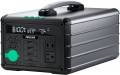 | 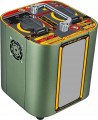 |
|---|---|---|
| Zendure SuperBase 1000M | TTN P06 Pro | |
| Compare prices 2 | Outdated Product | |
| User reviews | ||
| TOP sellers | ||
| In box | charging station | charging station |
| Rated power | 1000 W | 1200 W |
| Peak power | 1500 W | |
| Output waveform | sinusoid (PSW) | sinusoid (PSW) |
Outputs | ||
| Sockets (230 V) | 2 | 2 |
| USB-A | 3 pcs 5В/2.4А 12 W | 2 pcs 5В/2.4А 12 W |
| USB-C | 1 pcs 5 A 100 W | 1 pcs 5 A 100 W |
| Car cigarette lighter |  | |
| Add. ports | Jump Starter | |
Inputs (station charging) | ||
| From solar panels | | |
| DC input | 2 | |
| Input port XT60 |  | |
Battery and charging time | ||
| Battery type | Li-Ion | Li-Ion |
| Battery capacity | 1016 Wh | 1017 Wh |
General | ||
| PSU | external | |
| Display | | |
| Backlight | | |
| Carrying handle | | |
| Operating temperature | 0 °C ~ +40 °C | |
| Dimensions (LxWxH) | 190x325x138 mm | 175x175x187 mm |
| Weight | 8.3 kg | 7.6 kg |
| Added to E-Catalog | february 2023 | january 2023 |



Compare Zendure SuperBase 1000M and TTN P06 Pro
Zendure SuperBase 1000M and TTN P06 Pro are powerful charging stations, but they have their differences. The SuperBase 1000M has a rated power of 1000 W and a peak value of 1500 W, while the P06 Pro offers a slightly higher rated power at 1200 W. Both devices have a sine wave output and two 230 V outlets, but the outlet placement varies: the SuperBase has them at the back, while the P06 Pro places them on the top, which can be more convenient in different situations. In terms of ports, the SuperBase offers 3 USB A outputs, while the P06 Pro has 2 USB A and an additional Jump Starter. Both devices feature a display and lighting, as well as convenient carrying handles. Weight-wise, the SuperBase is slightly heavier (8.3 kg versus 7.6 kg for the P06 Pro), which can be an important factor during transport. Overall, the choice between them depends on preferences for power and ease of use.
Price comparison
You may be interested in
Zendure SuperBase 1000M often compared


Glossary
Rated power
Power that a device can consistently produce for an indefinitely long time without any unpleasant consequences. For normal operation of the charging station, the rated power must be at least 15 - 20% higher than the total power of all devices simultaneously connected to it.
Peak power
Some electrical appliances (in particular, units with electric motors - refrigerators, air conditioners, etc.) consume significantly more energy at startup than after reaching the operating mode. For such a load, the peak power of the charging station must be taken into account - its indicator must be higher than the starting power of the load.
USB-A
Full-size USB-A connectors are popular in computer technology, commonly used in charging adapters for 230 V household networks and 12 V car sockets. These outputs have become widespread in charging stations for charging gadgets.
— The total number of such ports can be quite varied (1 USB, 2 connectors, 3 ports, and even 4), as they allow for charging and, in some cases, powering various low-power devices — smartphones, tablets, power banks, lamps, and more.
— Current Strength. The maximum current delivered through the USB-A connector to the charging device. Note that different ports of the charging station may output different currents (for example, 1.5 A and 2.1 A). In such cases, the highest current strength is usually specified.
— Power. The maximum output power in watts (W) that the charging station is capable of delivering through the USB-A connector to a single charging gadget.
— The total number of such ports can be quite varied (1 USB, 2 connectors, 3 ports, and even 4), as they allow for charging and, in some cases, powering various low-power devices — smartphones, tablets, power banks, lamps, and more.
— Current Strength. The maximum current delivered through the USB-A connector to the charging device. Note that different ports of the charging station may output different currents (for example, 1.5 A and 2.1 A). In such cases, the highest current strength is usually specified.
— Power. The maximum output power in watts (W) that the charging station is capable of delivering through the USB-A connector to a single charging gadget.
Add. ports
Additional output connectors provided in the design of the charging station in addition to those described above.
DC input
DC connector for a distinctive round plug (like those used in many laptops) used to recharge the battery of the device. Note that DC- in plugs may have different sizes, and chargers with such plugs may have different operating voltages. In practice, this leads to the fact that finding a suitable charger for a portable station is not easy, you need to be especially careful when searching.
Input port XT60
Power connector with two round connectors, used to replenish energy reserves in the battery cells of the charging station. For the most part, the input port of the XT60 is for charging the device from solar panels using the appropriate cable.
Battery capacity
Nominal battery capacity, in fact - the amount of energy that is supposed to be stored. The larger it is, the longer the battery life of the charging station will be, all other things being equal. On the other hand, this parameter also affects the dimensions, weight and price of the battery, despite the fact that an energy-intensive battery is not always required. By the indicator of capacity in watt-hours, you can compare batteries with each other.
PSU
— External. Outdoor placement of the power supply requires additional space. However, most blocks of this type are quite compact in size and are equipped with “plugs” for sockets right on the case - in other words, the block is installed on a socket, and from there the wire stretches to the charging station. There are also external power supplies on the cable. Considering that you only need to connect the adapter while the device is charging, an external power supply is a very convenient solution.
- Internal. The built-in power supply does not take up space outside the charging station, however, it can increase the dimensions and weight of the device. The advantage of this arrangement is that the most common power wire goes from the housing to the socket, without additional equipment on it. At one end it is connected to the socket, the other end is connected to the input connector of the charging station.
- Internal. The built-in power supply does not take up space outside the charging station, however, it can increase the dimensions and weight of the device. The advantage of this arrangement is that the most common power wire goes from the housing to the socket, without additional equipment on it. At one end it is connected to the socket, the other end is connected to the input connector of the charging station.
Operating temperature
The temperature range in which the charging station normally operates in normal mode. Exceeding the specified norms in any direction leads to a rapid discharge of the battery, its accelerated degradation and other unpleasant consequences.