
Comparison Choetech BS006 vs Sigma mobile X-power SI625APS
Add to comparison | 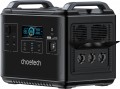 | 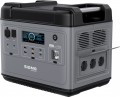 |
|---|---|---|
| Choetech BS006 | Sigma mobile X-power SI625APS | |
from $1,179.36 | Outdated Product | |
| User reviews | ||
| TOP sellers | ||
2 USB A ports, 2 USB A QC3.0 ports, 2 USB-C ports. Car cigarette lighter, 2 DC5521 ports. LiFePo4 battery 1997 Wh. New models (from 2026) have a smartphone control feature (confirm in the store before purchase). | Can be charged from a cigarette lighter 12V/8A, 24V/10A. 2 USB A ports, 2 USB A QC3.0 ports, 2 USB-C ports. Car cigarette lighter, 2 DC5521 ports. Surges up to 4000 W are allowed. LiFePo4 battery 2000 Wh. | |
| In box | charging station | charging station |
| Rated power | 2000 W | 2000 W |
| Peak power | 4000 W | |
| Output waveform | sinusoid (PSW) | sinusoid (PSW) |
| UPS function |  | |
| Switchover time to battery | 10 ms | |
Outputs | ||
| Sockets (230 V) | 3 | 3 |
| USB-A | 2 pcs 5В/2.4А 12 W | 2 pcs 5В/2.4А 12 W |
| USB-A (quick charge) | 2x QC3.0 18 W | 2x QC3.0 18 W |
| USB-C | 2 pcs 5 A 100 W | 2 pcs 5 A 100 W |
| Car cigarette lighter | | |
Inputs (station charging) | ||
| From solar panels | | |
| Input port XT60 | | |
| Anderson port | 11.5 – 50 H / 500 W | |
| Add. ports | C13/14 (charging) | C13/14 (charging) |
Battery and charging time | ||
| Battery type | LiFePO4 | LiFePO4 |
| Battery capacity | 1997 Wh | 2000 Wh |
| Charging cycles | 3500 | |
| Charging time (socket) ≈ | 120 min | 109 min |
| Charging time (socket + solar panel) ≈ | 90 min | |
| Charging time (solar panel) ≈ | 300 min | 240 min |
| Charging power (socket) | 1100 W | 1100 W |
| Charging power (solar panel) | 500 W | 500 W |
| Charging power (socket + solar panel) | 1600 W | |
General | ||
| Smartphone synchronization | Bluetooth and WiFi | |
| PSU | built into the body | built into the body |
| Display | | |
| Backlight | | |
| Carrying handle | | |
| Operating temperature | -10 °C ~ +40 °C | 0 °C ~ +40 °C |
| Dimensions (LxWxH) | 386x275x306 mm | 392x279x330 mm |
| Weight | 22 kg | 22 kg |
| Warranty | 2 years | |
| Added to E-Catalog | january 2023 | january 2023 |


Compare Choetech BS006 and Sigma mobile X-power SI625APS
Both charging stations, Choetech BS006 and Sigma mobile X-power SI625APS, have a rated power of 2000 W and offer the same number of outputs: three sockets and four USB ports each. However, Sigma mobile stands out with the capability of peak output up to 4000 W, which can be useful for high-consumption devices. Choetech BS006 features faster mains charging (120 minutes), while Sigma takes about 109 minutes, but it also supports solar panel charging with a wider voltage range. Both devices use LiFePO4 batteries, but Sigma has a larger capacity (39 Ah), providing longer operating time. Both devices have a display and backlight, as well as convenient carrying handles. The choice between them may depend on your power and charging time needs.
You may be interested in
My comparisons
Choetech BS006 often compared


Sigma mobile X-power SI625APS often compared


Glossary
Peak power
Some electrical appliances (in particular, units with electric motors - refrigerators, air conditioners, etc.) consume significantly more energy at startup than after reaching the operating mode. For such a load, the peak power of the charging station must be taken into account - its indicator must be higher than the starting power of the load.
Switchover time to battery
The delay (usually in milliseconds) between the power going out from the outlet and the moment when the station starts feeding connected devices from its battery, maintaining "pass-through" power. The shorter this time, the higher the chance that devices won't notice the drop at all: for routers, cameras, NAS, and PCs, this is critical because a long pause can cause a reboot, loss of connection, or even filesystem errors. Essentially, this is the same parameter as in a classic UPS, but for charging stations, it greatly depends on implementation: models with a more "UPS-like" switching scheme switch considerably faster, while some stations formally have a UPS mode but actually create a noticeable break or activate the output only after "realizing" the network's loss. In practice, this point helps distinguish a charging station that is truly suitable as a UPS for sensitive electronics from an option "for lights and charging": for example, for home internet and video surveillance, minimal switching time is important, while for lamps, charging phones, or a heater, a brief pause is typically not critical.
Anderson port
A large two-pole connector for connecting batteries, chargers and all kinds of equipment where reliable contact is required for the sake of ensuring stable operation of the equipment. Anderson Port is resistant to moisture changes, can be used both for indoor and outdoor mechanisms. Thanks to identical mating parts, a pair is formed by two identical connectors, which are rotated 180 ° relative to each other. Most often, Anderson port is used in mobile homes on wheels.
Battery capacity
Nominal battery capacity, in fact - the amount of energy that is supposed to be stored. The larger it is, the longer the battery life of the charging station will be, all other things being equal. On the other hand, this parameter also affects the dimensions, weight and price of the battery, despite the fact that an energy-intensive battery is not always required. By the indicator of capacity in watt-hours, you can compare batteries with each other.
Charging cycles
The number of charge-discharge cycles that the battery can withstand without significant loss of performance.
In the process of operation, the batteries wear out, which causes their performance to suffer (in the first place, the capacity decreases). Battery life is usually measured in charge-discharge cycles. However, models with the same declared resource are not always equally durable in practice. Different manufacturers may interpret “significant loss of performance” in different ways: for example, one brand indicates the resource up to a 20% decrease in capacity (DOD > 80%), another - up to a 60% decrease (DOD > 40%) Behind the abbreviation DOD worth decoding Depth of Discharge, i.e. discharge depth. Therefore, when choosing, it makes sense to focus not only on pure numbers, but also on other sources - test results, reviews, etc. Also note that battery life can be noticeably reduced if the operating conditions are violated (for example, in case of overheating or hypothermia).
In the process of operation, the batteries wear out, which causes their performance to suffer (in the first place, the capacity decreases). Battery life is usually measured in charge-discharge cycles. However, models with the same declared resource are not always equally durable in practice. Different manufacturers may interpret “significant loss of performance” in different ways: for example, one brand indicates the resource up to a 20% decrease in capacity (DOD > 80%), another - up to a 60% decrease (DOD > 40%) Behind the abbreviation DOD worth decoding Depth of Discharge, i.e. discharge depth. Therefore, when choosing, it makes sense to focus not only on pure numbers, but also on other sources - test results, reviews, etc. Also note that battery life can be noticeably reduced if the operating conditions are violated (for example, in case of overheating or hypothermia).
Charging time (socket) ≈
Time to charge the portable power station from a fully discharged state to 100% charge when using the power adapter from a household outlet. This refers to the original battery and standard charger.
Charging time (socket + solar panel) ≈
The parameter allows you to estimate the approximate battery charging time in the mode of combined connection of a portable power station - from a power outlet and a solar panel overnight. This method of replenishing energy reserves allows you to speed up the charging process.
Charging time (solar panel) ≈
Time spent on a full charge when using the original panel in bright sunlight. In cloudy weather, the charging time of the device from the solar panel can be strikingly different downwards.
Charging power (socket + solar panel)
Charging power with a combined variant of power supply to the device - from the socket and the solar panel at the same time.