
Comparison BASEUS Super Energy Max Car Jump Starter 20000 vs BASEUS Super Energy Air Car Jump Starter 10000
Add to comparison | 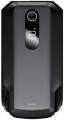 | 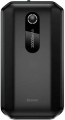 |
|---|---|---|
| BASEUS Super Energy Max Car Jump Starter 20000 | BASEUS Super Energy Air Car Jump Starter 10000 | |
| Outdated Product | from $119.92 | |
| User reviews | ||
| TOP sellers | ||
The USB type C port is only used to charge the power bank itself, but cannot be used to charge devices. | ||
| Device | booster | booster |
Specs | ||
| Battery voltage | 12 В | 12 В |
| Rated starting power | 1000 А | 400 А |
| Peak output current | 2000 А | 800 А |
| Built-in battery capacity | 20000 mAh | 10000 mAh |
Charging gadgets (outputs) | ||
| USB-A | 1 pcs 5В/2.4А 12 W | 1 pcs 5В/2.4А 12 W |
| USB-A (fast charge) | 1 pcs 5В/3А, 9В/3А, 12В/2.5А 30 W | |
| USB-C | 1 pcs 5В/2.4А 12 W | |
General | ||
| Built-in flashlight |  | |
| Power source | 230 В | 230 В |
| Size | 165x87x38 mm | 160x85x30 mm |
| Weight | 0.47 kg | 0.47 kg |
| Added to E-Catalog | october 2022 | october 2022 |


Compare BASEUS Super Energy Max Car Jump Starter 20000 and Super Energy Air Car Jump Starter 10000
You may be interested in
My comparisons
BASEUS Super Energy Max Car Jump Starter 20000 often compared


BASEUS Super Energy Air Car Jump Starter 10000 often compared


Glossary
Rated starting power
Nominal starting current of the starter charger or booster (see "Type").
In this case, it refers to the current that the device can deliver in engine starting mode for a relatively long period (at least 30 seconds, or even more). This indicator should not be lower than the nominal starting current consumed by the car's starter — otherwise, the device simply will not have enough power for effective starter cranking and engine starting. Information about the required starting current can be clarified by the car's documentation or by the specifications of the standard battery used in it. For most passenger cars, this figure ranges from 200 to 400 A; less powerful starting devices are mainly intended for motorcycles and other similar vehicles, while more powerful ones are for buses, trucks, and other heavy equipment, among such "starters" there are models for 400 – 600 A and even over 1000 A.
In this case, it refers to the current that the device can deliver in engine starting mode for a relatively long period (at least 30 seconds, or even more). This indicator should not be lower than the nominal starting current consumed by the car's starter — otherwise, the device simply will not have enough power for effective starter cranking and engine starting. Information about the required starting current can be clarified by the car's documentation or by the specifications of the standard battery used in it. For most passenger cars, this figure ranges from 200 to 400 A; less powerful starting devices are mainly intended for motorcycles and other similar vehicles, while more powerful ones are for buses, trucks, and other heavy equipment, among such "starters" there are models for 400 – 600 A and even over 1000 A.
Peak output current
Peak starting current of the starter charger or booster (see «Type»).
The peak current is the highest current that the device can issue without problems for a short time (1 – 2 seconds). This current is significantly higher than the nominal starting current (see above), which corresponds to the operation of a car starter: as it begins to spin, the starter consumes a very high current that decreases almost immediately.
The peak starting current of the starter charger or booster should not be lower than the peak starting current of the starter. This can be specified in the car's documentation or based on the characteristics of the standard car battery used.
The peak current is the highest current that the device can issue without problems for a short time (1 – 2 seconds). This current is significantly higher than the nominal starting current (see above), which corresponds to the operation of a car starter: as it begins to spin, the starter consumes a very high current that decreases almost immediately.
The peak starting current of the starter charger or booster should not be lower than the peak starting current of the starter. This can be specified in the car's documentation or based on the characteristics of the standard car battery used.
Built-in battery capacity
Capacity of the own battery provided in the design of the starter-charger.
As a rule, boosters and launchers with a power bank function are equipped with their own batteries (see “Type”). The main purpose of such a battery from the point of view of helping to “light up” is to provide the power necessary to start the engine. However, in some models the battery is responsible for other functions, such as the built-in compressor or flashlight. The larger the battery capacity, the longer the device can operate, and the more tasks it can perform on a single charge.
In starting devices with the powerbank function, this parameter is also given to estimate how much energy the battery can accumulate and then transfer to connected gadgets. It is important to consider that there is a nominal (declared) and real capacity - the latter is always less, because it takes into account the inevitable losses during energy conversion. Typically the difference is from 30 to 40%, i.e. a model with a conventional battery capacity of 10,000 mAh will not fully charge a smartphone with a 3,000 mAh battery three times, but at best will provide two power cycles, because in practice its working capacity is about 6,000 mAh. Therefore, it is not entirely correct to compare the mAh values of your gadget’s battery with the nominal capacity of the built-in battery - you should definitely take into account that the real capacity is always less than the “rated” one.
As a rule, boosters and launchers with a power bank function are equipped with their own batteries (see “Type”). The main purpose of such a battery from the point of view of helping to “light up” is to provide the power necessary to start the engine. However, in some models the battery is responsible for other functions, such as the built-in compressor or flashlight. The larger the battery capacity, the longer the device can operate, and the more tasks it can perform on a single charge.
In starting devices with the powerbank function, this parameter is also given to estimate how much energy the battery can accumulate and then transfer to connected gadgets. It is important to consider that there is a nominal (declared) and real capacity - the latter is always less, because it takes into account the inevitable losses during energy conversion. Typically the difference is from 30 to 40%, i.e. a model with a conventional battery capacity of 10,000 mAh will not fully charge a smartphone with a 3,000 mAh battery three times, but at best will provide two power cycles, because in practice its working capacity is about 6,000 mAh. Therefore, it is not entirely correct to compare the mAh values of your gadget’s battery with the nominal capacity of the built-in battery - you should definitely take into account that the real capacity is always less than the “rated” one.
USB-A (fast charge)
Full-size USB-A ports with fast charging support. This allows you to charge your smartphone, tablet, or other connected device significantly faster. The charging process takes place at increased power, with the current and voltage at each stage regulated (for example, 5V/3A, 9V/2A, 12V/1.5A) to remain within optimal values.
USB-C
The design includes a USB-C port for charging gadgets with a compatible cable. Due to the popularization of this port, such a solution does not seem unusual, but rather helps keep up with the times.
In addition to the number of such ports, the voltage and current on which the port operates, as well as the maximum charging power, may be specified.
— Current. The maximum current delivered through the USB type-C port to the charging device. Note that different ports of the charging station can output different currents (for example, 1.5 A and 2.1 A). In such a case, the highest current is usually indicated.
— Power. The maximum power in watts (W) that the charging station can deliver to one charging gadget. The high output power of the USB type-C port allows for a faster charging process. However, the charging device must support the corresponding power, otherwise, the speed of the process will be limited by the gadget's specifications.
In addition to the number of such ports, the voltage and current on which the port operates, as well as the maximum charging power, may be specified.
— Current. The maximum current delivered through the USB type-C port to the charging device. Note that different ports of the charging station can output different currents (for example, 1.5 A and 2.1 A). In such a case, the highest current is usually indicated.
— Power. The maximum power in watts (W) that the charging station can deliver to one charging gadget. The high output power of the USB type-C port allows for a faster charging process. However, the charging device must support the corresponding power, otherwise, the speed of the process will be limited by the gadget's specifications.