
Comparison 70mai Air Compressor Lite vs 70mai Air Compressor
Add to comparison | 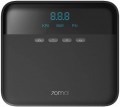 |  |
|---|---|---|
| 70mai Air Compressor Lite | 70mai Air Compressor | |
from $29.99 | Compare prices 3 | |
| TOP sellers | ||
Electronic pressure gauge with backlight. Hitch-hiking. Enclosed storage compartment for attachments and excess power cord. | ||
| Type | compressor | compressor |
| Power source | 12 В | 12 В |
Specs | ||
| Pressure gauge | digital | digital |
| Max. pressure | 10 Atm | 7 Atm |
| Performance | 25 L/min | 39 L/min |
| Current consumption | 10 А | 10 А |
| Connection | cigarette lighter | cigarette lighter |
| Power cord length | 2.9 m | 3.7 m |
General | ||
| Autostop function |  |  |
| Gauge backlight | | |
| Cover/case | | |
| Size | 235x110x173 mm | |
| Weight | 0.95 kg | |
| Added to E-Catalog | november 2020 | january 2020 |




Compare 70mai Air Compressor Lite and Air Compressor
Price comparison
You may be interested in
70mai Air Compressor Lite often compared


70mai Air Compressor often compared


Glossary
Max. pressure
The maximum pressure provided by the pump or compressor — in other words, the highest tyre pressure that can be achieved using this unit.
In most models, this figure is from 2.5 to 10 atm, and in mechanical pumps (manual and foot, see "Type") pressure of more than 10 atm is practically not found at all. This is due to the fact that even for heavy trucks, the optimal tyre pressure is usually about 5 – 9 atm (depending on a number of parameters — there are special formulas and tables for calculations); and in passenger car tyres, a pressure of more than 2.5 atm is extremely rarely used. However, there are compressors with higher pressure parameters — 11 – 15 atm, 16 – 20 atm and even higher. The meaning of such characteristics is mainly in the "power reserve": a higher working pressure contributes to faster pumping. However, be careful not to over-inflate the tyre and damage it.
In most models, this figure is from 2.5 to 10 atm, and in mechanical pumps (manual and foot, see "Type") pressure of more than 10 atm is practically not found at all. This is due to the fact that even for heavy trucks, the optimal tyre pressure is usually about 5 – 9 atm (depending on a number of parameters — there are special formulas and tables for calculations); and in passenger car tyres, a pressure of more than 2.5 atm is extremely rarely used. However, there are compressors with higher pressure parameters — 11 – 15 atm, 16 – 20 atm and even higher. The meaning of such characteristics is mainly in the "power reserve": a higher working pressure contributes to faster pumping. However, be careful not to over-inflate the tyre and damage it.
Performance
The capacity of the compressor (see "Type") is the maximum amount of air that it can pump into the tyre in a minute.
Higher performance reduces the time required to inflate the wheel; on the other hand, this parameter directly affects the dimensions, weight, power consumption and price of the compressor. So it is worth choosing according to performance, taking into account real needs. So, for a “duty” tyre inflation in a passenger car, a compressor with a low operating speed is quite enough — up to 20 L / min inclusive. And if the speed of full pumping is also important for you (for example, after replacing the rubber) — you can choose a unit for 21 – 40 L / min. In turn, models with more solid characteristics — 41 – 60 L / min and more — are intended mainly for heavy equipment like SUVs, trucks, tractors, etc.
Separately, it should be noted that this parameter is NOT suitable for calculating the exact inflation time (even if the exact volume of air in the wheel is known). The fact is that the actual performance of the compressor is always lower than the claimed one: the figures in the characteristics are indicated for free air outlet, and when pumping the wheels, the pumping speed will inevitably be lower due to the resistance of the nipple.
Higher performance reduces the time required to inflate the wheel; on the other hand, this parameter directly affects the dimensions, weight, power consumption and price of the compressor. So it is worth choosing according to performance, taking into account real needs. So, for a “duty” tyre inflation in a passenger car, a compressor with a low operating speed is quite enough — up to 20 L / min inclusive. And if the speed of full pumping is also important for you (for example, after replacing the rubber) — you can choose a unit for 21 – 40 L / min. In turn, models with more solid characteristics — 41 – 60 L / min and more — are intended mainly for heavy equipment like SUVs, trucks, tractors, etc.
Separately, it should be noted that this parameter is NOT suitable for calculating the exact inflation time (even if the exact volume of air in the wheel is known). The fact is that the actual performance of the compressor is always lower than the claimed one: the figures in the characteristics are indicated for free air outlet, and when pumping the wheels, the pumping speed will inevitably be lower due to the resistance of the nipple.
Power cord length
The length of the cord with which the compressor is connected to a power source — a standard car socket DC 12V (so-called cigarette lighter) or directly to the battery terminals. It is believed that the length of the cable should not be less than two metres to avoid inconvenience in operation.
Autostop function
Function that automatically stops operation when a sufficient level of tyre pressure is reached. Usually, the pressure at which the auto-stop is triggered can be set at the discretion of the user.
This function greatly simplifies the work with the pump: the risk of overfilling the tyre is reduced to almost zero, while the user does not need to monitor the pumping process, because the pump will stop at the right time. On the other hand, hitchhiking significantly affects the price. It is found only in electric compressors (see "Type").
This function greatly simplifies the work with the pump: the risk of overfilling the tyre is reduced to almost zero, while the user does not need to monitor the pumping process, because the pump will stop at the right time. On the other hand, hitchhiking significantly affects the price. It is found only in electric compressors (see "Type").
Cover/case
Many pumps/compressors come in special cases or cases that make them easy to store and transport. Under the cover, usually, we mean a classic cloth bag, which pumps are often equipped with and which rather protects them from dirt, dust, etc. But compressors are often supplied in plastic cases, they are convenient, inexpensive, rust-resistant and equipped with a convenient carrying handle . Plastic is considered less durable, but it is quite enough to provide the necessary protection.