
Comparison Profi Hunter 14 vs Profi Infinity 14
Add to comparison | 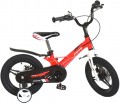 | 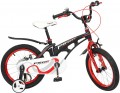 |
|---|---|---|
| Profi Hunter 14 | Profi Infinity 14 | |
| Outdated Product | Outdated Product | |
| TOP sellers | ||
Available with alloy wheels and regular spokes. | ||
| Type | two-wheeled | two-wheeled |
| Age group | from 3 to 6 years old | from 3 to 6 years old |
| Max. weight | 30 kg | 30 kg |
Design | ||
| Frame material | magnesium alloy | magnesium alloy |
| Wheel diameter | 14 " | 14 " |
| Wheels | inflatable rubber | inflatable rubber |
| Alloy wheels |  |  |
| Front brake | disk (hand) | rim mechanical (hand) |
| Rear brake | disk (hand) | disk (hand) |
| In box | side wheels fenders bell | side wheels fenders bell |
General | ||
| Weight | 10 kg | 8 kg |
| Color | ||
| Added to E-Catalog | may 2021 | may 2021 |


Compare Profi Hunter 14 and Infinity 14
You may be interested in
My comparisons
Glossary
Alloy wheels
In the context of children's bicycles, alloy wheels refer to monolithic wheels made by injection molding. This is where they differ from traditional wheels, where the rim and hub are connected by spokes. Alloy wheels are typically stronger and more resistant to damage, and with fewer moving parts, they are easier to maintain.
Front brake
The type of front brake provided on the bike — if such a brake is available at all (it is mainly equipped with two-wheeled models of the older age group).
— Rim mechanical. Such a brake works by pressing the pads against the wheel rim, and the force on the pads is transmitted from the handle through mechanical traction in the form of a cable. This is the most simple, inexpensive and at the same time quite effective type of brakes.
— Disk. Disc brakes also use mechanical traction (see above), but the pads in them are not pressed against the rim, but against a special brake disc. They are much more powerful than rims, and they work even with a curved rim, but they are more complex and expensive. Therefore, this option is found mainly in the most advanced two-wheeled bicycles of the older age group.
— Rim mechanical. Such a brake works by pressing the pads against the wheel rim, and the force on the pads is transmitted from the handle through mechanical traction in the form of a cable. This is the most simple, inexpensive and at the same time quite effective type of brakes.
— Disk. Disc brakes also use mechanical traction (see above), but the pads in them are not pressed against the rim, but against a special brake disc. They are much more powerful than rims, and they work even with a curved rim, but they are more complex and expensive. Therefore, this option is found mainly in the most advanced two-wheeled bicycles of the older age group.