
Comparison Nokta Makro Anfibio Multi vs Nokta Makro Multi Kruzer
Add to comparison | 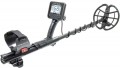 | 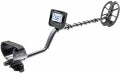 |
|---|---|---|
| Nokta Makro Anfibio Multi | Nokta Makro Multi Kruzer | |
from $639.00 | from $636.65 | |
| User reviews | ||
| TOP sellers | ||
Target Depth Determination | Target Depth Determination The Kruzer model has one detection frequency (14 kHz), and the Multi Kruzer model has three (5, 14, 19 kHz) | |
| Type | metal detector | metal detector |
| Suitable for | underwater | underwater |
| Principle of operation | VLF | VLF |
Coil/frame | ||
| Type | DD | DD |
| Shape | butterfly | elliptical |
| Waterproof |  | |
| Dimensions (WxD) | 18x28 cm | 18x28 cm |
| Number of coils | 1 | 1 |
Specs | ||
| Number of detection frequencies | 3 | 3 |
| Detection frequency | 5, 14, 20 kHz | 5, 14, 19 kHz |
| Discriminator | | |
| Ground balance | manual / automatic | manual / automatic |
Features | ||
| Number of modes | 9 | 6 |
| Search modes | main, relics (2 tones), coins (3 tones, 4 tones, 5 tones, 99 tones), beach, depth, treasure | all metals, relics (2 tones), coins (3 tones, 4 tones), beach, depth |
| Functions | Pin-Point mode sensitivity adjustment anti-interference tone identification VDI identification / Target ID target depth determination vibration response volume control low charge indicator | Pin-Point mode sensitivity adjustment anti-interference tone identification VDI identification / Target ID target depth determination vibration response volume control low charge indicator |
| More features | LCD display display backlight armrest built-in speaker headphone output headphones | LCD display display backlight armrest built-in speaker headphone output headphones |
General | ||
| Power source | proprietary battery | proprietary battery |
| Additionally included | charger, USB cable | charger, USB cable |
| Shaft length | 76 – 136 cm | 111 – 135.5 cm |
| Weight | 1.7 kg | 1.4 kg |
| Added to E-Catalog | march 2019 | february 2019 |


Compare Nokta Makro Anfibio Multi and Multi Kruzer
You may be interested in
Nokta Makro Anfibio Multi often compared


Nokta Makro Multi Kruzer often compared


Glossary
Shape
The shape of the coil (frame) of the metal detector.
— Round. The traditional form used in almost all types of ground and underwater metal detectors (see "Type"); the only exceptions are models that work according to the RF method (see "Operating principle"). When using concentric coils (see "Coil Type"), this option allows you to create a conical field, which is convenient for pinpointing the location of the find, but reduces the covered area and makes it difficult to search over a large area; models with DD coils do not have this drawback.
— Elliptical. The shape in the form of a longitudinally elongated ellipse allows you to somewhat "stretch" the field created by the metal detector in length. This is especially true for coils of the concentric type — however, such an expansion somewhat reduces the positioning accuracy of individual finds. But in coils of the DD type, where the accuracy is by definition low, the choice between round and elliptical shape is most often not fundamental.
— Rectangular. A specific form used in RF or PI instruments. For technical reasons, it is considered optimal for such devices, but it is practically not found in other types of metal detectors.
— Butterfly. Another option used in DD coils along with the ellipse (see above). In fact, it consists of two elliptical windings..., partially combined and resembling butterfly wings in shape — hence the name. This option is typical mainly for large-sized DD coils; with a large width, it is considered more optimal than an ellipse.
— Round. The traditional form used in almost all types of ground and underwater metal detectors (see "Type"); the only exceptions are models that work according to the RF method (see "Operating principle"). When using concentric coils (see "Coil Type"), this option allows you to create a conical field, which is convenient for pinpointing the location of the find, but reduces the covered area and makes it difficult to search over a large area; models with DD coils do not have this drawback.
— Elliptical. The shape in the form of a longitudinally elongated ellipse allows you to somewhat "stretch" the field created by the metal detector in length. This is especially true for coils of the concentric type — however, such an expansion somewhat reduces the positioning accuracy of individual finds. But in coils of the DD type, where the accuracy is by definition low, the choice between round and elliptical shape is most often not fundamental.
— Rectangular. A specific form used in RF or PI instruments. For technical reasons, it is considered optimal for such devices, but it is practically not found in other types of metal detectors.
— Butterfly. Another option used in DD coils along with the ellipse (see above). In fact, it consists of two elliptical windings..., partially combined and resembling butterfly wings in shape — hence the name. This option is typical mainly for large-sized DD coils; with a large width, it is considered more optimal than an ellipse.
Detection frequency
The operating frequency (or frequency range) of the metal detector. This is one of the most important parameters when choosing a device, because the optimal frequency for different cases will be different — depending on the size and material of the items being searched, the characteristics of the soil and other factors. Detailed recommendations on the choice of frequency for each specific situation can be found in special sources; And already on the basis of this information, it is worth choosing a specific model.
Note that the actual frequency at which the metal detector will operate also depends on the installed coil — they are usually made for a specific frequency. Therefore, to use the full capabilities of the device with the ability to adjust this parameter, you may need replaceable coils.
Note that the actual frequency at which the metal detector will operate also depends on the installed coil — they are usually made for a specific frequency. Therefore, to use the full capabilities of the device with the ability to adjust this parameter, you may need replaceable coils.
Number of modes
The number of pre-installed programs for searching for various materials. Their number reflects the capabilities of a particular model, allowing you to start working right off the bat.
Search modes
Regular metal detector search programs include detection of coins, all metals, jewelry and relics. In some models, this list can be expanded with "Beach" programs, custom (user) detection mode, etc.
Shaft length
The length of a metal detector rod is usually indicated by the distance from the coil to the upper end of the rod (where the armrest is located, if any). The higher the height of the operator, the longer the boom must be so that he can hold the coil above the ground without bending over (or not bending too much). In most models, the length lies in the range from 120 to 145 cm — for most adults this is quite a suitable value. Note that the rods can be adjustable (telescopic) — to adjust for growth.
Weight
The total weight of the metal detector in the working position is with the installed coil and batteries (if both are removable, see above). This parameter is quite important, taking into account the fact that during operation the device has to be kept on the weight: long-term use can be very tiring even with a relatively small weight and the presence of an armrest (see above). Therefore, light weight is a noticeable advantage for any metal detector. At the same time, other things being equal, lighter models tend to cost more, so you can use another option — a shoulder strap that reduces the load on the hand. And for underwater metal detectors (see "Type"), this parameter is not particularly relevant, because. objects underwater lose a significant amount of weight.