
Comparison Haisser 40164 vs Haisser 40160
Add to comparison | 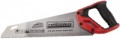 | 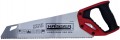 |
|---|---|---|
| Haisser 40164 | Haisser 40160 | |
| Outdated Product | Outdated Product | |
| TOP sellers | ||
| Type | classic | classic |
| Suitable for | wood | wood |
Specs | ||
| Blade length | 350 mm | 350 mm |
| Number of teeth per inch (TPI) | 11 | 8 |
| Hardened teeth |  | |
| Tooth sharpening | trihedral | trihedral |
General | ||
| Handle material | plastic / rubber | plastic / rubber |
| Teeth cover | | |
| Added to E-Catalog | march 2023 | january 2021 |


Compare Haisser 40164 and 40160
You may be interested in
Glossary
Number of teeth per inch (TPI)
Density of teeth in a complete saw blade; measured as the number of teeth per blade length inch (TPI).
The higher the TPI, the smaller each individual tooth, and vice versa. Other things being equal, large teeth allow you to cut easily and quickly, but not very accurately; small — provide an accurate and clean cut, but at the cost of increased effort and time. Accordingly, when choosing a saw for this parameter, one must proceed from the fact that in this case it is more important — speed or accuracy. In addition, the TPI determines suitability for small workpieces: the smallest allowable log thickness is considered to be a three-tooth pitch. For example, in a 9 TPI saw, three teeth will take up 1/3", or approximately 8.5 mm.
It is worth remembering that only tools of the same type and purpose can be compared by the number of teeth per inch. So, for example, in standard saws for wood, the minimum TPI value is 4, and already in passer saws — 9. The most coarse-toothed today are saws for foam concrete — they have about 1.2 – 1.8 teeth per inch; and the “record holders” in terms of density are saws for metal and jigsaws, for which the TPI value of 24 is almost the standard.
The higher the TPI, the smaller each individual tooth, and vice versa. Other things being equal, large teeth allow you to cut easily and quickly, but not very accurately; small — provide an accurate and clean cut, but at the cost of increased effort and time. Accordingly, when choosing a saw for this parameter, one must proceed from the fact that in this case it is more important — speed or accuracy. In addition, the TPI determines suitability for small workpieces: the smallest allowable log thickness is considered to be a three-tooth pitch. For example, in a 9 TPI saw, three teeth will take up 1/3", or approximately 8.5 mm.
It is worth remembering that only tools of the same type and purpose can be compared by the number of teeth per inch. So, for example, in standard saws for wood, the minimum TPI value is 4, and already in passer saws — 9. The most coarse-toothed today are saws for foam concrete — they have about 1.2 – 1.8 teeth per inch; and the “record holders” in terms of density are saws for metal and jigsaws, for which the TPI value of 24 is almost the standard.