
Comparison Procraft PSL2400 vs Iron Angel ES 2500
Add to comparison | 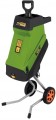 | 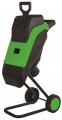 |
|---|---|---|
| Procraft PSL2400 | Iron Angel ES 2500 | |
| Expecting restock | from $118.00 up to $140.44 | |
| User reviews | ||
| TOP sellers | ||
| Shredding | branches and leaves | branches and leaves |
| Motor type | electric (mains) | electric (mains) |
| Voltage | 230 В | 230 В |
Specs | ||
| Shredding system | blade | blade |
| Max. shredded material diameter | 45 mm | 45 mm |
| Shredder speed | 4300 rpm | 4500 rpm |
| Collector type | soft | soft |
| Waste container capacity | 35 L | 50 L |
| Features | pusher | pusher |
| Motor power | 2400 W | 2500 W |
| Overload protection |  |  |
General | ||
| Transporting wheels | | |
| Material | plastic | plastic |
| Weight | 11.6 kg | 10 kg |
| Added to E-Catalog | december 2021 | january 2016 |


Compare Procraft PSL2400 and Iron Angel ES 2500
You may be interested in
My comparisons
Procraft PSL2400 often compared


Iron Angel ES 2500 often compared


Glossary
Shredder speed
The speed of rotation of the cutting tool of the chopper (see "Crushing system"). Variable speed models (see below) usually have a maximum RPM value.
In general, the general pattern is as follows: with equal engine power, the higher the speed, the lower the torque (see below), and vice versa. In addition, high speed improves performance (see "Bandwidth"). At the same time, this parameter in most cases is more of a reference value than a practically significant one: manufacturers select the rotation speed in such a way that it provides the claimed throughput and at the same time maintains the torque at a sufficient level for efficient processing of materials that were originally calculated design. Therefore, in some models, revolutions may not be indicated at all, and when choosing, it is worth focus on moments that are closer to practice.
In general, the general pattern is as follows: with equal engine power, the higher the speed, the lower the torque (see below), and vice versa. In addition, high speed improves performance (see "Bandwidth"). At the same time, this parameter in most cases is more of a reference value than a practically significant one: manufacturers select the rotation speed in such a way that it provides the claimed throughput and at the same time maintains the torque at a sufficient level for efficient processing of materials that were originally calculated design. Therefore, in some models, revolutions may not be indicated at all, and when choosing, it is worth focus on moments that are closer to practice.
Waste container capacity
The capacity of the garbage collector provided in the design or delivery set of the grinder.
The larger the container, the more recycled material the collector can hold and the less often it will have to be emptied. On the other hand, it is not always convenient to carry a large amount of material, and a large container takes up a lot of space — and if for soft bags (see "Type of collection") the latter is relevant only when fully loaded, then rigid containers are bulky by definition. Therefore, when choosing, you should proceed from the optimal compromise between capacity and convenience.
The larger the container, the more recycled material the collector can hold and the less often it will have to be emptied. On the other hand, it is not always convenient to carry a large amount of material, and a large container takes up a lot of space — and if for soft bags (see "Type of collection") the latter is relevant only when fully loaded, then rigid containers are bulky by definition. Therefore, when choosing, you should proceed from the optimal compromise between capacity and convenience.
Motor power
The operating power of the chopper motor, expressed in watts. This designation is used for all electric models (see "Engine type"), but can also be used for gasoline / diesel.
The performance of the unit and its ability to cope with hard and thick branches primarily depend on the engine power. In general, the more powerful the grinder, the more advanced it is considered. However, it should be taken into account here that these moments are also highly dependent on other design features — the specifics of a particular motor, grinding system (see above), etc. Therefore, when choosing, it makes sense to pay attention first of all to the direct performance characteristics, such as the type of material being processed (see "Grinding"), its thickness (see "Maximum diameter of the material being ground"), etc. And the power itself can be useful for a general assessment of a particular model. So, shredders up to 1.5 kW inclusive belong mainly to the entry level, the middle class can carry an engine up to 2.5 kW, and higher rates are typical for professional units. Detailed recommendations on the optimal power for a particular situation can be found in special sources.
The performance of the unit and its ability to cope with hard and thick branches primarily depend on the engine power. In general, the more powerful the grinder, the more advanced it is considered. However, it should be taken into account here that these moments are also highly dependent on other design features — the specifics of a particular motor, grinding system (see above), etc. Therefore, when choosing, it makes sense to pay attention first of all to the direct performance characteristics, such as the type of material being processed (see "Grinding"), its thickness (see "Maximum diameter of the material being ground"), etc. And the power itself can be useful for a general assessment of a particular model. So, shredders up to 1.5 kW inclusive belong mainly to the entry level, the middle class can carry an engine up to 2.5 kW, and higher rates are typical for professional units. Detailed recommendations on the optimal power for a particular situation can be found in special sources.
Overload protection
Availability of protection against an overload in a design of a grinder.
Overload is a critical increase in the load on the working mechanism and, accordingly, the engine of the device. Such a situation may arise, for example, when too large or solid debris (or too many “regular” materials) enters the unit; at best, its consequences are limited to increased wear, at worst, an accident can occur. The protection system prevents such troubles by shutting down the motor (or the drive to the grinding system) in the event of an overload. Of course, you can also turn off the unit manually — however, automation is more reliable, since it constantly monitors the status of the device and reacts almost instantly.
Overload is a critical increase in the load on the working mechanism and, accordingly, the engine of the device. Such a situation may arise, for example, when too large or solid debris (or too many “regular” materials) enters the unit; at best, its consequences are limited to increased wear, at worst, an accident can occur. The protection system prevents such troubles by shutting down the motor (or the drive to the grinding system) in the event of an overload. Of course, you can also turn off the unit manually — however, automation is more reliable, since it constantly monitors the status of the device and reacts almost instantly.
Weight
Overall weight of the shredder. Generally, in this case, only the weight of the unit itself is indicated — for example, with an empty collector (for models equipped with standard containers, see "Collector Type"), without fuel in the tank (for engines, see "Engine Type"), etc.