
Comparison Benetech GM100X vs Wintact WT100A
Add to comparison | 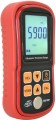 | 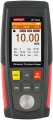 |
|---|---|---|
| Benetech GM100X | Wintact WT100A | |
| Outdated Product | Outdated Product | |
| TOP sellers | ||
This thickness gauge is not designed to measure the thickness of cast iron objects, because this material has a dense crystalline structure. | This thickness gauge is equipped with a microprocessor, which can measure the thickness and sound velocity of various materials quickly, accurately and without damage through ultrasonic measurement. | |
| Type | ultrasonic | ultrasonic |
| Max. thickness (ferrous met.) | 300000 µm | 255000 µm |
| Max. thickness (non-ferrous met.) | 300000 µm | 255000 µm |
| Max. error | 1% | 0.5% |
| Auto switch-off |  | |
| Display backlight | | |
| Built-in memory | | |
| Memory | 10 measurements | 500 measurements |
| Power source | 3xAAA | 3xAAA |
| Operating temperature | 0 °C ~ +40 °C | 0 °C ~ +40 °C |
| Dimensions | 72x146x29 mm | 65x146x30 mm |
| Weight | 202 g | 130 g |
| Added to E-Catalog | march 2021 | march 2021 |


Compare Benetech GM100X and Wintact WT100A
You may be interested in
My comparisons
Glossary
Max. thickness (ferrous met.)
The maximum coating thickness that the instrument can detect when measuring on ferrous metals such as steel. With a larger coating thickness, the thickness gauge sensor simply cannot “catch” on the metal surface under the paint, and effective measurement will not be possible. This parameter is indicated in micrometers — thousandths of a millimetre; the larger it is, the more versatile the device is, the wider the possibilities for its use. On the other hand, a large maximum measurement thickness can adversely affect the accuracy when measuring small values.
For modern thickness gauges, the maximum thickness up to 1000 microns is considered small, from 1000 to 1500 microns — small, from 1500 to 2000 microns — medium, more than 2000 microns — significant. In the most advanced professional-level models, this figure can reach 20 – 30 cm.
For modern thickness gauges, the maximum thickness up to 1000 microns is considered small, from 1000 to 1500 microns — small, from 1500 to 2000 microns — medium, more than 2000 microns — significant. In the most advanced professional-level models, this figure can reach 20 – 30 cm.
Max. thickness (non-ferrous met.)
The maximum coating thickness that the instrument can detect when measuring non-ferrous metals such as aluminium alloys. With a larger coating thickness, the thickness gauge sensor simply cannot “catch” on the metal surface under the paint, and effective measurement will not be possible. This parameter is indicated in micrometers — thousandths of a millimetre; the larger it is, the more versatile the device is, the wider the possibilities for its use. On the other hand, a large maximum measurement thickness can adversely affect the accuracy when measuring small values.
For modern thickness gauges, the maximum thickness up to 1000 microns is considered small, from 1000 to 1500 microns — small, from 1500 to 2000 microns — medium, more than 2000 microns — significant. In the most advanced professional-level models, this figure can reach 20 – 30 cm.
For modern thickness gauges, the maximum thickness up to 1000 microns is considered small, from 1000 to 1500 microns — small, from 1500 to 2000 microns — medium, more than 2000 microns — significant. In the most advanced professional-level models, this figure can reach 20 – 30 cm.
Max. error
The maximum measurement error provided by the device, in other words, the largest deviation from the real value of the measured value that may occur during the measurement process. The smaller this indicator, the more accurate the device, the smaller the error it gives in the measurement process; on the other hand, high accuracy has a corresponding effect on cost.
Specifically, in thickness gauges, an accuracy of 10% is considered low, 5% is average, 3% is good, and less than 3% is excellent.
Specifically, in thickness gauges, an accuracy of 10% is considered low, 5% is average, 3% is good, and less than 3% is excellent.
Memory
The maximum number of measurement results that can be simultaneously stored in the instrument's built-in memory. This number can vary from 10 – 20 in low-cost models to several thousand in the most advanced ones.
Volumetric memory allows you to simultaneously store a lot of information, but affects the cost of the device.
Volumetric memory allows you to simultaneously store a lot of information, but affects the cost of the device.