
Comparison Karcher WV 6 Plus vs Karcher WV 5 Plus
Add to comparison | 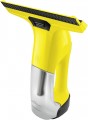 | 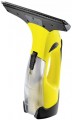 |
|---|---|---|
| Karcher WV 6 Plus | Karcher WV 5 Plus | |
from $143.01 | from $205.00 | |
| User reviews | ||
| TOP sellers | ||
Display with charging time indication. Battery life 100 minutes. Flexible, replaceable Liquid Silicon scraper. Window cleaning concentrate included. Tank capacity 150 ml. | Spray gun with microfibre. Unlike the model WV 5 Premium, there is no narrow suction nozzle. | |
| Type | window vacuum cleaner | window vacuum cleaner |
| Power supply | battery | battery |
| Suction power | 10 W | 10 W |
| Suction width | 28 cm | 28 cm |
| Waste detergent tank | 0.15 L | 0.1 L |
Battery | ||
| Battery type | Li-Ion | Li-Ion |
| Voltage | 3.65 В | 3.7 В |
| Autonomy time | 100 min | 35 min |
| Charging time | 3 h | 3 h |
More specs | ||
| Noise level | 52 dB | 50 dB |
| Dimensions | 28x31x12.6 cm | 33x28x13 cm |
| Weight | 0.76 kg | 0.7 kg |
| Added to E-Catalog | september 2019 | august 2016 |


Compare Karcher WV 6 Plus and WV 5 Plus
Comparing Karcher WV 6 Plus and Karcher WV 5 Plus, several key differences can be noted. WV 6 Plus has a larger tank for used solution — 150 ml compared to 100 ml in WV 5 Plus, allowing for longer operation without the need for emptying. The battery life of WV 6 Plus is 100 minutes, whereas WV 5 Plus works for only 35 minutes. The noise level of WV 5 Plus is slightly lower — 50 dB compared to 52 dB in WV 6 Plus. Both devices have the same suction power and suction width, but WV 6 Plus offers a more modern display with charge time indication.
You may be interested in
My comparisons
Karcher WV 6 Plus often compared


Karcher WV 5 Plus often compared
Glossary
Waste detergent tank
Объем бака для отработанного раствора, установленного в уборочной машине.
Такими баками оснащаются исключительно поломоечные машины (включая бытовые) и модели для окон (см. «Тип»): напомним, и те, и другие рассчитаны на всасывание раствора с обрабатываемой поверхности. В целом чем вместительнее бак — тем реже придется его опорожнять, однако тем больше будут габариты и вес агрегата. Поэтому производители обычно выбирают данный показатель с учетом типа и особенностей применения машины. Так, в устройствах для окон, которые при работе удерживаются в руках на весу, вместимость баков под отработанный раствор невелика — обычно порядка 150 – 200 мл; этого вполне достаточно с учетом формата применения и в то же время такой дополнительный вес не создает неудобств при работе. В свою очередь, в поломоечных машинах применяются емкости на несколько литров или даже десятков литров; как правило, конкретный объем напрямую зависит от общей «весовой категории» и производительности машины.
Такими баками оснащаются исключительно поломоечные машины (включая бытовые) и модели для окон (см. «Тип»): напомним, и те, и другие рассчитаны на всасывание раствора с обрабатываемой поверхности. В целом чем вместительнее бак — тем реже придется его опорожнять, однако тем больше будут габариты и вес агрегата. Поэтому производители обычно выбирают данный показатель с учетом типа и особенностей применения машины. Так, в устройствах для окон, которые при работе удерживаются в руках на весу, вместимость баков под отработанный раствор невелика — обычно порядка 150 – 200 мл; этого вполне достаточно с учетом формата применения и в то же время такой дополнительный вес не создает неудобств при работе. В свою очередь, в поломоечных машинах применяются емкости на несколько литров или даже десятков литров; как правило, конкретный объем напрямую зависит от общей «весовой категории» и производительности машины.
Voltage
The voltage of the battery used in the machine with the corresponding type of power supply. This parameter is not key when choosing; it may only be needed when looking for a third-party charger or a replacement/spare battery, as well as for specific calculations related to capacity (see below).
Autonomy time
Operating time of a battery-powered cleaning machine on one charge of a standard battery.
This parameter itself is quite approximate: it is most often indicated for standard operating modes and simple conditions. However, the actual autonomy is usually not very different from the stated one; so, based on the stated operating time, it is quite possible to both evaluate the capabilities of different models and compare them with each other.
This parameter itself is quite approximate: it is most often indicated for standard operating modes and simple conditions. However, the actual autonomy is usually not very different from the stated one; so, based on the stated operating time, it is quite possible to both evaluate the capabilities of different models and compare them with each other.
Noise level
The noise level created by the harvesting machine during operation.
Low noise levels are important for the comfort of both the operator and others; the latter is especially true in some specific places such as hospitals or kindergartens. On the other hand, the higher the power, the louder, as a rule, the unit operates and the more difficult it is to reduce this noise to a certain level; despite the fact that in many cases high volume operation is not a particular problem. So you should specifically look for a “quiet” cleaning machine only if a low noise level is more critical for you than high cost and/or reduced power.
When assessing specific loudness values, it is worth considering that the decibel used to indicate the noise level is a non-linear quantity. Therefore, the easiest way is to evaluate specific values using comparative tables. Here's a simplified table for the range that most modern harvesting machines fit into:
55 dB - background noise in an office without special noise sources;
60 dB - loud conversation;
65 dB - city street with average traffic intensity;
70 dB - a conversation between several people in a raised voice.
75 dB – high power vacuum cleaner.
80 dB - traffic noise on a busy street.
Low noise levels are important for the comfort of both the operator and others; the latter is especially true in some specific places such as hospitals or kindergartens. On the other hand, the higher the power, the louder, as a rule, the unit operates and the more difficult it is to reduce this noise to a certain level; despite the fact that in many cases high volume operation is not a particular problem. So you should specifically look for a “quiet” cleaning machine only if a low noise level is more critical for you than high cost and/or reduced power.
When assessing specific loudness values, it is worth considering that the decibel used to indicate the noise level is a non-linear quantity. Therefore, the easiest way is to evaluate specific values using comparative tables. Here's a simplified table for the range that most modern harvesting machines fit into:
55 dB - background noise in an office without special noise sources;
60 dB - loud conversation;
65 dB - city street with average traffic intensity;
70 dB - a conversation between several people in a raised voice.
75 dB – high power vacuum cleaner.
80 dB - traffic noise on a busy street.
Weight
The total weight of the cleaning machine. Usually, weight is indicated with empty tanks for detergent, waste, fuel, etc. At the same time, additional equipment, such as side brushes, may or may not be taken into account. Such equipment has a very small weight compared to the machines themselves. And, when installed/removed, does not seriously affect the mass of the entire machine.