
Comparison B.Well PRO-913 vs B.Well WI-912
Add to comparison | 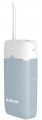 | 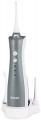 |
|---|---|---|
| B.Well PRO-913 | B.Well WI-912 | |
| Outdated Product | Outdated Product | |
| TOP sellers | ||
Contactless charging. Low noise level. | ||
| Type | irrigator | irrigator |
| Nozzles | 1 no. standard (single jet) | 5 no. standard (single jet) orthodontic (for braces) periodontological (pocket cleaning) for tongue cleaning |
Specs | ||
| Intensity modes | 2 | 1 |
| Additional modes | impulse (Pulse) | delicate impulse (Pulse) |
| Pulsation rate | 1.8 thousand/min | 14.2 thousand/min |
| Irrigator pressure | 30 – 105 PSI | 55 – 104 PSI |
| Water tank capacity | 150 ml | 150 ml |
| Removable reservoir |  | |
Features | ||
| 360° nozzle rotation | | |
| Timer | | |
| Wall mount |  | |
Power supply | ||
| Power source | rechargeable battery | rechargeable battery |
| Max. operating time | 60 min | 60 min |
| Full charging time | 24 h | |
| Charging via USB port | | |
General | ||
| Nozzle compartment | | |
| Charging stand | | |
| Case / cover | | |
| Dimensions | 56×79×195 mm | |
| Weight | 282 g | |
| Color | ||
| Added to E-Catalog | april 2021 | june 2019 |


Compare B.Well PRO-913 and WI-912
You may be interested in
My comparisons
B.Well WI-912 often compared


Glossary
Nozzles
No translation necessary.
Intensity modes
The number of intensity levels indicates how precisely the water pressure can be adjusted to match gum sensitivity and specific tasks. Low values are suitable for getting used to the irrigator and gentle treatment, while high values are for more intensive cleaning of food residues from between teeth. Intensity should not be confused with cleaning modes, which alter the nature of pulsations or the water delivery algorithm.
Additional modes
Additional operating modes change the water flow pattern and allow the irrigator to be adapted to gum sensitivity or a specific care task.
— Delicate. Uses lower pressure or a gentler pulse pattern for sensitive gums and gradual adaptation to the irrigator. Also suitable for the first procedures after fitting braces or orthodontic appliances.
— Deep cleaning. Enhances the jet effect or cyclically changes its intensity for more thorough treatment of interdental spaces and the gumline. Unlike the standard mode, the program may include pauses for sequential movement between areas.
— Gum massage. Alternates the strength or frequency of pulses, creating a gentle pulsating effect along the gumline. The mode is mainly intended for additional gum care rather than replacing the main cleaning of interdental spaces.
— Whitening. A special program for removing surface pigmented stains, usually used together with a suitable nozzle or branded product. It can refresh the appearance of teeth but does not change their natural color and does not replace professional whitening.
— Pulse. A switchable mode with pronounced alternation in water pulse strength, designed for gum massage or more dynamic cleaning. It should not be confused with the regular pulsating water flow..., which is used continuously in many irrigators and cannot be switched off.
— Delicate. Uses lower pressure or a gentler pulse pattern for sensitive gums and gradual adaptation to the irrigator. Also suitable for the first procedures after fitting braces or orthodontic appliances.
— Deep cleaning. Enhances the jet effect or cyclically changes its intensity for more thorough treatment of interdental spaces and the gumline. Unlike the standard mode, the program may include pauses for sequential movement between areas.
— Gum massage. Alternates the strength or frequency of pulses, creating a gentle pulsating effect along the gumline. The mode is mainly intended for additional gum care rather than replacing the main cleaning of interdental spaces.
— Whitening. A special program for removing surface pigmented stains, usually used together with a suitable nozzle or branded product. It can refresh the appearance of teeth but does not change their natural color and does not replace professional whitening.
— Pulse. A switchable mode with pronounced alternation in water pulse strength, designed for gum massage or more dynamic cleaning. It should not be confused with the regular pulsating water flow..., which is used continuously in many irrigators and cannot be switched off.
Pulsation rate
The number of pulsations per minute indicates the rhythm of the water jet's impact on teeth and gums. Frequent impulses sequentially loosen and wash away impurities, and the flow feels more continuous and gentle. However, for example, 1800 pulsations per minute are not necessarily more effective than 1200, as the result also depends on the water jet's strength, the nozzle, and the irrigator's design.
Irrigator pressure
The irrigator pressure determines the force of the water jet and directly affects cleaning intensity. Values around 20–40 PSI are suitable for getting used to the device and gentle care, while 70–100 PSI provides more powerful rinsing of hard-to-reach areas. A wide range allows you to select a comfortable flow strength for gums, implants, braces, and different nozzles.
Wall mount
The ability to fix the body, base, or holder of the irrigator on a vertical surface frees up space near the sink. Wall mounting is particularly convenient for stationary models, as the handle and hose remain within reach and the device is less obstructive on the countertop.
Full charging time
The full charge time indicates how long it takes to recharge the irrigator's battery from the minimum level to 100%. This parameter is especially important for models with limited battery life that need to be charged more frequently.
Charging via USB port
USB connectivity makes charging the irrigator more versatile and frees the user from being tied to a specific power adapter. The device can be charged from an outlet using a USB adapter, from a computer, or an external battery, which is especially convenient during travel.
Nozzle compartment
Attachment compartment is a built-in storage space for interchangeable water flosser tips. It helps keep them close to the device, protects them from dust, and reduces the risk of loss. Tips are stored more neatly in closed compartments; however, after use, it is advisable to rinse and dry them beforehand.