
Comparison EMOS E0042 vs EMOS E0041
Add to comparison | 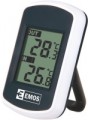 | 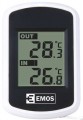 |
|---|---|---|
| EMOS E0042 | EMOS E0041 | |
| Outdated Product | from $16.24 | |
| TOP sellers | ||
| Purpose | household (for home) | household (for home) |
| Device type | electronic | electronic |
Measurements and specs | ||
| Measurements | temperature external temperature | temperature external temperature |
| Measurement range | -40 °C ~ +60 °C | -40 °C ~ +60 °C |
General | ||
| Power source | batteries | batteries |
| Type of external sensor | wireless | wired |
| Material | plastic | plastic |
| Dimensions | 85x56x18 mm | 85×57×18 mm |
| Added to E-Catalog | february 2022 | june 2016 |


Compare EMOS E0042 and E0041
You may be interested in
Glossary
Type of external sensor
A kind of external sensor used by a household thermometer (see "Purpose") with the possibility of external measurements.
— Wired. Wired sensors are inexpensive and do not require their own power supply, because they receive energy through the wire. At the same time, they are less convenient to install than wireless ones, since laying wires can be quite a hassle (up to having to drill a wall or window frame). And the distance to which the sensor can be taken from the thermometer is limited by the length of the wire.
— Wireless. Radio-connected sensors do not require wiring and can operate at a much greater distance from the thermometer than wired ones. On the other hand, they are noticeably more expensive and use their own power sources (batteries or accumulators), which need to be monitored and changed/recharged in time.
— Wired. Wired sensors are inexpensive and do not require their own power supply, because they receive energy through the wire. At the same time, they are less convenient to install than wireless ones, since laying wires can be quite a hassle (up to having to drill a wall or window frame). And the distance to which the sensor can be taken from the thermometer is limited by the length of the wire.
— Wireless. Radio-connected sensors do not require wiring and can operate at a much greater distance from the thermometer than wired ones. On the other hand, they are noticeably more expensive and use their own power sources (batteries or accumulators), which need to be monitored and changed/recharged in time.